Introduction
Have you ever received a message saying, “What’s the tea?” and wondered what the person was talking about? The phrase might sound like an invitation to drink tea, but in modern slang, it usually means gossip, interesting news, or details about a situation.
The Meaning Of Tea Depends on the Context. In everyday English, tea is a popular drink made from tea leaves. In texting and social media, it can refer to gossip or inside information. Understanding both meanings will help you follow everyday conversations, understand internet slang, and use common English expressions naturally.
1. What Does Tea Mean?
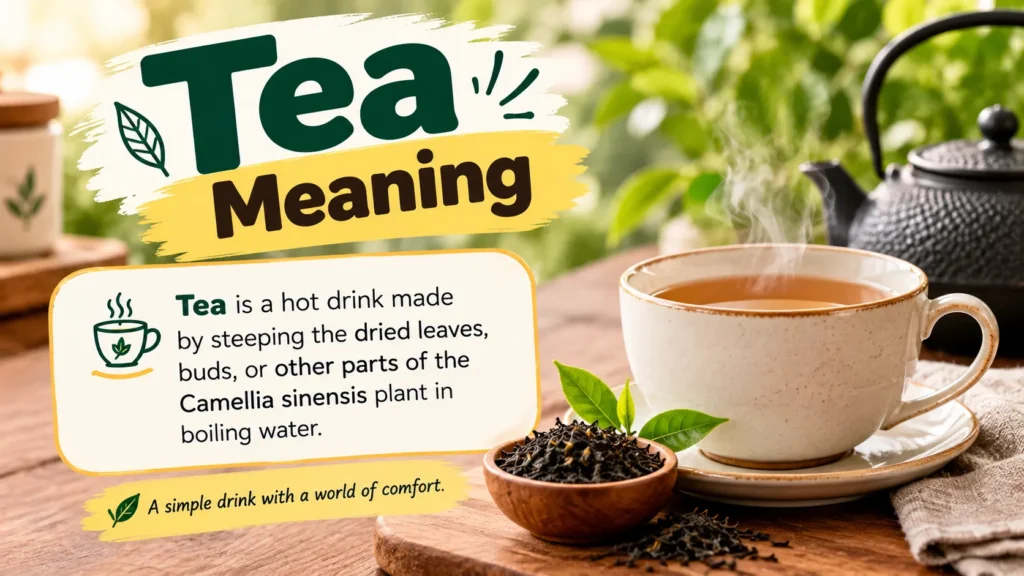
Tea is a noun with several meanings, depending on how people use it. Its most common meaning is a beverage prepared by steeping tea leaves in hot water. In informal English, the word can also mean gossip or interesting information.
Here are the main meanings of tea:
- Tea as a drink: A beverage made from tea leaves or other plant ingredients.
- Tea as slang: Gossip, interesting news, or information about a situation.
- Tea as a meal: In some British English contexts, an afternoon or evening meal.
- Tea as a plant: The plant Camellia sinensis, which produces traditional tea leaves.
For example, “Would you like some tea?” usually refers to the drink. However, “I’ve got some tea about the party” means the speaker has interesting information to share.
The surrounding words help you understand which meaning someone intends.
2. Tea Meaning in Slang
In slang, tea means gossip, juicy information, or interesting details about a person, event, or situation. People commonly use it when discussing friendships, relationships, celebrity news, or surprising events.
Consider these examples:
- “I’ve got some tea.” — I have interesting information to share.
- “Give me the tea.” — Tell me what happened.
- “The tea is wild.” — The information is surprising.
- “There’s tea about their argument.” — There is gossip or information about their disagreement.
- “That tea is getting interesting.” — The story is becoming more intriguing.
The expression is informal and often appears in casual conversations, online comments, and social media discussions.
However, tea does not automatically mean a rumor or a lie. It can describe verified news, someone’s personal account, or unconfirmed gossip. Always consider the reliability of the information before accepting or sharing it.
3. Tea Meaning in Texting and Social Media
When someone uses the word tea in a text message, group chat, or social media comment, they usually mean gossip, updates, or interesting information rather than a beverage.
People often use the expression to show curiosity or invite someone to explain what happened.
| Text or expression | Meaning |
| What’s the tea? | What’s happening? Tell me the details. |
| I have tea. | I have interesting information. |
| Spill the tea! | Tell me what happened. |
| Give me the tea. | Share the interesting details. |
| That’s the tea. | That’s the point or the conclusion I’m emphasizing. |
| No tea, no shade. | I’m presenting my comment as free from gossip or intentional disrespect. |
Example conversation:
Alex: You won’t believe what happened at school today.
Sam: Wait, what’s the tea?
Alex: Two friends finally resolved their disagreement.
Sam: Seriously? Tell me how it happened!
In this conversation, Sam wants to hear the details, not receive a drink.
People may also use the teacup emoji to suggest gossip, curiosity, or a relaxed reaction. Its meaning can vary with the surrounding message.
4. What Does “Spill the Tea” Mean?
“Spill the tea” is an informal expression that means to reveal interesting information, share gossip, or explain the details of a situation.
It is similar to saying “Tell me everything” or “Give me the details.” The expression can sound playful, excited, or curious.
Here are some examples:
- “Come on, spill the tea! What happened at the party?”
- “She spilled the tea about their surprise announcement.”
- “I’ve been waiting all day for you to spill the tea.”
- “Don’t spill the tea before everyone arrives.”
- “He finally spilled the tea about why he left the group.”
The expression is common in conversations about relationships, friendships, celebrity news, and unexpected events.
Its cultural background is also important. Modern tea slang is associated with Black drag culture and the use of “T” to mean truth or personal information. The exact development of the slang is not completely settled, so it is best to avoid presenting one explanation as the definitive origin.
5. What Does “What’s the Tea?” Mean?
“What’s The Tea?” is an informal way of asking what happened, what is going on, or what interesting information someone knows.
A person may use it when they notice something unusual or hear that an interesting event has occurred.
Examples include:
- “You look excited. What’s the tea?”
- “What’s the tea about the new teacher?”
- “I missed the meeting. What’s the tea?”
- “Everyone is talking about the announcement. What’s the tea?”
- “You said you had news, so what’s the tea?”
The phrase generally works well among friends who understand the slang. However, it may sound nosy if the subject involves someone’s private life.
If you want to ask politely, you can say, “What’s the update?” or “Would you mind telling me what happened?”
6. What Does “That’s the Tea” Mean?
“That’s the tea” is a casual expression used to emphasize a point, confirm a conclusion, or indicate that the speaker considers their statement important or settled.
Its tone can be confident, humorous, dramatic, or slightly sarcastic.
Examples:
- “She worked hard for that achievement, and that’s the tea.”
- “We agreed to be honest with each other. That’s the tea.”
- “Everyone has an opinion, but that’s the tea.”
- “He kept practicing until he improved. That’s the tea.”
- “Good communication matters, and that’s the tea.”
In these examples, the speaker is emphasizing a point rather than discussing a beverage.
The expression can suggest that the speaker believes they have stated the truth. However, saying “that’s the tea” does not prove that a claim is factually correct.
7. What Does “No Tea, No Shade” Mean?
“No tea, no shade” is an informal expression used before a comment to suggest that the speaker does not intend to gossip, insult someone, or show disrespect.
The expression is associated with Black LGBTQ+ and drag culture. In slang, “shade” often means a subtle insult, criticism, or disrespectful remark.
Examples:
- “No tea, no shade, but I preferred the original design.”
- “No tea, no shade; I’m just sharing my opinion.”
- “No tea, no shade, but that outfit isn’t my style.”
- “No tea, no shade, your presentation could use a little more detail.”
- “No tea, no shade, but I think we should try a different approach.”
The phrase can be playful, but it does not guarantee that the following comment will sound kind.
For example, criticizing someone’s appearance may still hurt their feelings even if you begin with “no shade.” Use the expression thoughtfully and consider how your words might affect others.
Related To Another Article: https://genzwishes.com/epitaph-meaning/
8. Tea Meaning in Everyday English
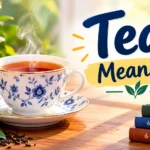
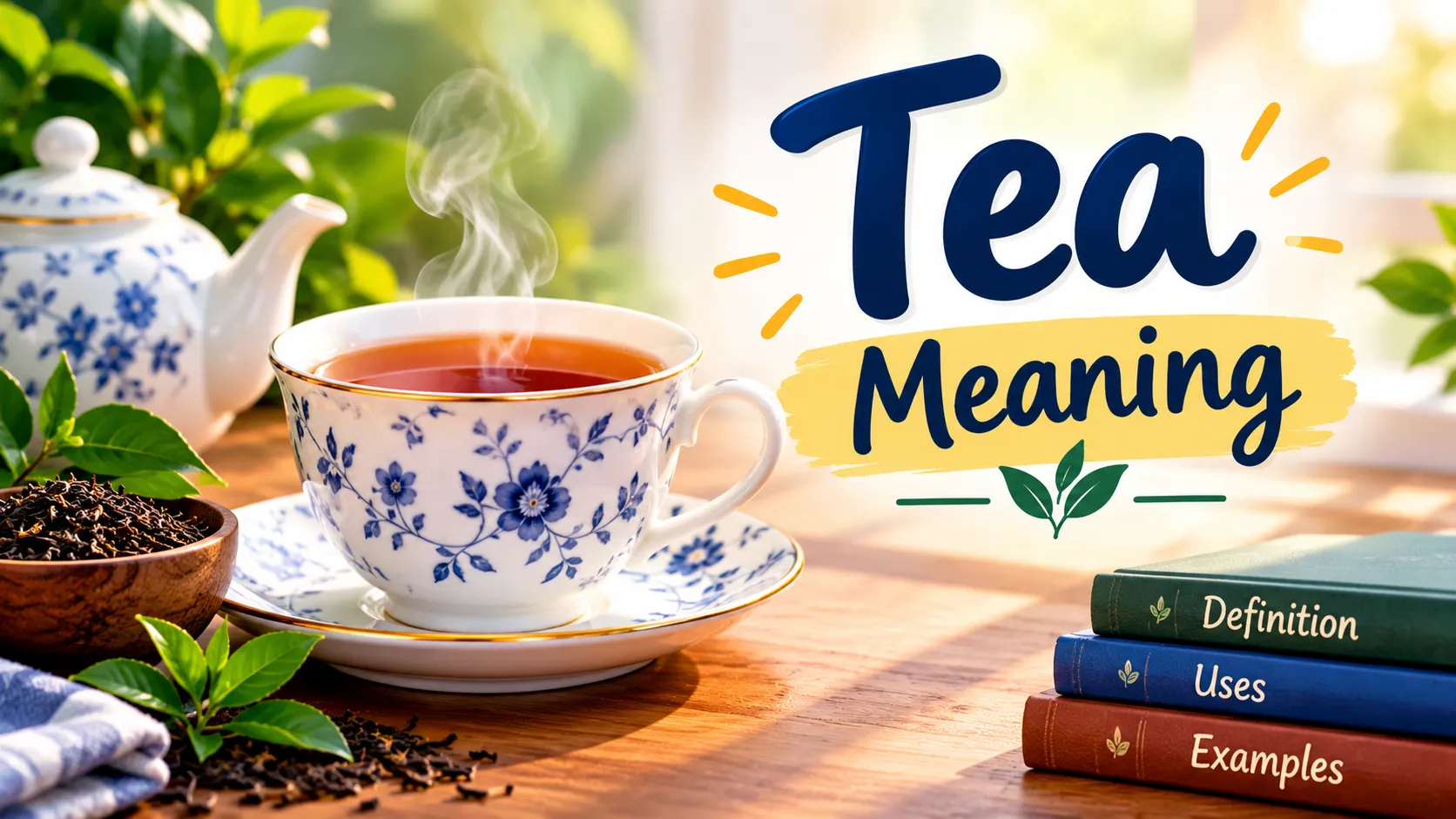
Outside slang, tea usually refers to a drink made from the leaves of the tea plant. People enjoy it hot or cold, sometimes with milk, sugar, lemon, or other ingredients.
Examples include:
- “I drink tea every morning.”
- “She prepared a pot of green tea.”
- “Would you like iced tea with lunch?”
- “The tea is too hot to drink.”
- “My family enjoys tea with biscuits.”
Traditional black tea, green tea, white tea, and oolong tea come from Camellia sinensis, although processing methods differ. Herbal infusions made from ingredients such as mint or chamomile are commonly called herbal teas, even though they do not necessarily contain leaves from the traditional tea plant.
In British English, tea can also refer to an afternoon meal or an early evening meal. For example, “We’re having tea at six” may mean that dinner is being served.
Context is the easiest way to distinguish these meanings.
9. Origin and History of the Word Tea
The English word tea has a long history connected to international trade and the movement of tea leaves across Asia and Europe.
The modern English form developed through Dutch thee, Malay teh, and a Chinese form associated with the Amoy or Xiamen dialect. Related forms include cha and chai, which spread through different linguistic and trading routes.
Historical records show that forms such as chaa appeared in English during the late sixteenth century. The spelling and pronunciation eventually developed into the modern word tea.
The slang meaning has a separate cultural history. Dictionary.com associates tea as gossip or personal information with Black drag culture and the expression “T,” meaning truth or personal business.
Although several explanations connect the slang to truth, gossip, and social gatherings, the precise path of its development is not entirely certain. Distinguishing the history of the beverage’s name from the history of the slang helps prevent confusion.
10. How to Use Tea in a Sentence
You can use tea in sentences about drinks, meals, gossip, and informal conversations. The correct meaning depends on the words around it.
1. Tea as a drink
- “My Grandmother enjoys a cup of tea after breakfast.”
- “Please let the tea cool before drinking it.”
- “We served tea and biscuits to our guests.”
- “He ordered green tea instead of coffee.”
- “Would you like another cup of tea?”
2. Tea as slang
- “I have some tea about the school event.”
- “She asked her friend to spill the tea.”
- “What’s the tea about the announcement?”
- “Everyone wants to hear the tea.”
- “That’s the tea, and I’m sticking to my opinion.”
3. Tea as a meal
- “The family usually has tea in the early evening.”
- “We’re having tea with sandwiches today.”
- “They invited us over for tea.”
When writing an academic assignment, formal email, or professional report, choose clearer expressions such as “information,” “news,” or “details” instead of slang.
11. Tea vs. Gossip: Is There a Difference?
So, Tea and gossip are closely related in modern slang, but the words do not have exactly the same meaning in every context.
Tea often suggests interesting, surprising, or noteworthy information. Gossip usually refers to conversation about other people’s private lives and may include unverified claims.
| Tea | Gossip |
| Can mean interesting news or inside information | Often concerns other people’s personal lives |
| Frequently sounds playful and informal | Can sound neutral or negative |
| May refer to verified information or rumors | May also include verified information or rumors |
| Common in contemporary slang and social media | Used in everyday conversation and other contexts |
For example, “What’s the tea about the event?” asks for interesting details. “They were gossiping about their neighbor” describes a conversation about another person’s private life.
Neither word tells you whether a claim is true. If the information could harm someone’s reputation, check the facts and respect their privacy before repeating it.
12. Is Tea a Formal or Informal Word?
Tea is appropriate in formal and informal English when it refers to the beverage. Its meal-related meaning is also established in British English, although usage varies by region and household.
The slang meaning is informal. It works well in casual conversations, text messages, memes, and social media comments, but it may not suit every professional or academic setting.
Compare these examples:
- Casual: “Tell me the tea about the party.”
- Neutral: “Can you tell me what happened at the party?”
- Professional: “Could you share the relevant details about the event?”
Choose the wording that suits your audience. If you are unsure whether someone understands the slang, a neutral expression will usually communicate your meaning more clearly.
13. Common Mistakes When Using Tea
Understanding the different meanings of tea can help you avoid confusion in everyday conversations.
Mistake 1: Assuming tea always means gossip
In most ordinary contexts, tea refers to a beverage. Look at the surrounding words before interpreting it as slang.
Mistake 2: Treating gossip as confirmed truth
When someone says they have tea, they are claiming to have information. That does not mean the information has been verified.
Mistake 3: Using slang in every situation
Expressions such as “spill the tea” are suitable for casual conversations but may sound too informal in a business email or academic assignment.
Mistake 4: Assuming British tea always means a drink
In some British contexts, tea refers to a meal. The time of day and the situation help clarify the intended meaning.
Mistake 5: Thinking “no shade” always prevents offense
The phrase may suggest that someone does not intend to insult another person, but the comment that follows can still be hurtful.
Mistake 6: Assuming every person knows internet slang
Slang changes across communities and generations. When speaking to someone unfamiliar with the expression, use straightforward English.
The key is to consider context, audience, and tone before deciding how to interpret or use the word.
14. Synonyms and Related Expressions
The best alternative to tea depends on whether you mean a beverage, gossip, or a particular idiom.
| Word or expression | Meaning |
| Gossip | Conversation or information about other people’s private lives |
| News | New or recently received information |
| Scoop | Important or exclusive information |
| Inside information | Information not generally available to everyone |
| Details | Specific facts about a situation |
| Spill the beans | Reveal information that was meant to remain secret |
| What’s going on? | Ask about a situation or recent events |
| The truth | What is factually correct |
| Cup of tea | A drink or, idiomatically, something a person likes |
For example, “Give me the scoop” and “Spill the tea” can both request interesting information. However, “cup of tea” has a different idiomatic meaning in the sentence “Horror movies aren’t my cup of tea.”
In that expression, the speaker means that horror movies are not something they particularly enjoy.
Choose the expression that communicates your intended meaning rather than replacing every use of tea with the same synonym.
People Also Ask
A: In slang, tea means gossip, interesting news, or inside information about a person or situation. For example, “I’ve got some tea” means “I have some interesting information to share.”
A: In texting, tea usually means gossip or interesting details. Someone asking “What’s the tea?” wants to know what happened or hear the latest news.
A: “Spill the tea” means to share gossip, reveal interesting information, or explain the details of a situation.
A: “Give me the tea” means “Tell me the interesting details” or “Share what you know about the situation.”
A: “That’s the tea” is a casual expression used to emphasize a point, express a conclusion, or indicate that the speaker considers their version of events to be correct.
Conclusion
The meaning of Tea Depends on the context. In everyday English, it usually refers to a popular beverage, while in modern slang it means gossip, interesting news, or inside information. Expressions such as “spill the tea,” “what’s the tea?” and “that’s the tea” are common in informal conversations and online discussions.
Once you understand these different meanings, you can interpret the word more confidently in text messages, social media posts, and everyday English. Remember to consider the situation, tone, and reliability of the information before deciding what a speaker means.
If this guide helped you understand tea slang, share it with someone learning English or save it for later. Explore more English meanings and everyday expressions on GenzWishes.
Disclaimer: This article is intended for educational and informational purposes. Slang meanings can vary by community and context, so interpret expressions thoughtfully and respectfully.