Introduction
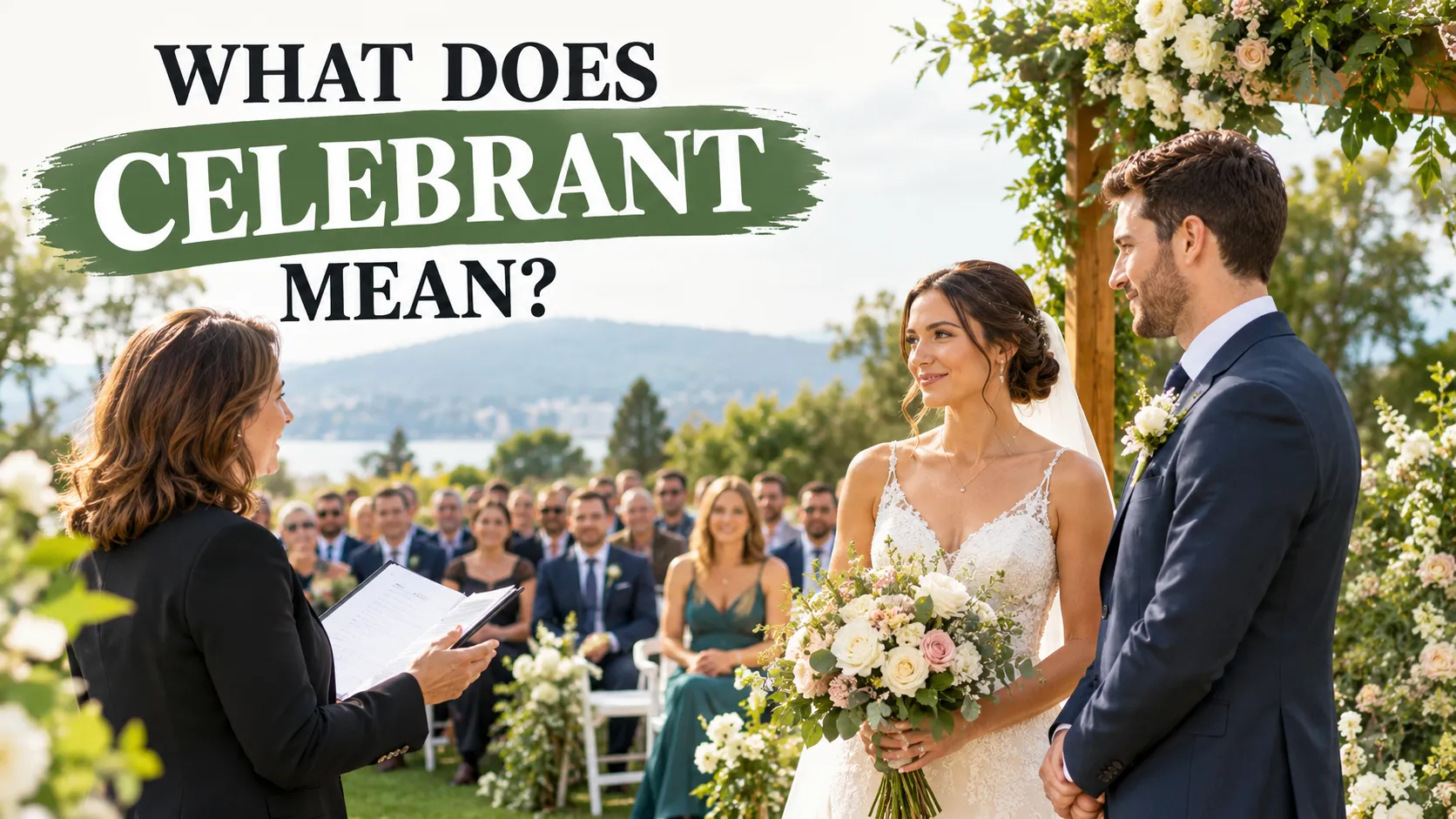
Have you ever wondered what the word “Celebrant” really means and why people use it for weddings, religious ceremonies, and other important occasions? A celebrant is a person who leads or conducts a meaningful ceremony, helping people celebrate special moments, honor traditions, or mark important life events. Depending on the context, the word can refer to a wedding celebrant, a religious leader performing a service, or someone conducting a funeral or memorial ceremony. Understanding the meaning of celebrant will help you use the word correctly in everyday conversations, writing, and different cultural settings.
1. Celebrant Meaning: Quick Definition
The word celebrant means a person who leads or performs a ceremony or, in some contexts, someone who participates in a celebration. Its exact meaning depends on the situation in which the word appears.
For example, a priest may be called a celebrant during a religious service, while a professional wedding celebrant may conduct a marriage ceremony. In American English, celebrants can also refer to people enjoying a festival or public celebration.
Simple definition: A celebrant is someone associated with conducting a ceremony or participating in a celebration.
2. What Does Celebrant Mean in Simple English?
In simple English, a celebrant is someone connected with a special ceremony or celebration.
Imagine a couple getting married. The person leading their wedding ceremony may be called a celebrant. Now imagine a crowd cheering at a New Year’s Eve celebration. Those people may also be described as celebrants.
The difference is the person’s role. One person leads a ceremony, while the others participate in an event.
Example: “The celebrant welcomed everyone before the wedding began.”
In this sentence, celebrant refers to the person conducting the ceremony rather than an ordinary guest.
3. Celebrant Pronunciation and Syllables
The word celebrant is pronounced approximately as SEL-uh-bruhnt.
- Word: Celebrant
- Part of speech: Noun
- Pronunciation: /ˈselɪbrənt/
- Syllables: Three
- Plural: Celebrants
The first syllable receives the main stress. Start with “SEL,” then say the remaining syllables smoothly.
Practicing the word aloud can help English learners recognize it in conversations about weddings, religious services, and celebrations.
4. Origin and History of the Word Celebrant
Celebrant is related to the Latin verb celebrare, meaning to celebrate, honor, or perform a ceremony. The English word is also related to celebrate and celebration.
The term became associated with people performing religious rites and conducting ceremonies. It also developed a broader use for people taking part in celebrations.
This connection explains why celebrant can describe different roles. The word may refer to someone leading a formal service or, depending on the context, someone celebrating a special occasion.
5. Celebrant Meaning in Different Contexts
The word celebrant takes on slightly different meanings depending on the event.
- Wedding: A person who conducts a marriage ceremony.
- Funeral: A person who leads a funeral or memorial service.
- Religion: A religious figure who performs or leads a rite.
- Public celebration: Someone participating in a festival or other celebratory event.
- Community ceremony: A person who leads a naming ceremony or another meaningful gathering.
For example, “The celebrant shared a touching story about the couple” refers to someone leading a wedding ceremony.
By contrast, “Celebrants filled the streets after the team’s victory” refers to people participating in a celebration.
Context helps readers determine which meaning applies.
6. What Is a Wedding Celebrant?
A wedding celebrant is a person who conducts a wedding ceremony. Depending on their role, they may help couples prepare vows, choose readings, include cultural traditions, and create a ceremony that reflects their relationship.
Some couples choose a celebrant for a personalized outdoor wedding, a destination ceremony, or a nonreligious celebration.
For example: “The wedding celebrant helped the couple create a ceremony that reflected their love story.”
A wedding celebrant is not automatically authorized to perform a legally binding marriage. Legal requirements vary by country and jurisdiction, so couples should check the applicable rules before booking a ceremony.
7. What Is a Funeral Celebrant?
A funeral celebrant leads a funeral, memorial service, or celebration of life. The celebrant may work with relatives to create a service that reflects the deceased person’s personality, beliefs, and memories.
A ceremony may include personal stories, readings, music, prayers, or tributes.
Example: “The funeral celebrant shared memories that captured her kindness and generosity.”
Funeral Celebrants may conduct religious, spiritual, humanist, or nonreligious services, depending on their training and the family’s preferences.
A funeral celebrant is not necessarily a funeral director. A funeral director generally coordinates practical arrangements, while a celebrant focuses on the ceremony itself.
8. What Is a Religious Celebrant?
A religious celebrant is someone who performs or leads a religious rite or service.
In certain Christian traditions, the word specifically refers to a priest who leads a service such as the Eucharist or Communion.
A religious celebrant may lead prayers, read religious texts, perform established rituals, and guide the congregation through the service.
Example: “The celebrant led the congregation in prayer.”
The precise role depends on the religion and denomination. Not every celebrant has the same qualifications, responsibilities, or religious authority.
9. Celebrant Meaning in American and British English
Celebrant has related meanings in British and American English, although the emphasis may differ by context.
| English usage | Meaning |
| British English | Often associated with a person performing a religious rite or conducting a ceremony; also used for professional ceremony leaders. |
| American English | Used for someone performing a ceremony and, more broadly, a person participating in a celebration. |
Consider these examples:
Ceremony: “The celebrant led the wedding service.”
Here, celebrant refers to the person conducting the ceremony.
Celebration: “The celebrants cheered as the fireworks began.”
Here, celebrants refers to people participating in the event.
These are general usage patterns rather than absolute rules. The surrounding sentence is the best guide to the intended meaning.
Related To Another Article: https://genzwishes.com/feral-cat-meaning/
10. Celebrant Synonyms and Related Words
Several words are Associated with celebrant, but each emphasizes a slightly different role.
| Word | Meaning |
| Officiant | A person who formally conducts a ceremony. |
| Celebrator | A person who celebrates an event. |
| Presider | Someone who leads a meeting or formal service. |
| Ceremony leader | A general term for someone conducting a ceremony. |
| Priest | A religious official who performs particular rites. |
| Minister | A religious leader who may conduct worship and ceremonies. |
| Participant | Someone who takes part in an event. |
| Host | Someone who welcomes or organizes guests at an event. |
Officiant is often suitable when referring specifically to someone conducting a formal ceremony. Celebrator is more appropriate when emphasizing the act of celebrating.
Choose a synonym according to the person’s actual role.
11. Celebrant vs. Officiant vs. Celebrator
Celebrant, officiant, and celebrant are related words, but they are not interchangeable in every sentence.
| Word | Main distinction | Example |
| Celebrant | Someone who conducts a ceremony or participates in a celebration, depending on context. | The celebrant led the wedding ceremony. |
| Officiant | Someone who formally conducts a ceremony or service. | The officiant explained the wedding vows. |
| Celebrator | Someone who celebrates an occasion. | Every celebrant joined the parade. |
The key difference is the role being described. An officiant conducts a formal ceremony. A celebrator takes part in celebrating. A celebrant can refer to either a ceremony leader or a participant, depending on the context.
Easy memory tip: An officiant officiates, a celebrator celebrates, and a celebrant is associated with a ceremony or celebration.
12. Examples of Celebrant in a Sentence
Here are 12 examples showing how to use celebrant naturally.
- The celebrant welcomed the guests before the wedding began.
- The couple thanked their celebrant for creating a personal ceremony.
- The priest served as the principal celebrant during the religious service.
- A professional celebrant helped the couple prepare their vows.
- The funeral celebrant delivered a thoughtful tribute.
- The family selected a celebrant who understood their wishes.
- The celebrant introduced each part of the ceremony.
- Thousands of celebrants gathered downtown to celebrate the victory.
- The wedding celebrant included a reading written by the bride.
- The celebrant spoke warmly about the couple’s journey.
- The religious celebrant led the congregation through the service.
- The festival was filled with celebrants singing and dancing.
These examples demonstrate that celebrant can refer to a ceremony leader or a person participating in a celebration.
13. Common Mistakes When Using Celebrant
Understanding these common mistakes will help you use the word accurately.
Mistake 1: Assuming every celebrant is a priest.
A celebrant may be a religious official, a professional ceremony leader, or someone participating in a celebration.
Mistake 2: Thinking celebrants only work at weddings.
Celebrants may also lead funerals, memorials, naming ceremonies, and religious services.
Mistake 3: Confusing a celebrant with a guest.
A ceremony celebrant usually leads the event. A guest attends it. However, the broader meaning of celebrant can include people celebrating an occasion.
Mistake 4: Assuming every wedding celebrant can legally marry people.
Legal authority depends on local law and the person’s authorization.
Mistake 5: Using celebrant when a more precise word would be clearer.
Host, officiant, participant, and celebrant may be better choices in particular situations.
Always consider the context before selecting the word.
14. How to Remember the Meaning of Celebrant
The easiest way to remember celebrant is to connect it with celebrate and celebration.
Think of three situations:
- A priest leads a religious service.
- A professional conducts a wedding ceremony.
- A crowd celebrates a sports victory.
The first two involve someone leading a ceremony. The third involves people participating in a celebration.
This simple connection helps explain why the word has more than one use.
Memory tip: A celebrant is connected with a ceremony or celebration; the exact role depends on the context.
People Also Ask
A: A celebrant is someone who conducts or leads a ceremony or, in some contexts, participates in a celebration.
A: It means someone connected with a special ceremony or celebration, such as a wedding, funeral, religious service, or public event.
A: Not exactly. An officiant formally conducts a ceremony, while a celebrant can refer to a ceremony leader or a person participating in a celebration.
A: A wedding celebrant conducts a wedding ceremony and may help personalize its vows, readings, and rituals. Legal authority to solemnize a marriage depends on local requirements.
A: The plural is celebrants. For example: “The celebrants cheered when the festival began.”
Conclusion
A Celebrant is someone who leads or performs a ceremony or, in certain contexts, participates in a celebration. The word commonly appears in wedding, funeral, and religious settings, but it can also describe people celebrating an event.
Understanding its pronunciation, synonyms, examples, and differences from officiant and celebrant will help you use the word confidently.
Save this guide for your English vocabulary practice, and explore more word meanings and language guides on GenzWishes.