Introduction
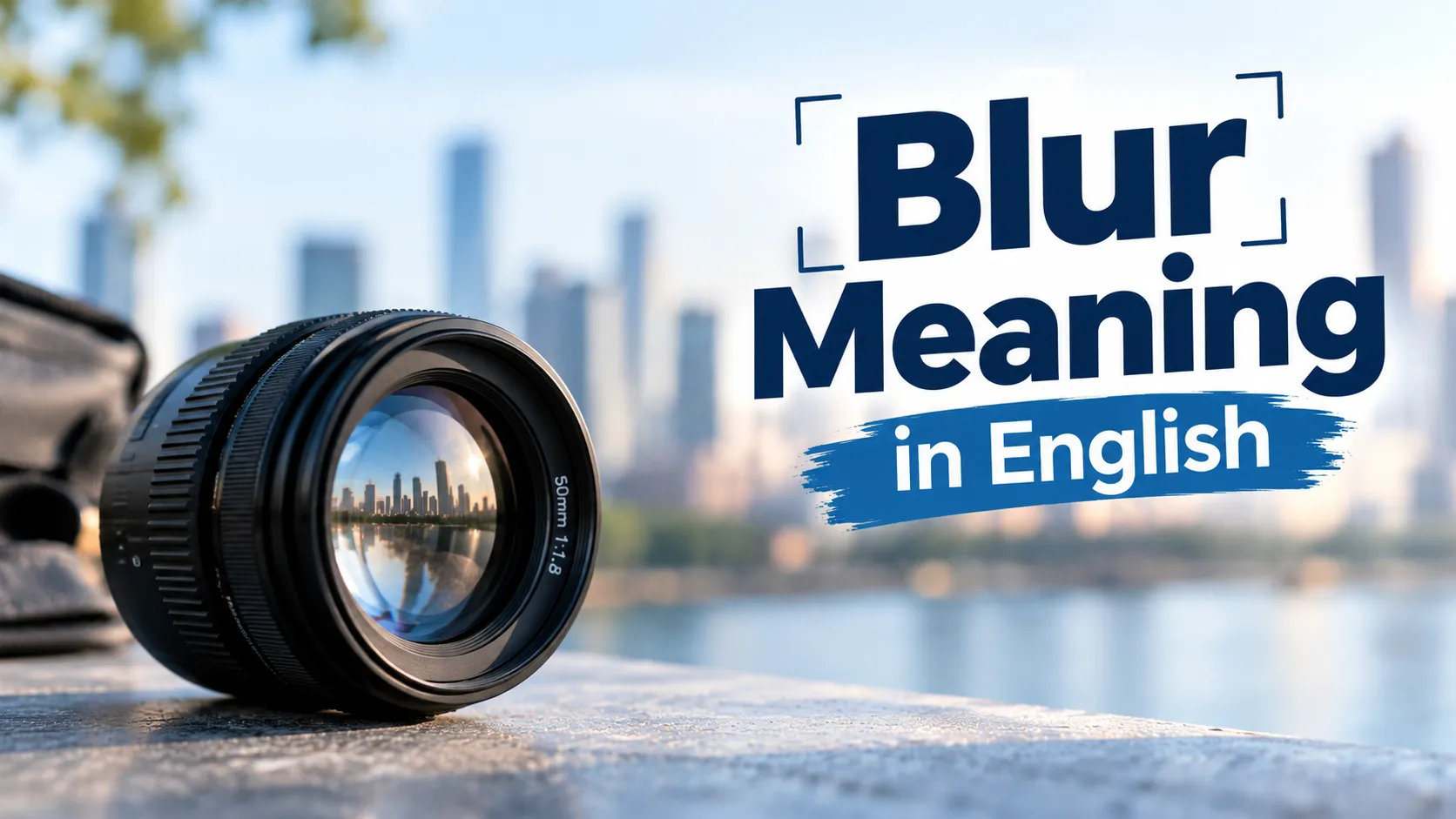
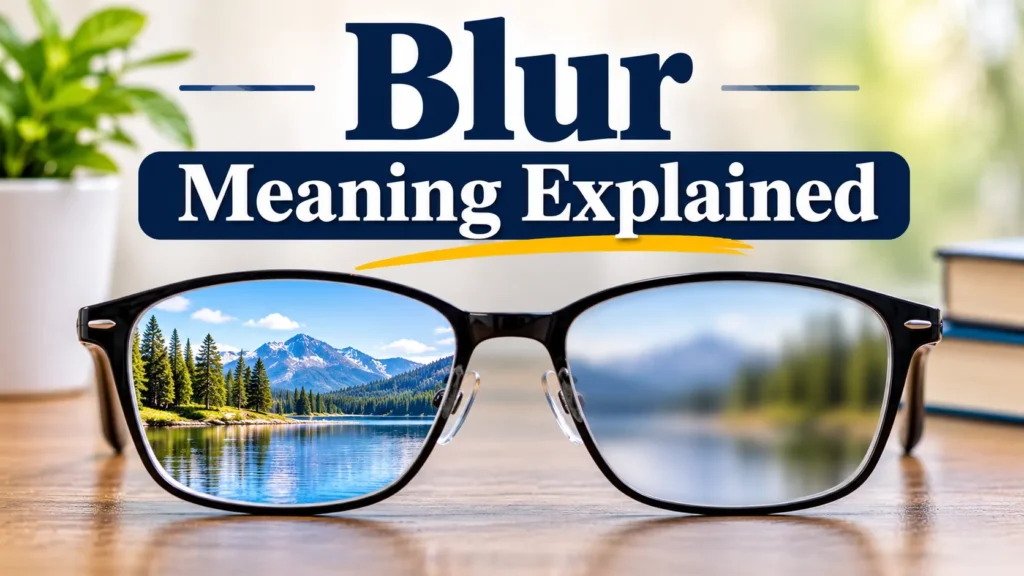
The word Blur Means something that is unclear, difficult to see, hard to remember, or not easy to distinguish. As a noun, it describes an unclear image or experience. As a verb, it means to make something unclear or to become unclear.
For example, “The photograph is a blur” means the picture lacks clear details, while “My entire weekend was a blur” means the experience passed quickly or is difficult to remember clearly. Understanding the context helps you use this word correctly in everyday English.
1. What Does Blur Mean?
Blur refers to something that lacks a clear outline, appearance, memory, or distinction. It can describe an unclear photograph, a vague memory, a fast-moving object, or a situation in which two things become difficult to distinguish.
For example, if a car passes you very quickly, you might see only a blur. Similarly, if you have a busy weekend filled with activities, you might describe the entire experience as a blur.
The word has two main grammatical uses:
- Noun: An unclear image, shape, or experience.
- Verb: To make something unclear or to become unclear.
Example: “The lights became a blur as the train moved away.”
2. Blur Meaning in Simple English
In simple English, blur means something unclear, fuzzy, or difficult to distinguish. It can also describe an experience that is hard to remember because many things happened quickly.
The word commonly has these meanings:
- Unclear appearance: Something cannot be seen sharply.
- Unclear memory: An event is difficult to recall in detail.
- Fast movement: Something moves too quickly to see clearly.
- Unclear difference: Two things become difficult to distinguish.
- Loss of sharpness: An image or outline becomes less distinct.
For example, “The writing became a blur in the rain” describes unclear writing. However, “The whole school year was a blur” describes an experience that is difficult to remember clearly.
The simplest way to understand blur is to remember that something becomes less distinct, whether visually, mentally, or conceptually.
3. Blur Pronunciation and Word Forms
The word blur has one syllable and rhymes approximately with “fur” in many English accents. Its pronunciation varies slightly between American and British English.
| Word Detail | Explanation |
| Word | Blur |
| American pronunciation | /blɜːr/ |
| British pronunciation | /blɜː/ |
| Syllables | One |
| Part of speech | Noun and verb |
| Past tense | Blurred |
| Present participle | Blurring |
| Related adjective | Blurry |
Examples:
- The picture began to blur.
- The rain blurred the writing.
- The camera is blurring the moving subject.
- The photograph looks blurry.
Learning these forms helps you use blur correctly in conversations, schoolwork, and writing.
4. Blur as a Noun
As a noun, blur refers to an unclear image, indistinct shape, vague memory, or experience that is difficult to recall in detail.
It commonly appears in expressions such as “a blur,” “a colorful blur,” and “a blur of activity.”
Examples:
- The speeding car appeared as a blur.
- Without my glasses, the entire room looks like a blur.
- My first day at university is still a blur.
- The colorful lights formed a beautiful blur.
- The celebration passed in a blur of music and laughter.
- The distant mountains looked like a blue blur.
- The runner was nothing more than a blur on the track.
- My childhood memories sometimes feel like a blur.
- The crowd became a blur of moving faces.
- The final minutes of the match were a blur of excitement.
In these examples, blur names something that is not clearly distinguishable or easy to recall.
5. Blur as a Verb
As a verb, blur means to make something unclear or to become unclear. It can describe vision, photographs, writing, memories, or the boundaries between different ideas.
Examples:
- Tears began to blur her vision.
- Thick fog blurred the outlines of the buildings.
- The rain blurred the ink on the page.
- The moving cyclist blurred the background in the photograph.
- The artist blurred the edges of the painting.
- The bright lights blurred together in the distance.
- Stress can blur your perception of a difficult situation.
- The two stories blur the line between fact and fiction.
- The water blurred the reflection in the lake.
- The image began to blur as the camera moved.
The verb can describe an action performed on something or a change that happens by itself.
Transitive example: The rain blurred the writing.
Intransitive example: The image began to blur.
The first sentence identifies what caused the writing to become unclear. The second describes the image becoming unclear without specifying a cause.
6. Blur Meaning in Different Contexts
The meaning of blur changes slightly depending on the situation. Context helps you understand whether someone is describing an image, a memory, movement, or an unclear distinction.
Blur in Photography
In photography, blur refers to a lack of sharp detail in an image. It can result from camera movement, subject movement, incorrect focus, or a deliberate artistic choice.
Example: “The photographer used motion blur to make the racing car look faster.”
Photographers sometimes use background blur or motion blur to create depth, emphasize a subject, or communicate movement.
Blur in Memories
When people say an experience was a blur, they usually mean they cannot remember its details clearly or that events happened so quickly that individual moments became difficult to separate.
Example: “My first week at the new job was a blur.”
This is a figurative use of the word rather than a description of an actual image.
Blur in Relationships and Boundaries
Blur can describe situations in which the difference between two things becomes less obvious.
Example: “Working with close friends can blur the lines between personal and professional life.”
Here, blur refers to unclear boundaries rather than eyesight.
Blur in Everyday Experiences
People often use blur to describe hectic schedules, rapid changes, and overwhelming experiences.
Example: “Between exams, travel, and family events, the entire month became a blur.”
This expression communicates that events happened so quickly that it became difficult to process or remember them individually.
7. Blur Meaning in Text and Social Media
In text messages and social media posts, Blur Generally has the same meaning as it does in standard English. People often use it informally to describe busy experiences, confusing situations, or moments that seem to pass quickly.
Examples:
- “My weekend was a blur.” The weekend passed quickly or is difficult to remember in detail.
- “Life has been a blur lately.” Life has felt busy, hectic, or difficult to process.
- “That whole trip was a blur.” The speaker cannot recall the trip clearly.
- “Everything happened in a blur.” Events occurred so quickly that the speaker struggled to take in every detail.
- “The last few days have blurred together.” The days have become difficult to distinguish from one another.
Blur is not exclusively internet slang. It is an ordinary English word used in formal writing, casual conversations, and digital communication.
Its emotional tone depends on the situation. Someone might use it to describe a wonderful holiday, an exhausting week, or a confusing experience.
8. Examples of Blur in Sentences
These examples demonstrate how blur works in different situations.
| Example Sentence | Meaning |
| The photograph is just a blur. | The photograph lacks clear details. |
| The runner became a blur. | The runner moved too quickly to see clearly. |
| Tears blurred my vision. | Tears made it difficult to see. |
| The entire afternoon was a blur. | The afternoon is difficult to remember clearly. |
| Fog blurred the distant hills. | Fog made the hills less distinct. |
| The artist blurred the edges. | The artist made the edges less sharp. |
| The two stories blur the line between truth and fiction. | The distinction between the two becomes less clear. |
| The days began to blur together. | The days became difficult to distinguish. |
| The ink started to blur on the page. | The ink spread and became less clear. |
| The city lights formed a colorful blur. | The lights appeared as an indistinct collection of colors. |
| The details of the conversation are a blur. | The speaker cannot remember the details clearly. |
| The fast-moving train became a blur. | The train was difficult to see distinctly. |
Context determines whether blur describes an image, an action, a memory, or a distinction.
9. Common Expressions With Blur
Several everyday expressions use blur to communicate unclear appearances, rapid activity, or indistinct boundaries.
A Blur
This expression describes something difficult to see, remember, or distinguish.
Example: “The first day of the competition was a blur.”
A Blur of Activity
This phrase describes a period filled with rapid movements, tasks, or events.
Example: “The kitchen became a blur of activity before dinner.”
Blur the Lines
This means to make the differences or boundaries between two things less clear.
Example: “Social media can blur the lines between public and private life.”
Blur Together
This means that separate things become difficult to distinguish from one another.
Example: “After several sleepless nights, the days started to blur together.”
In a Blur
This expression describes events happening so quickly or intensely that individual details are difficult to notice or remember.
Example: “The final minutes of the game passed in a blur.”
These expressions are useful in everyday conversations, descriptive writing, social media captions, and storytelling.
10. Blur Synonyms
Synonyms are words with similar meanings, but the best choice depends on the context. Some describe unclear images, while others describe unclear Understanding or indistinct memories.
| Synonym | Meaning | Example |
| Smudge | An unclear mark, often caused by rubbing | There was a smudge of ink on the paper. |
| Smear | A mark made by spreading a substance | The wet paint left a smear. |
| Obscure | To make something difficult to see or understand | Clouds obscured the mountain. |
| Haze | A condition that makes things look indistinct | A haze covered the distant landscape. |
| Fuzziness | A lack of sharpness or clarity | The photograph had noticeable fuzziness. |
| Confuse | To make something difficult to understand | The complicated instructions confused me. |
| Cloud | To make perception or judgment less clear | Doubt clouded his judgment. |
| Dim | To make something less bright or distinct | The fading light dimmed the view. |
| Mist | To cover or obscure with fine droplets | Steam misted the bathroom mirror. |
| Disguise | To conceal the true appearance or identity | The costume disguised his appearance. |
These words are not interchangeable in every sentence. Smudge often refers to a physical mark, whereas confuse usually relates to understanding. Choose a synonym that preserves the intended meaning.
11. Blur Antonyms
Antonyms are words with opposite or contrasting meanings. The appropriate opposite of blur depends on whether you are discussing an image, an explanation, or the distinction between two things.
| Antonym or Contrasting Word | Meaning | Example |
| Clear | Easy to see or understand | The sky became clear. |
| Sharpen | To make an image or edge more distinct | The photographer sharpened the image. |
| Clarify | To make something easier to understand | She clarified the instructions. |
| Distinguish | To recognize differences between things | I can distinguish the two voices. |
| Define | To establish clear limits or meaning | The team defined its responsibilities. |
| Focus | To make an image or attention more precise | He focused the camera on the subject. |
| Specify | To state something clearly and precisely | The teacher specified the requirements. |
| Illuminate | To make something easier to see or understand | The example illuminated the main point. |
The best opposite depends on context. Sharpen works well for images, while clarify is more suitable for explanations and confusing ideas.
Related To Another Article: https://genzwishes.com/bon-vivant-meaning/
12. Blur vs. Blurry vs. Blurred vs. Blurring
Blur, blurry, blurred, and blurring share the same root but serve different grammatical purposes.
| Word | Grammatical Role | Meaning | Example |
| Blur | Noun or verb | An unclear image or the action of becoming unclear | The picture began to blur. |
| Blurry | Adjective | Not sharp or clearly defined | The picture looks blurry. |
| Blurred | Past-tense verb or adjective | Became unclear or is in an unclear condition | The rain blurred the words. |
| Blurring | Verb form or gerund | Making or becoming unclear | The rain is blurring the view. |
When Should You Use Blur?
Use blur as a noun when naming an unclear image or experience, or as a verb when describing something becoming unclear.
Example: “The lights became a blur.”
When Should You Use Blurry?
Use blurry when describing something that lacks sharpness.
Example: “This photograph is blurry.”
When Should You Use Blurred?
Use blurred when describing an action that happened in the past or an unclear condition.
Example: “The words were blurred by the rain.”
When Should You Use Blurring?
Use blurring when describing an ongoing action or the process of becoming unclear.
Example: “The moving car is blurring the background.”
Remember this simple distinction: blur names or expresses an action, blurry describes a quality, and blurred often describes a completed action or resulting condition.

13. Origin and History of Blur
The word blur has been used in English since the sixteenth century. Historical dictionary accounts associate its earlier meanings with a stain, smear, or mark that obscured something without completely removing it.
Over time, the word developed broader meanings involving indistinct appearances, unclear perceptions, and confused distinctions.
Today, people use blur in both literal and figurative contexts. “The ink left a blur on the page” describes a physical mark, whereas “The entire year was a blur” describes an experience that is difficult to remember clearly.
This development illustrates how a word describing a physical appearance can acquire broader meanings in everyday communication.
14. Common Mistakes When Using Blur
Although blur is a straightforward word, a few common mistakes can make a sentence sound unnatural or change its meaning.
Mistake 1: Using Blur Instead of Blurry
Incorrect: “The picture is blur.”
Correct: “The picture is blurry.”
Use blurry as an adjective when describing an unclear picture.
Mistake 2: Assuming Blur Only Relates to Photography
Blur can describe images, memories, movement, and unclear distinctions.
Example: “The entire vacation was a blur.”
This sentence refers to a memory or experience, not a photograph.
Mistake 3: Assuming Blur Always Has a Negative Meaning
Blur can describe an unwanted problem, but it can also refer to an intentional artistic effect or a pleasant experience that passed quickly.
Example: “The colorful lights created a beautiful blur.”
Mistake 4: Treating Blur as Exclusively Internet Slang
Blur is a standard English word. People use it in everyday conversations, formal writing, and casual messages.
Example: “My weekend was a blur.”
Mistake 5: Ignoring Context
The phrase “blur the lines” describes unclear boundaries, while “blur the photograph” describes an unclear image.
Reading the entire sentence helps you determine which meaning applies.
Mistake 6: Confusing Blurry With Blurred
Blurry usually describes a quality, while blurred can describe the result of an action or an existing condition.
Examples:
- The image is blurry.
- The image was blurred by movement.
Understanding these differences improves both grammar and vocabulary.
People Also Ask
A: Blur means something is unclear, difficult to see, or difficult to remember. It can also mean making the distinction between two things less obvious.
A: In text messages, blur commonly describes a busy experience, a confusing situation, or a moment that is difficult to remember clearly. For example, “My weekend was a blur” means the weekend passed quickly or is hard to recall in detail.
A: Blur can be both a noun and a verb. As a noun, it means an unclear image or experience. As a verb, it means to make something unclear or to become unclear.
A: “It was all a blur” means an experience happened so quickly, felt so overwhelming, or is remembered so vaguely that its details are difficult to recall.
A: Blur is a noun or verb, while blurry is an adjective. You can say, “The image is a blur” or “The image is blurry.”
Conclusion
The Word Blur means something unclear or difficult to distinguish, whether it involves an image, a memory, fast movement, or the difference between two things. It functions as both a noun and a verb, while blurry is an adjective and blurred can function as a past-tense verb or adjective.
Understanding the context makes the word easier to use correctly. A photograph can be blurry, a busy weekend can be a blur, and a complicated situation can blur the lines between two ideas.
By learning its definitions, pronunciation, synonyms, antonyms, word forms, and common expressions, you can recognize blur and use it naturally in everyday English. Explore more simple English explanations on GenzWishes.