Introduction
Have you ever seen the word “pita” in a text message and wondered what it means? The answer depends on the context. Pita commonly refers to a soft, round flatbread, while PITA is an informal abbreviation for “Pain In The Ass,” an expression people use for something or someone annoying or frustrating.
Understanding both meanings can help you interpret conversations, recognize internet slang, and avoid embarrassing misunderstandings. In this guide, you’ll learn what Pita Meaning refers to, how people use PITA in texting, what pita bread is, and which polite alternatives you can use in everyday conversations.
1. What Does Pita Mean?
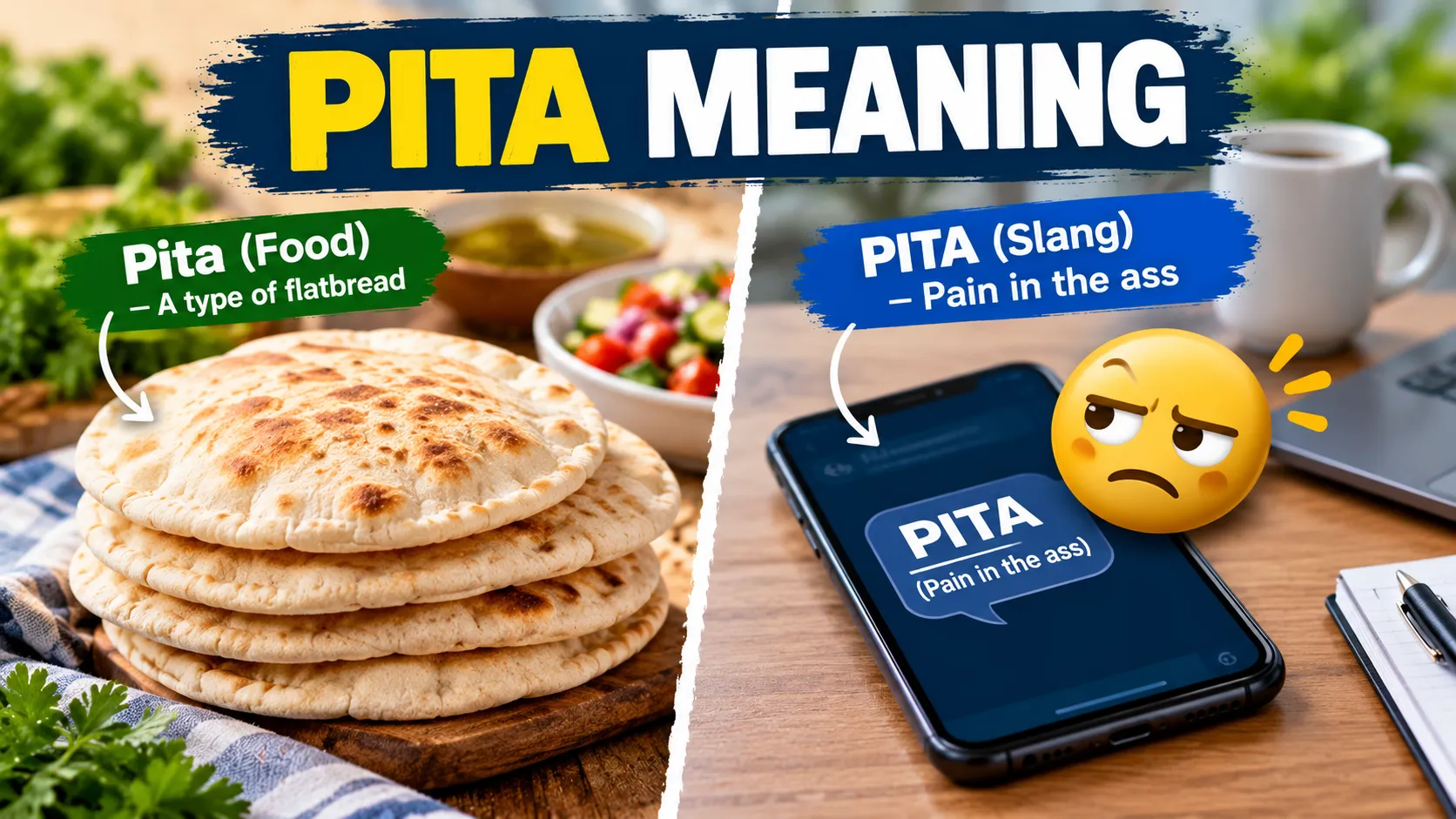
Pita has two common meanings in everyday English. It refers to a type of flatbread in food-related conversations, but PITA can also stand for “pain in the ass” in informal slang.
The surrounding words usually reveal the intended meaning.
For example:
- “I ordered a chicken pita for lunch.” Here, pita means bread.
- “Completing this paperwork is a PITA.” Here, PITA means something frustrating or inconvenient.
The food meaning is neutral, while the slang meaning is informal and potentially rude. Recognizing the difference helps you understand the word without confusing a meal with a complaint.
2. What Does PITA Stand For in Slang?
PITA stands for “pain in the ass.” English speakers use this informal abbreviation to describe a person, task, object, or situation that causes annoyance or frustration.
The abbreviation represents the following words:
- P: Pain
- I: In
- T: The
- A: Ass
For example, someone might say, “Installing this application is a PITA.” They mean that installing it is unnecessarily difficult or annoying.
Friends may also use the expression playfully when teasing one another. However, the abbreviation still carries the tone of the original phrase, so it may not be appropriate in formal conversations.
If you want to express frustration without sounding rude, alternatives such as “a hassle,” “a nuisance,” or “frustrating” can communicate the same general idea.
3. Pita Meaning in Text Messages
In text messages, PITA usually means “pain in the ass” when someone discusses an annoying experience, difficult task, or frustrating situation.
People use it in casual chats, online discussions, gaming conversations, and social media posts. It allows them to express irritation quickly without typing the full phrase.
Here are some examples:
- “This assignment is such a PITA.” The assignment is frustrating.
- “Getting my account back was a PITA.” Recovering the account was difficult.
- “Traffic is a PITA today.” The traffic is annoying.
- “You’re being a PITA 😂.” The sender may be teasing someone playfully.
- “This app keeps crashing. Total PITA!” The app is causing repeated problems.
Context is important. If someone mentions sandwiches, lunch, or cooking, pita probably refers to bread. If the conversation involves complaints or difficulties, PITA is more likely to mean “pain in the ass.”
4. Pita Bread Meaning Explained
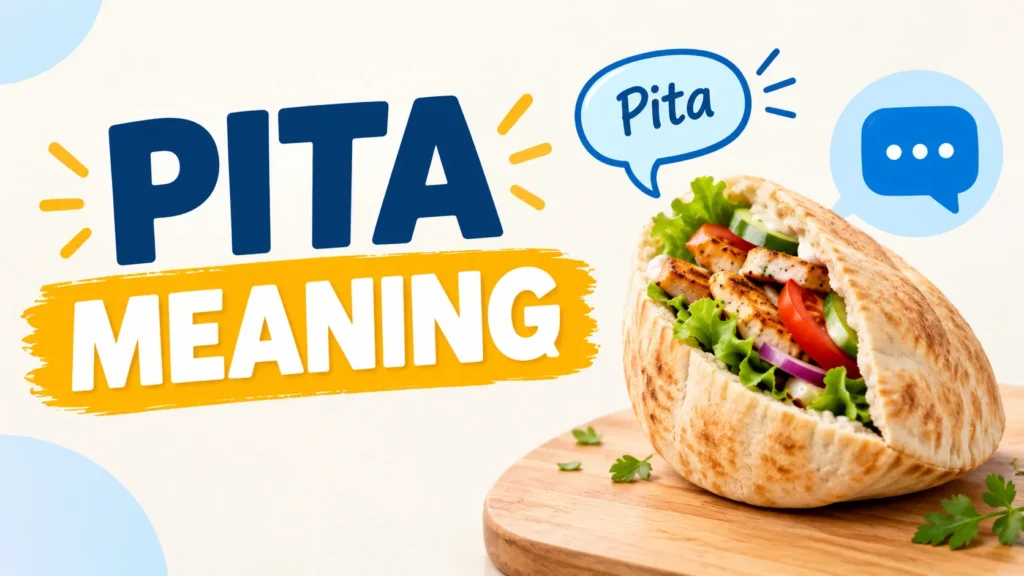
Pita bread is a soft, round or oval flatbread commonly associated with Middle Eastern and Mediterranean cuisines. During baking, it can develop a hollow pocket that people fill with meat, vegetables, sauces, or other ingredients.
Pita is popular because it works well with many different foods and can be served as a sandwich, side dish, or snack.
Common examples include:
- Chicken pita: Flatbread filled with chicken and other ingredients.
- Falafel pita: Bread filled with falafel, vegetables, and sauces.
- Pita pocket: The hollow space inside the bread used for fillings.
- Pita chips: Pieces of pita bread baked or toasted until crisp.
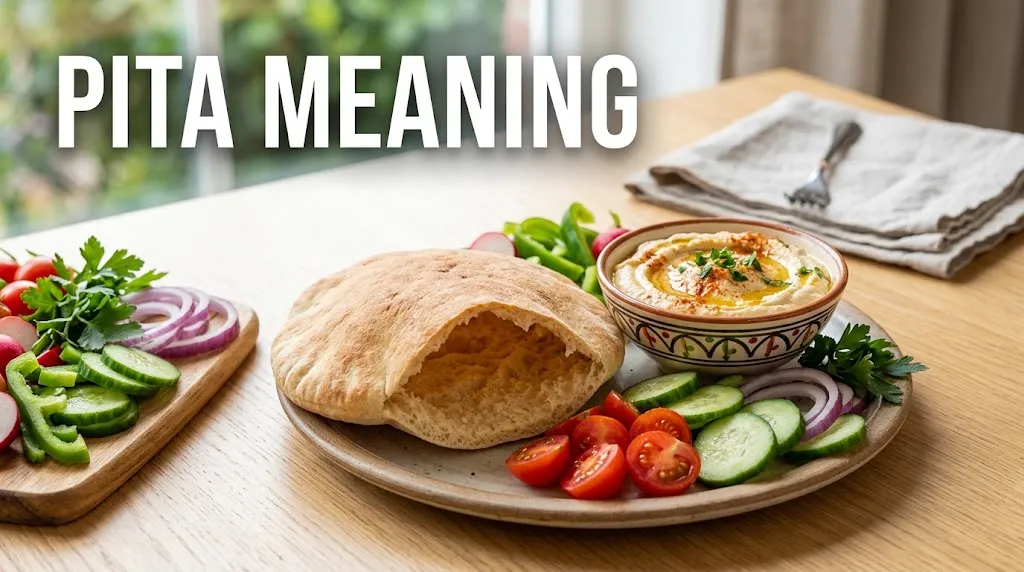
- Pita with hummus: Bread served with a creamy chickpea dip.
For example, “We bought fresh pita bread for dinner” clearly refers to food rather than slang.
The spelling also varies by region. American English generally uses “pita,” while British English commonly uses “pitta.”
5. Pita Meaning in Different Contexts
The same spelling can have different meanings depending on the situation. Looking at the surrounding words is usually the simplest way to understand what someone intends.
In casual conversations
“That new phone setup is a PITA.”
The speaker finds the setup frustrating or unnecessarily complicated.
In text messages
“This homework is a PITA.”
The sender is complaining about a difficult or annoying assignment.
On social media
“Finding parking downtown was a PITA.”
The person is expressing frustration about finding a parking space.
In food discussions
“Let’s make pita sandwiches tonight.”
Here, pita refers to the flatbread used for the sandwiches.
In workplace conversations
“Updating all these files is a PITA.”
A colleague may use this expression informally to describe a frustrating task. However, a more professional version would be, “Updating all these files is time-consuming.”
These examples show why context matters more than capitalization alone.
6. Examples of PITA in Sentences
Learning through examples makes unfamiliar expressions easier to understand. The following sentences demonstrate how people use PITA in everyday English.
- “Setting up the new printer was a PITA.”
- “The paperwork turned out to be a real PITA.”
- “Traffic made the entire journey a PITA.”
- “My phone keeps freezing, and it’s becoming a PITA.”
- “Canceling that subscription was a PITA.”
- “You can be a PITA sometimes, but you’re still my friend.”
- “Finding an affordable apartment was a PITA.”
- “The confusing instructions made the project a PITA.”
- “Waiting for customer support was a PITA.”
- “Installing the latest update has been a PITA.”
- “Organizing all these documents is a PITA.”
- “The broken elevator has become a daily PITA.”
- “Getting everyone to agree on a meeting time is a PITA.”
- “My old laptop makes simple tasks a PITA.”
- “The long checkout process was a complete PITA.”
In each example, PITA expresses annoyance, inconvenience, or frustration.
Here are five additional examples using the food meaning:
- “She filled the pita with grilled vegetables.”
- “We served warm pita with hummus.”
- “He ordered a chicken pita for lunch.”
- “The recipe calls for two pieces of pita bread.”
- “They prepared homemade pita pockets for dinner.”
These examples make the difference between the slang abbreviation and the food meaning easy to recognize.
7. Is PITA a Bad Word?
PITA can be considered mildly vulgar because it abbreviates the phrase “pain in the ass.” Although many people use it casually, its tone depends on the speaker, audience, and situation.
Among close friends, calling someone a PITA may be playful teasing. During an argument, the same expression can sound insulting.
Consider these situations:
- With friends: “You’re such a PITA 😂.” This may be friendly teasing.
- About a task: “This form is a PITA.” This expresses frustration.
- In a formal email: “Your request is a PITA.” This may sound disrespectful.
The expression is not necessarily intended to hurt someone, but the recipient may interpret it differently.
When speaking with teachers, employers, customers, or people you do not know well, choose more neutral wording. “This process is frustrating” communicates the problem without the same potentially offensive tone.
8. How to Reply When Someone Calls You a PITA
Your response depends on whether the person is joking, expressing frustration, or genuinely criticizing your behavior.
Here are several ways to respond:
- Playful: “Only on special occasions!”
- Funny: “At least I’m keeping life interesting.”
- Friendly: “Haha, I’ll try to behave.”
- Confident: “I prefer the term unforgettable.”
- Understanding: “Sorry, I didn’t mean to make things difficult.”
- Curious: “What did I do that bothered you?”
- Calm: “Can you explain what upset you?”
- Direct: “I’d appreciate it if you spoke to me respectfully.”
If a close friend uses PITA jokingly, a humorous reply may be enough. If the comment hurts your feelings, you do not have to laugh it off. Ask what they mean and explain how you feel.
A good response addresses the situation without automatically turning a small disagreement into a bigger argument.
9. Polite Alternatives to PITA
You can Express Frustration without using language that might offend someone. Several alternatives communicate a similar idea while keeping your tone more neutral.
| Alternative | Meaning |
| A hassle | Something inconvenient or troublesome |
| Annoying | Something that causes irritation |
| A nuisance | Someone or something that causes trouble |
| A headache | A frustrating problem |
| A pain in the neck | A less vulgar expression for annoyance |
| Troublesome | Difficult to manage |
| Frustrating | Something that causes frustration |
| Time-consuming | Something that takes a lot of time |
| Inconvenient | Something that creates difficulty |
| Difficult to deal with | A neutral description of a challenging situation |
For example, instead of saying, “This application process is a PITA,” you could say, “This application process is quite frustrating.”
For professional communication, words such as “inconvenient,” “challenging,” and “time-consuming” are often better choices.
The best alternative depends on what you want to describe. Use “a hassle” for inconvenience, “frustrating” for irritation, and “time-consuming” when a task takes longer than expected.
10. Pita Pronunciation and Spelling
English pronunciation varies by region and individual speaker.
For the bread, American English commonly uses a pronunciation resembling “PEE-tuh,” while British English often uses “PIT-uh.” Both pronunciations are widely recognized.
The two common spellings are:
- Pita: The usual American English spelling.
- Pitta: A common British English spelling.
When referring to the slang abbreviation, people often write PITA in capital letters to distinguish it from the food. However, informal writers sometimes use lowercase letters.
Capitalization offers a useful clue, but it is not a strict rule. The meaning of the full sentence provides a more reliable guide.
For example, “I bought pita bread” refers to food, while “This task is a PITA” expresses frustration.
11. PITA vs. Pita: What’s the Difference?
Pita and PITA have the same letters, but they can communicate very different meanings.
| Feature | Pita | PITA |
| Common meaning | A type of flatbread | Pain in the ass |
| Main context | Food and cooking | Slang and casual communication |
| Example | “I bought pita bread.” | “This task is a PITA.” |
| Tone | Neutral | Informal and potentially rude |
| Common use | Meals and recipes | Complaints or teasing |
The most important difference is context. A conversation about sandwiches points toward the bread, while a complaint about a frustrating task usually points toward the slang abbreviation.
Writers often capitalize PITA when using the abbreviation, but not everyone follows this convention consistently.
Related To Another Article: https://genzwishes.com/bishop-meaning/
12. Common Misunderstandings About Pita
Because both meanings share the same spelling, readers can occasionally misunderstand the word. These distinctions help prevent confusion.
Misunderstanding 1: Pita always means slang.
Pita is also the standard name for a type of flatbread. Food-related sentences usually make this meaning clear.
Misunderstanding 2: PITA is completely polite because it is abbreviated.
The abbreviation still represents a mildly vulgar phrase. It may sound inappropriate in professional or formal communication.
Misunderstanding 3: Capitalization always determines the meaning.
Capital letters can signal slang, but writers do not always use them consistently. Read the entire sentence to understand the intended meaning.
Misunderstanding 4: Calling someone a PITA always means serious anger.
Not necessarily. Friends may use the expression humorously, although it can also communicate genuine irritation.
Misunderstanding 5: Pita and pitta always have different meanings.
Both spellings can refer to the same type of bread. The difference mainly reflects regional spelling preferences.
Misunderstanding 6: PITA is suitable for every workplace conversation.
Even when colleagues understand the abbreviation, it can sound unprofessional. Neutral language is generally safer in formal emails and customer communication.
People Also Ask
A: Pita usually means a type of soft, round flatbread. In informal slang, PITA stands for “pain in the ass,” describing something or someone annoying or frustrating.
A: PITA usually means “pain in the ass” in casual text messages. For example, “This homework is a PITA” means the homework is frustrating.
A: PITA stands for “pain in the ass.” It is an informal abbreviation used in casual English conversations and online messages.
A: PITA can sound mildly vulgar because of the phrase it represents. It is generally more suitable for casual conversations than formal communication.
A: Yes. Pita is a soft, round or oval flatbread commonly associated with Middle Eastern and Mediterranean cuisines. It can form a pocket for fillings such as chicken, vegetables, or falafel.
Conclusion
The Meaning of Pita depends on the context. In food-related conversations, pita refers to a soft flatbread commonly used for sandwiches and other dishes. In informal texting and slang, PITA stands for “pain in the ass,” an expression for someone or something annoying, troublesome, or frustrating.
Remember that the abbreviation can sound rude, so it is best reserved for casual communication. When you encounter the word, check the surrounding sentence to determine which meaning the writer intends.
If this guide helped you understand the expression, save it for future reference and explore more English word meanings and texting slang guides on GenzWishes.