Introduction
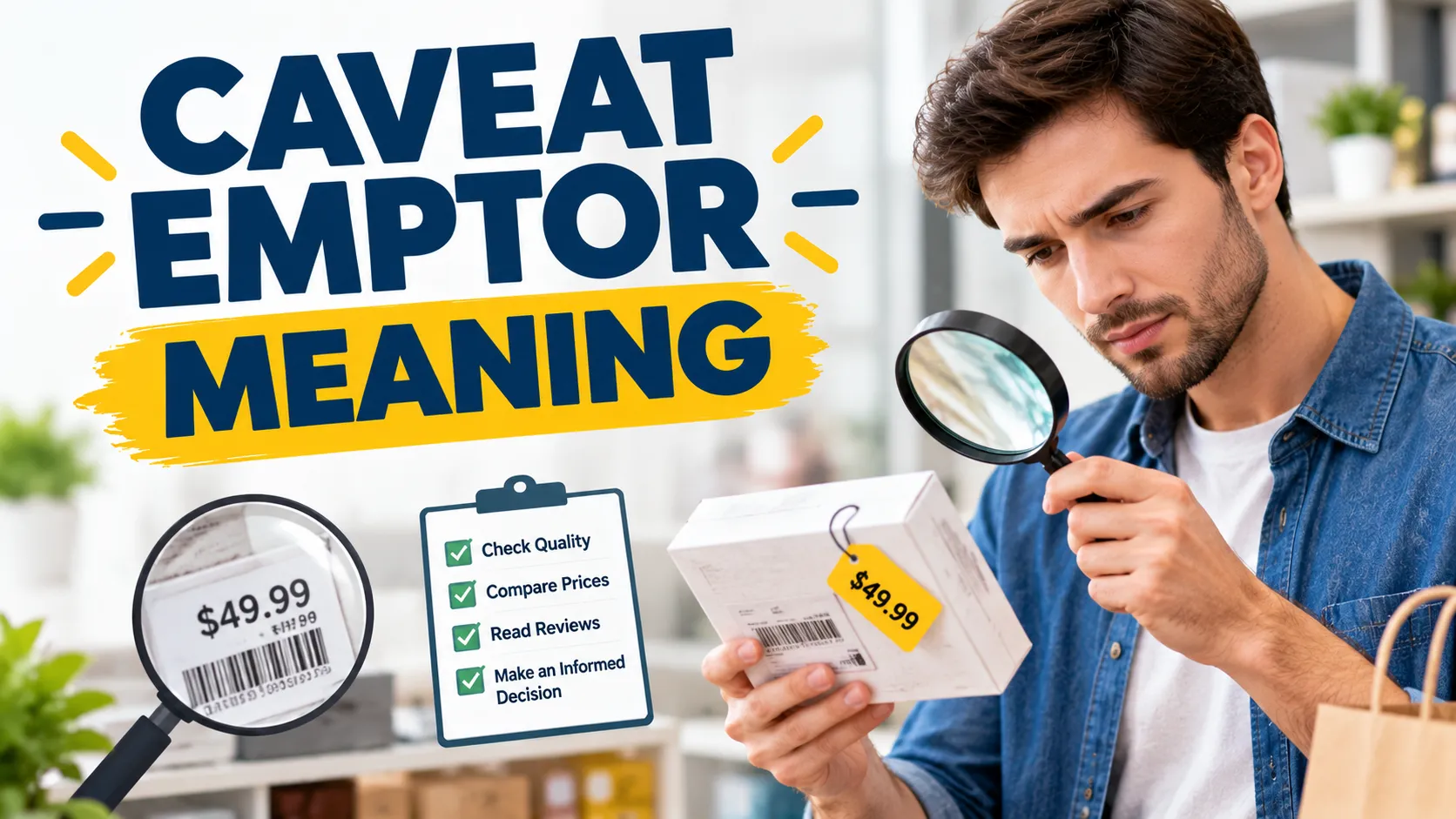
Caveat Emptor is a Latin phrase that means “let the buyer beware.” It reminds buyers to check a product, understand its condition, and review the terms of a purchase before spending their money. The phrase is commonly used in business, shopping, real estate, and legal discussions. However, it does not mean that sellers are always free from responsibility when something goes wrong.
Understanding caveat emptor can help you make better purchasing decisions, recognize important English expressions, and understand why checking the details before buying something matters.
1. What Does Caveat Emptor Mean?
Caveat emptor means “let the buyer beware.” It is a Latin expression that encourages buyers to examine what they intend to purchase and understand the possible risks before completing a transaction.
For example, imagine buying a used laptop without checking its battery, keyboard, or screen. If you discover a serious problem after the purchase, you may regret not inspecting the device beforehand. This illustrates the basic idea behind caveat emptor.
The expression frequently appears in discussions about consumer behavior, commercial transactions, secondhand goods, and property purchases.
However, caveat emptor does not automatically remove every seller obligation. Warranties, consumer protection laws, contractual promises, and rules against fraud may still protect buyers, depending on the circumstances and applicable law.
2. Caveat Emptor Meaning in Simple English
In simple English, caveat emptor means “be careful before you buy.”
It reminds people to investigate a product instead of relying entirely on a seller’s claims. Buyers should check the condition, compare prices, read purchase terms, and ask questions whenever something is unclear.
Here are a few everyday examples:
- Buying a used phone? Check its battery, screen, and other functions.
- Purchasing a secondhand car? Arrange an inspection and review its history.
- Shopping online? Read product descriptions, seller reviews, and return policies.
- Buying a house? Investigate its condition and review the relevant documents.
- Purchasing a collectible? Verify its authenticity before paying a high price.
The main lesson is simple: an informed buyer can make better decisions and reduce avoidable risks.
Caveat emptor does not suggest that every seller is dishonest. Instead, it encourages buyers to take reasonable precautions before committing their money.
3. Origin and History of Caveat Emptor
Caveat emptor comes from Latin and has a long history in English vocabulary and commercial law. The expression became established in English usage centuries ago and is still used in modern discussions about buying and selling.
The phrase contains two important words:
- Caveat: A Latin verb form associated with being careful, taking precautions, or being on guard.
- Emptor: A Latin noun meaning buyer or purchaser.
Together, these words form the expression “let the buyer beware.”
Historically, caveat emptor became associated with legal principles that placed responsibility on buyers to examine goods or property before completing certain transactions. Discovering a defect after a purchase did not necessarily mean that a buyer could automatically demand a refund or compensation.
Modern laws have changed the way the principle operates in many jurisdictions. Consumer protection rules, product warranties, disclosure requirements, and contractual obligations can limit its application.
Today, the phrase remains useful because it captures an important idea: buyers should investigate purchases, while sellers must still follow the laws and obligations that apply to them.
4. How to Pronounce Caveat Emptor
Caveat emptor is commonly pronounced approximately as KAV-ee-at EMP-tor.
English pronunciation can vary by region, but breaking the expression into two parts makes it easier to say.
- Caveat: KAV-ee-at
- Emptor: EMP-tor
The phrase is often encountered in formal writing, legal commentary, business reports, and newspaper articles. You may also hear it during conversations about expensive purchases or risky deals.
For example, someone might say, “Caveat emptor—check the car before you buy it.”
If you prefer a simpler expression in everyday conversation, “buyer beware” communicates essentially the same general warning.
5. Caveat Emptor Examples in Everyday Life
Real-world examples make the meaning of caveat emptor easier to understand. The following situations show how the principle can apply to different purchases.
Example 1: Buying a used car
A buyer purchases a secondhand car without checking its mechanical condition. A few days later, the engine develops a serious problem. The situation illustrates why an inspection can be valuable before purchasing a vehicle.
Example 2: Shopping online
A customer orders an expensive electronic device from an unfamiliar website without checking the seller’s reputation. The product arrives in poor condition. Researching the seller and reviewing the return policy beforehand could have reduced the risk.
Example 3: Purchasing a house
A prospective homeowner overlooks signs of water damage during a property inspection. After moving in, the owner discovers costly repairs. This example demonstrates the importance of investigating a property’s condition.
Example 4: Buying a collectible watch
A collector purchases a watch advertised as authentic without obtaining verification. Later, an expert identifies it as a replica. Independent authentication could have helped the buyer make a more informed decision.
Example 5: Buying secondhand furniture
A person purchases a used table without checking its legs or surface. At home, the buyer discovers that the table is unstable. A quick inspection before payment might have revealed the problem.
Example 6: Hiring a service provider
A customer hires a contractor without reviewing the agreement, previous work, or payment conditions. The finished work does not meet expectations. Checking references and clarifying the contract beforehand could have helped prevent the misunderstanding.
These situations illustrate the practical message of caveat emptor. However, whether a buyer has legal remedies depends on the facts, contractual terms, and applicable law.
6. Caveat Emptor in a Sentence
Learning how to use caveat emptor in a sentence can help you understand the phrase and use it naturally in English.
Here are 15 original examples:
- “Remember Caveat Emptor when purchasing a used laptop from an unfamiliar seller.”
- “The buyer followed caveat emptor by arranging a professional car inspection.”
- “Caveat emptor reminds consumers to check product details before making a purchase.”
- “The expensive watch turned out to be a replica, making the deal a lesson in caveat emptor.”
- “Before signing the property agreement, the buyer researched the house carefully.”
- “The journalist used caveat emptor to explain the risks of buying secondhand goods.”
- “Caveat emptor is an important expression in discussions about buyer responsibility.”
- “She compared the warranties and return policies before completing the purchase.”
- “The online advertisement looked convincing, but caveat emptor encouraged him to verify the claims.”
- “The collector researched the artwork’s authenticity before paying for it.”
- “Caveat emptor is often discussed in connection with certain property transactions.”
- “The customer checked the product’s condition instead of relying solely on the seller’s description.”
- “The phrase caveat emptor emphasizes caution when making purchasing decisions.”
- “He learned the meaning of caveat emptor after researching an unfamiliar legal expression.”
- “Caveat emptor encourages buyers to investigate a deal before committing their money.”
In formal writing, caveat emptor can help explain buyer responsibility. In casual conversation, expressions such as “buyer beware” and “check before you buy” often sound more natural.
7. Caveat Emptor in Law and Real Estate
In legal discussions, caveat emptor refers to a principle that can place responsibility on buyers to inspect goods or property and identify certain problems before completing a transaction.
Real estate is a common context for this expression. A person purchasing a house may need to arrange inspections, review property records, and investigate potential defects.
For example, a buyer considering an older property might examine the roof, plumbing, electrical systems, drainage, and structural condition before signing a purchase agreement.
However, caveat emptor does not apply identically to every property transaction. Local laws may require sellers to disclose certain defects or provide specific information. Contractual promises, fraud, concealment, warranties, and statutory protections can also affect a buyer’s rights.
The legal position varies between countries, states, and regions. Therefore, anyone involved in a property dispute should consult a qualified local professional rather than assuming that caveat emptor settles the matter.
The practical takeaway is that buyers should investigate property carefully while understanding that sellers may still have legal responsibilities.
8. Does Caveat Emptor Mean the Seller Has No Responsibility?
No. Caveat emptor does not mean that sellers have no responsibility for defective products, misleading claims, or other problems.
The principle encourages buyers to investigate a purchase, but sellers may still have obligations under applicable law and the terms of their agreement.
For example, consider two different situations.
In the first situation, a buyer purchases a used chair with an obvious scratch after inspecting it. The buyer knew about the condition before paying.
In the second situation, a seller deliberately conceals a serious defect and falsely claims that the chair is in perfect condition. That conduct may raise different legal issues.
The difference matters because buyer responsibility and seller responsibility can exist at the same time.
Depending on the jurisdiction and transaction, relevant protections may include:
- Consumer protection legislation
- Express or implied warranties
- Contractual promises
- Required disclosures
- Rules against fraud and misleading representations
- Remedies for qualifying defective goods
Caveat emptor is therefore a useful warning, not a universal rule that eliminates every buyer protection.
9. Caveat Emptor vs. Caveat Venditor
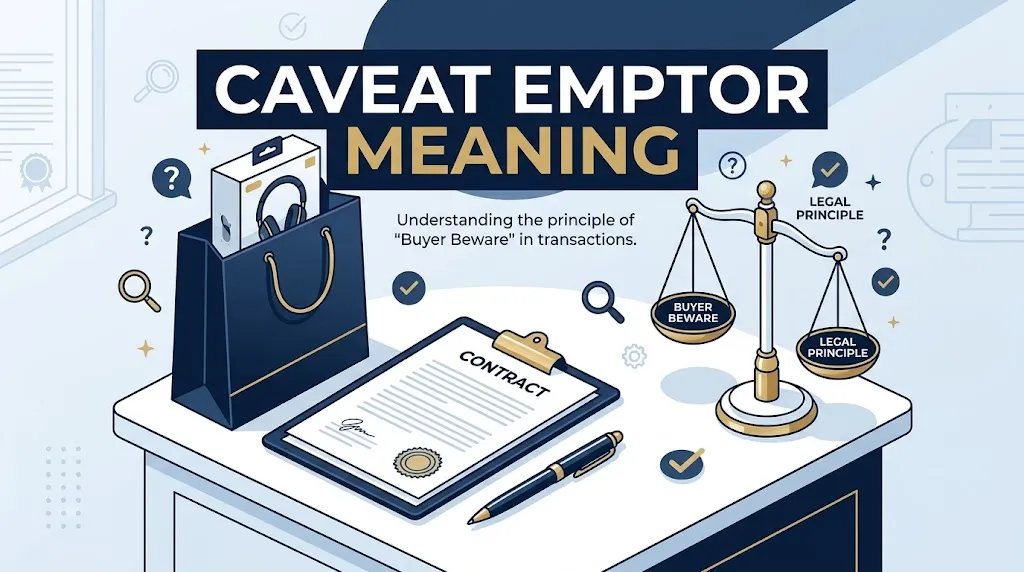
Caveat emptor and caveat venditor are related Latin expressions, but they emphasize different sides of a transaction.
| Feature | Caveat Emptor | Caveat Venditor |
| Meaning | Let the buyer beware | Let the seller beware |
| Main focus | Buyer caution | Seller responsibility |
| Basic idea | Buyers should investigate purchases | Sellers should take care to meet their obligations |
| Common context | Inspections and purchase risks | Product quality and consumer protection |
| Important qualification | Does not remove every seller duty | Does not make sellers automatically liable for every problem |
Caveat venditor is commonly described as the opposite of caveat emptor. It emphasizes the need for sellers to act responsibly and comply with applicable obligations.
For example, caveat emptor encourages a customer to inspect a used car before buying it. Caveat venditor emphasizes the seller’s responsibility to comply with relevant laws and contractual promises.
Modern transactions can involve both principles. Buyers should investigate purchases, and sellers should provide accurate information and fulfill their legal obligations.
Related To Another Article: https://genzwishes.com/received-meaning-definition-texting-examples/
10. Caveat Emptor vs. Sold As Is
Caveat emptor and “sold as is” are related expressions, but they are not interchangeable.
Caveat emptor is a general principle that encourages buyers to beware of potential problems and investigate purchases before committing their money.
Sold as is is a phrase used in advertisements or agreements to describe the stated condition or terms under which an item is sold. Its legal effect depends on the agreement and applicable law.
For example, a seller might advertise a used desk as “sold as is” because it has scratches and other visible signs of use. A buyer should examine the desk and understand the stated sale terms before purchasing it.
However, an “as is” statement does not necessarily override every statutory protection or excuse fraud. Some jurisdictions restrict how sellers can use these terms, particularly in certain consumer transactions.
The key difference is that caveat emptor describes a general principle, while “sold as is” describes a stated sale condition or contractual term.
11. Synonyms and Related Expressions
Several English expressions communicate ideas related to caveat emptor. Understanding their differences can Improve Your Vocabulary and help you use the correct phrase in different contexts.
Buyer beware: The closest everyday equivalent. It warns purchasers to act carefully.
Let the buyer beware: The direct English translation of caveat emptor.
Exercise caution: A general expression advising someone to take care before making a decision.
Due diligence: The process of investigating relevant information before making a decision, especially in business, investment, and property transactions.
Sold as is: A term describing the stated condition or terms of a sale, subject to applicable law.
Caveat venditor: A Latin expression meaning “let the seller beware.”
Look before you leap: An English idiom advising people to consider the consequences before taking action.
Although these expressions share related ideas, they are not identical. Due diligence describes an investigative process, while caveat emptor communicates a warning about buyer responsibility.
For example, you might say, “I performed due diligence before buying the business,” or simply, “Buyer beware when purchasing electronics from an unfamiliar seller.”
12. Why Caveat Emptor Still Matters Today
Caveat emptor remains relevant because buyers often make decisions without knowing every detail about a product, seller, or transaction.
Online marketplaces, secondhand sales, property purchases, and expensive services can all involve risks. Product descriptions may omit important information, and an attractive price does not always indicate good value.
The principle encourages practical habits that can help buyers avoid preventable mistakes.
For example, someone buying a smartphone online can check the seller’s reputation, compare specifications, review the return policy, and confirm whether the phone is new or refurbished.
A person buying a used vehicle can arrange a mechanical inspection, examine service records, and verify ownership documents.
Similarly, a prospective homeowner can investigate structural issues and review the relevant property documents.
These precautions do not guarantee a perfect purchase. They help buyers make informed decisions while preserving any legal rights that may apply.
Caveat emptor also remains useful as a vocabulary expression because it summarizes a complicated idea in two Latin words: investigate before you buy.
13. How to Protect Yourself as a Buyer
You can apply the practical lesson of caveat emptor by following a few straightforward steps before making a purchase.
1. Research the seller. Check the seller’s reputation, business details, customer reviews, and any warning signs.
2. Inspect the product. Examine its condition, specifications, accessories, and functionality whenever possible.
3. Read the terms. Review warranties, return policies, payment conditions, and any stated restrictions.
4. Verify important claims. Ask for supporting documents or independent assessments when purchasing expensive items such as cars, property, or collectibles.
5. Compare alternatives. Compare prices, features, and seller terms before choosing a product.
6. Keep records. Save receipts, written promises, agreements, advertisements, and relevant communications.
7. Understand your rights. Research the consumer protection rules that apply to your location and transaction.
8. Avoid unnecessary pressure. Be cautious when a seller demands immediate payment or discourages reasonable questions.
9. Use secure payment methods. Choose suitable payment options that provide appropriate records and protections.
10. Seek professional advice when needed. For high-value purchases or complicated agreements, consider consulting a qualified professional.
The goal is not to distrust every seller. It is to make informed decisions, recognize potential risks, and understand your options before completing a purchase.
People Also Ask
A: Caveat emptor means “let the buyer beware.” It is a Latin expression that encourages buyers to investigate purchases before committing their money.
A: In simple English, caveat emptor means “be careful before you buy.” It reminds people to check a product’s condition, review purchase terms, and investigate important details.
A: Buying a used car without arranging an inspection is a simple example. The buyer might discover mechanical problems later that an inspection could have identified.
A: Yes. Caveat emptor is a legal doctrine associated with buyer responsibility in certain transactions. Its application depends on the relevant law, contract, and circumstances.
A: Caveat venditor, meaning “let the seller beware,” is commonly described as the opposite of caveat emptor. It emphasizes seller responsibility.
Conclusion
Caveat Emptor means “let the buyer beware.” This Latin expression reminds people to inspect purchases, investigate important details, and understand potential risks before spending their money.
The principle remains relevant when buying used goods, shopping online, evaluating property, or considering an unfamiliar offer. However, it does not mean that sellers are always free from responsibility. Consumer protection laws, warranties, contractual obligations, and rules against fraud may affect a buyer’s rights.
Understanding caveat emptor helps you make informed purchasing decisions and recognize an important expression used in English, business, and law.
If you found this explanation useful, save it for future reference and explore more vocabulary guides on GenzWishes to expand your English knowledge.
Disclaimer: This article provides general educational information about an English expression and its common legal usage. It is not legal advice. Laws and consumer rights vary by jurisdiction.