Introduction
Have you ever seen a cat hiding under a car or running away whenever someone approaches? You may have wondered whether it was a stray cat or a feral cat. Understanding the difference can help you use the right words and respond appropriately.
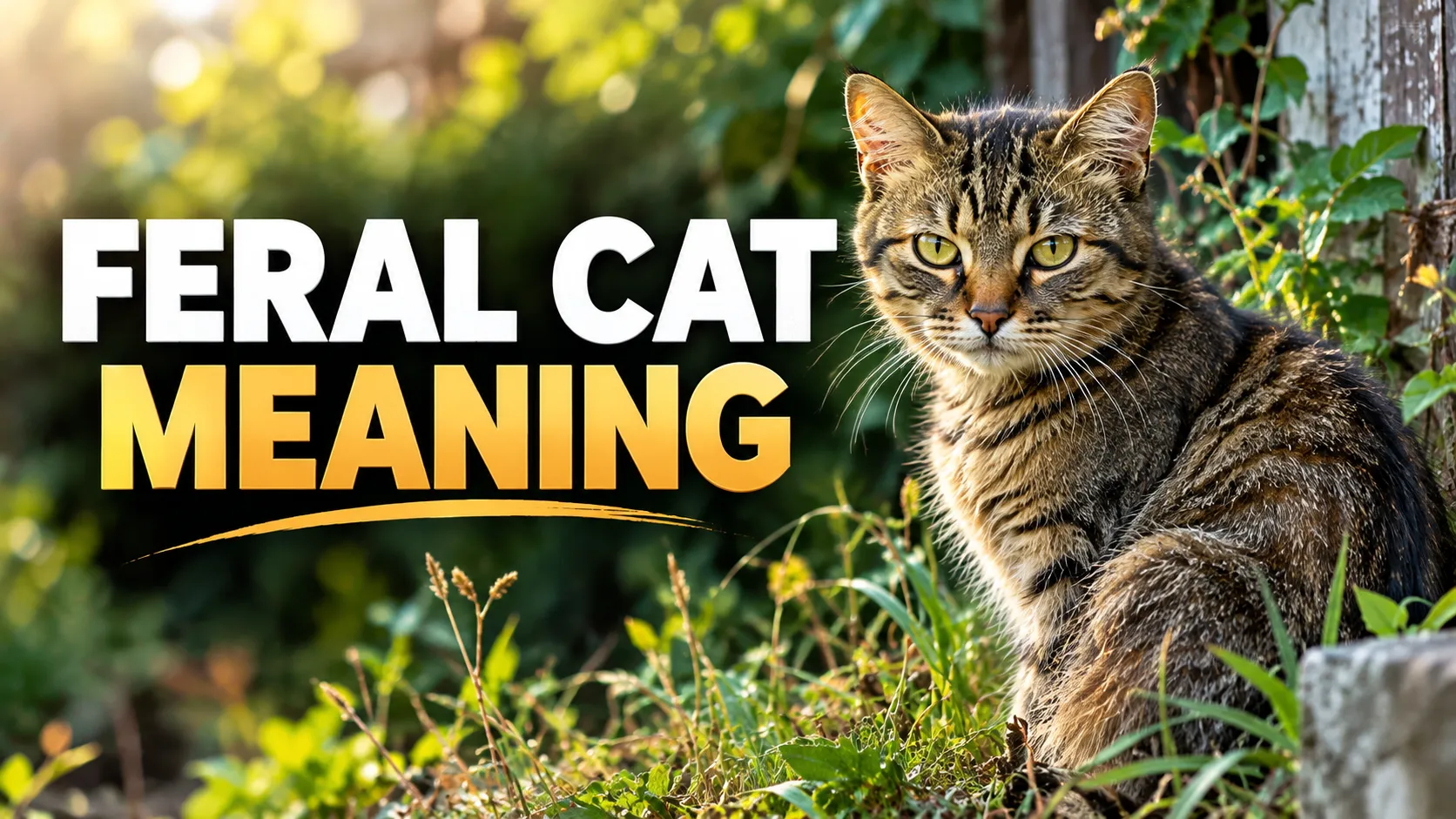
Feral Cat Meaning: A feral cat is a domestic cat that lives freely outdoors and has little or no socialization with humans. It generally avoids close contact with people and may become fearful or defensive when approached. However, fear alone does not prove that a cat is feral.
In this guide, you will learn the meaning of a feral cat in simple English, its pronunciation, common signs, example sentences, and the differences between feral, stray, and domestic cats.
1. What Is the Meaning of a Feral Cat?
A feral cat is a domestic cat that lives in a free-roaming or wild state and is not accustomed to close human contact. It may hide from people, run away when approached, or resist being handled.
In simple words, a feral cat is a cat that generally lives outdoors and is not socialized to humans.
For example, imagine a cat living near an abandoned building. Whenever people approach, it hides and refuses to come close. If this behavior reflects a lack of socialization rather than temporary fear, the cat may be described as feral.
Feral cats are not a separate species. They belong to the same domestic cat species as ordinary pet cats, Felis catus.
2. Feral Cat Meaning in Simple English
The easiest way to understand the phrase is to examine its two words.
- Feral: Living in a wild state despite belonging to a type of animal that humans have domesticated.
- Cat: A small feline commonly kept as a pet.
Together, the words describe a domestic cat that lives freely and generally avoids close human interaction.
Simple definition: A feral cat is a domestic cat that lives outdoors and is not accustomed to being handled by people.
Think of a cat that sleeps in a quiet corner of a farm and disappears whenever someone comes near. If it has little experience with human contact, it may be feral.
The Cambridge Dictionary uses “feral” for animals living in a wild state despite coming from a domesticated type of animal.
3. Feral Cat Pronunciation
The phrase “feral cat” is pronounced approximately as FAIR-uhl KAT in common American English.
- Feral: FAIR-uhl
- Cat: KAT
- Full phrase: FAIR-uhl KAT
The exact vowel sound in “feral” can vary slightly between English accents. The Cambridge Dictionary provides the pronunciation /ˈfer.əl/.
Example sentence: “A feral cat was hiding behind the garden shed.”
To practice, say the phrase slowly first, then use it in a complete sentence. This makes the pronunciation easier to remember.
4. Feral Cat Meaning With Example Sentences
Example sentences show how people use the phrase in everyday English.
- A feral cat lives behind the old warehouse.
- The frightened feral cat ran away when someone approached.
- Volunteers provide food and water for the local cat colony.
- The animal shelter assessed the cat before deciding how to help it.
- A feral kitten may become comfortable around people with appropriate socialization.
- The farmer noticed a feral cat near the barn.
- The cat rescue organization arranged veterinary care for an injured outdoor cat.
- A feral cat may hide rather than approach unfamiliar people.
- The neighborhood has a group of free-roaming cats.
- The veterinarian explained the difference between a feral cat and a socialized stray.
These examples show that the term describes a cat’s relationship with people and its living situation, not its breed, color, or size.
5. Feral Cat vs. Stray Cat: Key Differences
Feral cats and stray cats can both live outdoors, but their experiences with humans may be different.
| Feature | Feral Cat | Stray Cat |
| Human socialization | Usually unsocialized | May be socialized |
| Response to people | Often avoids people | May approach people |
| Physical contact | Usually resists handling | May tolerate or welcome handling |
| Previous home life | May have had little human contact | May have been lost or abandoned |
| Becoming a pet | May require careful professional assessment | May readjust to home life more readily |
These are general patterns rather than strict rules. A lost pet may be extremely frightened, and a feral cat may gradually become comfortable with a familiar caregiver.
The most important distinction is usually the cat’s level of socialization, not simply whether it lives outdoors.
If you find a friendly cat outside, do not automatically assume it is feral. It could be a lost or abandoned pet.
6. Feral Cat vs. Domestic Cat
A Domestic Cat belongs to the species Felis catus. The term “feral” describes a domestic cat living freely without close socialization with humans.
A typical pet cat may enjoy sitting beside its owner, playing with toys, and being touched. A feral cat may prefer hiding places and avoid physical contact.
Here is the essential difference:
- Domestic cat: A member of the domesticated cat species; it may be a pet or live outdoors.
- Feral cat: A domestic cat that is not socialized to close human contact.
- Socialized pet cat: A cat accustomed to living with and interacting with people.
A cat’s coat color does not determine whether it is feral. Black, white, ginger, and tabby cats can all display feral behavior.
7. Common Signs and Behaviors of a Feral Cat
A feral cat may show several behaviors that suggest it is not comfortable around people. However, no single behavior proves that the cat is feral.
Common signs include:
- Hiding when people approach.
- Running away from unfamiliar people.
- Avoiding touch or physical contact.
- Hissing or growling when cornered.
- Crouching or remaining still when frightened.
- Seeking quiet hiding places.
- Living independently or among other outdoor cats.
- Becoming active when the surroundings are quiet.
Some cats may also appear fearful in unfamiliar indoor environments.
Remember that a frightened, injured, or recently abandoned cat can display similar behaviors. Observe the cat over time and seek advice from an experienced rescue organization before making assumptions.
8. What Is a Feral Cat Colony?
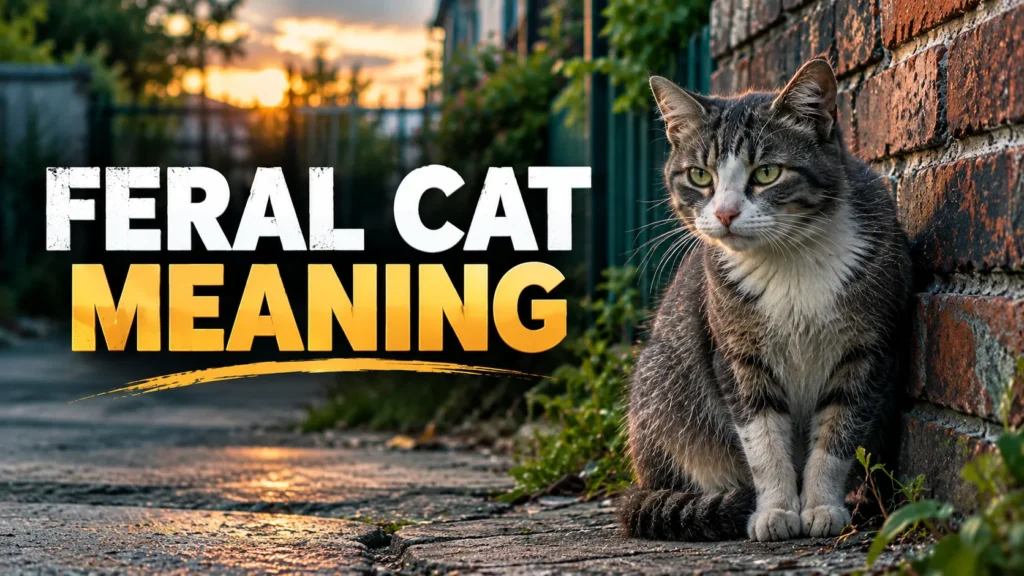
A feral cat colony is a group of free-roaming cats that share an outdoor area or gather where food and shelter are available.
Colonies may be found near farms, gardens, industrial buildings, parks, and residential neighborhoods. Some receive regular care from volunteers who provide food, water, shelter, and veterinary assistance.
A colony may contain adult cats, kittens, feral cats, and socialized strays. Therefore, not every cat living in a colony is necessarily feral.
Some animal welfare programs use trap-neuter-return, commonly called TNR. In suitable circumstances, trained people humanely capture cats so they can receive sterilization and veterinary care before being returned to their outdoor environment.
The goal and appropriate approach depend on the cats’ welfare, local regulations, and the circumstances of the colony.
9. Can a Feral Cat Become Friendly or Be Tamed?
Some feral cats become more comfortable around familiar people, but the outcome varies from one cat to another.
Age, temperament, previous experiences, health, and the amount of safe socialization can all influence the process. Young kittens often have a better chance of adapting to human contact than adult cats that have spent years avoiding people.
If you want to help a feral cat, follow these general steps:
- Observe the cat from a safe distance.
- Avoid chasing, cornering, or grabbing it.
- Provide appropriate food and water where permitted.
- Allow the cat to become familiar with your presence gradually.
- Contact an experienced cat rescue organization for advice.
Never force a frightened cat to accept touching. Some cats may eventually enjoy human company, while others may remain more comfortable living outdoors with suitable care.
10. Can You Keep a Feral Cat as a Pet?
Yes, some feral cats can adapt to indoor life, but not every cat is suited to being a household pet.
Young kittens may become socialized when they receive appropriate care and positive human contact. Adult cats with a long history of avoiding people may remain fearful despite patient efforts.
Before attempting to bring an outdoor cat into your home, consider its health, temperament, safety, and welfare. A veterinarian or experienced rescue organization can help you assess the situation.
If the cat seems friendly, check for identification and follow local lost-pet procedures before assuming it has no owner.
The best outcome is one that protects the cat’s welfare rather than assuming every outdoor cat should be handled or adopted.
11. What Does Feral Kitten Mean?
A feral kitten is a Young Domestic cat that has had little or no positive socialization with humans.
Some feral kittens are born outdoors to mothers that avoid people. Others grow up in outdoor colonies without regular human interaction.
Kittens may become comfortable around people more readily than adult feral cats, although success depends on their individual circumstances and appropriate handling.
If you find a kitten outdoors, do not immediately separate it from its mother. Observe the situation from a safe distance and contact a local rescue organization or veterinarian for guidance.
Very young kittens may need specialized feeding, warmth, and medical care. Their needs should be assessed before anyone attempts to relocate or handle them.
12. Are Feral Cats Dangerous?
Feral cats are not automatically dangerous simply because they avoid people. Many prefer to hide or escape rather than confront someone.
However, a frightened cat may scratch or bite if someone tries to grab it, corner it, or handle it against its will. Unfamiliar cats can also carry parasites or infectious diseases.
Follow these precautions:
- Keep a respectful distance.
- Do not try to pick up a frightened cat.
- Keep children away from attempts to catch or restrain it.
- Avoid direct contact with wounds or saliva.
- Seek prompt medical advice if a bite or scratch breaks the skin.
If a cat appears seriously injured or ill, contact a veterinarian or experienced animal rescue service. Professional assistance is safer than attempting to restrain an unfamiliar animal yourself.
13. How Can You Help a Feral Cat Humanely?
Helping a feral cat begins with understanding its behavior and respecting its needs.
Provide suitable food and water. Where permitted, offer clean water and appropriate cat food in a safe location. Keep the area clean to discourage pests.
Contact an animal rescue organization. Experienced rescuers can assess the cat and recommend suitable care.
Consider sterilization programs. Qualified local programs may provide TNR services for eligible outdoor cats.
Arrange veterinary care. Injured, sick, or severely underweight cats may require professional attention.
Respect its space. Avoid disturbing established hiding places or forcing the cat into physical contact.
Check local rules. Regulations regarding feeding, trapping, and managing outdoor cats vary by location.
Humane assistance does not always mean turning a feral cat into a pet. It means choosing an approach that reduces suffering and supports the animal’s welfare.
Related To Another Article: https://genzwishes.com/physiology-meaning/
14. Common Misconceptions About Feral Cats
Several misconceptions can lead people to misunderstand outdoor cats.
Myth 1: Every outdoor cat is feral.
Fact: Outdoor cats may be owned pets, lost pets, abandoned cats, socialized strays, or feral cats.
Myth 2: Every feral cat is aggressive.
Fact: Many avoid people and hide instead of confronting them. Defensive behavior often occurs when a cat feels threatened.
Myth 3: A feral cat can never trust a human.
Fact: Some feral cats become more comfortable around familiar caregivers, although their responses vary.
Myth 4: Every feral kitten must remain outdoors.
Fact: Some kittens can become socialized and adapt to indoor homes when they receive appropriate care.
Myth 5: Feral cats are a different species.
Fact: Feral cats are domestic cats, not a separate species.
Myth 6: Feeding a feral cat automatically makes it a pet.
Fact: A cat may accept food from someone while continuing to avoid touching and close contact.
Myth 7: Fear always proves that a cat is feral.
Fact: A lost, frightened, injured, or unfamiliar cat may also avoid people. Behavior needs to be assessed in context.
Understanding these distinctions helps people identify cats more accurately and make better decisions about their care.
People Also Ask
A: A feral cat is a domestic cat that lives freely outdoors and has little or no socialization with humans. It generally avoids close contact with people.
A: No. A feral cat is generally unsocialized to humans, while a stray cat may have previously lived with people. Their behavior can overlap, so one encounter may not be enough to tell them apart.
A: Some feral cats can adapt to home life, particularly young kittens. Adult cats may remain fearful, so their welfare and suitability should be assessed individually.
A: A wild cat usually refers to a wild feline species or an animal living in a natural wild state. A feral cat is a domestic cat living freely without close socialization with humans.
A: Some are more active at dusk, during the night, or when fewer people are around. Activity depends on the cat, its environment, and access to food and shelter.
Conclusion
The meaning of a Feral Cat is straightforward: it is a domestic cat that lives freely and generally lacks socialization with humans. It may hide, avoid handling, and live independently or as part of an outdoor colony.
The main difference between a feral cat and a stray cat is usually their relationship with people, although their behavior can overlap. Understanding this distinction helps you use the term accurately and respond to outdoor cats more humanely.
If you found this guide helpful, bookmark it for future reference and share it with someone who wants to understand cat behavior. Explore more simple meanings and vocabulary guides on GenzWishes.
Disclaimer: This article provides general educational information, not veterinary advice. Contact a qualified veterinarian or animal welfare professional for guidance about an injured, sick, or frightened cat.