Introduction
Physiology is an important term in biology, medicine, and health sciences. If you have encountered this word in a textbook, medical article, classroom discussion, or everyday conversation, understanding its meaning can help you learn how living things work.
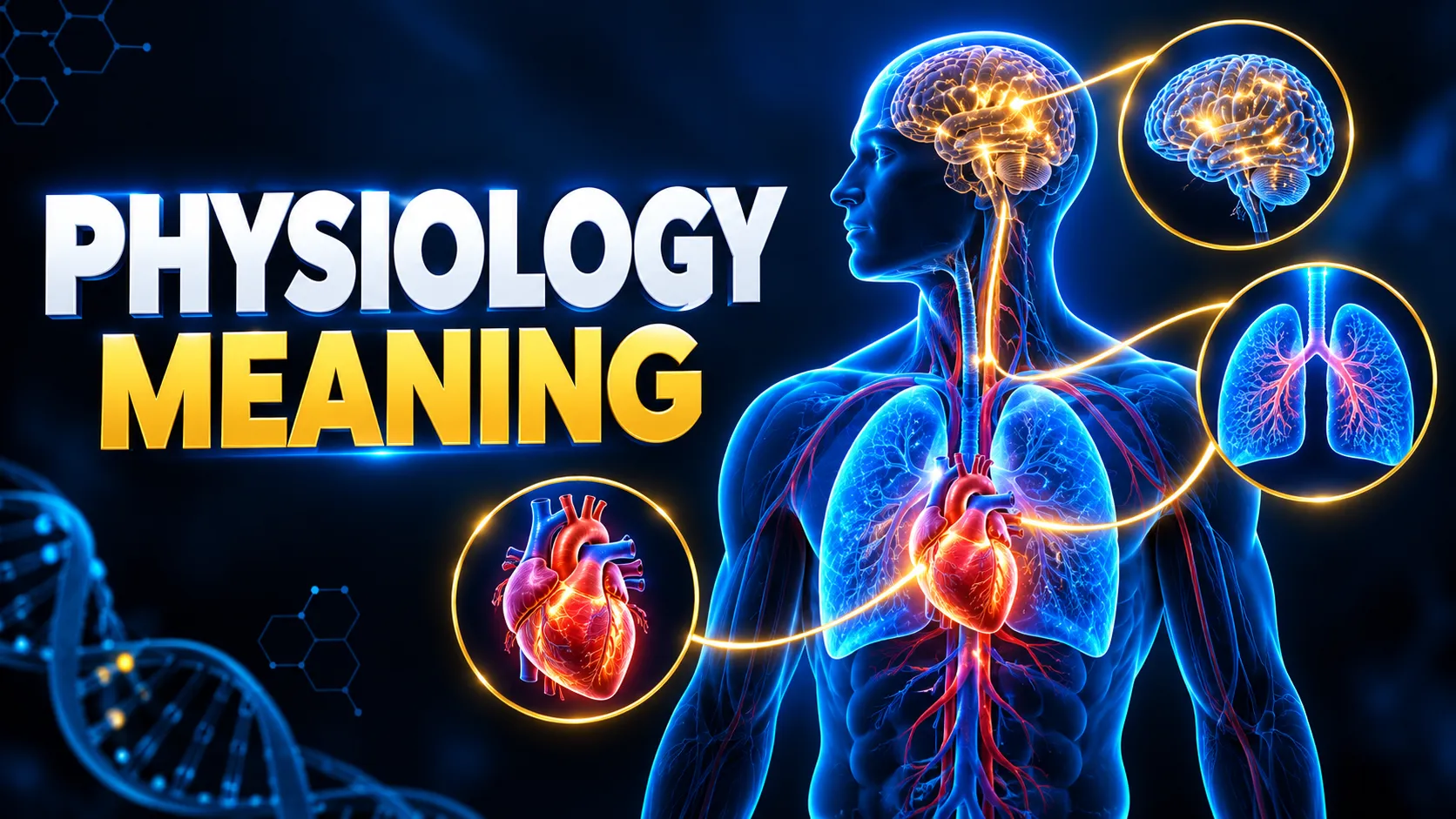
In simple terms, Physiology Means the scientific study of how living organisms and their parts function. It explains how the heart pumps blood, how the lungs help us breathe, how the digestive system processes food, and how the brain communicates with the rest of the body.
This beginner-friendly guide covers physiology in simple English, pronunciation, everyday examples, major branches, and the differences between physiology, anatomy, and psychology.
1. What Does Physiology Mean?
Physiology means the scientific study of the functions and processes of living organisms, including humans, animals, and plants. It examines how cells, tissues, organs, and entire body systems work individually and together.
For example, studying the structure of the heart belongs to anatomy, while studying how the heart contracts and pumps blood belongs to physiology.
Physiology helps scientists and healthcare professionals understand essential life processes, such as breathing, digestion, circulation, movement, growth, and reproduction.
Simple definition: Physiology is the scientific study of how living things work.
Examples of physiological processes include:
- The heart pumping blood around the body.
- The lungs exchanging oxygen and carbon dioxide.
- The digestive system breaking down food.
- The kidneys regulating fluid balance and removing waste.
- Plants using sunlight to produce sugars through photosynthesis.
Understanding these processes helps explain how organisms survive and respond to changes in their surroundings.
2. Physiology Pronunciation and Word Origin
The word physiology may look complicated, but breaking it into smaller sounds makes it easier to pronounce.
Pronunciation: fiz-ee-OL-uh-jee.
American English IPA: /ˌfɪziˈɑːlədʒi/.
Part of speech: Noun.
The word comes from Latin via Greek physiología, which refers to the study of nature and natural phenomena. Modern physiology focuses specifically on the functions and processes of living organisms.
Related words include:
- Physiological: Relating to the functions or processes of a living organism.
- Physiologist: A scientist who studies how living organisms function.
- Physiologically: In a way that relates to the body’s functions.
For example, the sentence “Exercise causes physiological changes” means that exercise produces changes in how the body functions.
Learning these related words can help you understand scientific articles and medical terminology more easily.
3. Physiology Meaning in Simple English
In simple English, physiology explains what happens inside a living organism and how those processes work.
Imagine running to catch a bus. Your heart beats faster, your breathing increases, and your muscles use more energy. These changes help deliver oxygen and support energy production in your working muscles.
Physiology studies the biological processes responsible for these changes.
Here are some simple examples:
- Breathing: Your lungs exchange oxygen and carbon dioxide.
- Digestion: Your body breaks food down into substances it can absorb.
- Circulation: Your heart pumps blood through blood vessels.
- Movement: Your muscles contract to move your body.
- Temperature control: Your body uses processes such as sweating to help regulate temperature.
- Plant growth: Plants use water, nutrients, light, and other resources to support their functions.
These activities involve different organs and biological systems, but they all illustrate physiology.
A useful way to remember the term is that anatomy describes the structure of a living organism, while physiology explains how that structure functions.
4. Examples of Physiology in Everyday Life
Physiology is not limited to laboratories or medical textbooks. Your body performs physiological processes throughout the day, even when you are not consciously thinking about them.
Example 1: Breathing
When you inhale, air enters your lungs. Oxygen passes into the blood through tiny air sacs called alveoli, while carbon dioxide moves from the blood into the lungs to be exhaled.
The processes involved in breathing and gas exchange are part of respiratory physiology.
Example 2: Digestion
After you eat, your digestive system breaks food into smaller substances that your body can absorb and use. Your stomach, intestines, pancreas, and other organs contribute to this process.
Studying how these organs digest food and absorb nutrients is part of digestive physiology.
Example 3: Exercise
During physical activity, your muscles require more energy. Your heart and breathing rates generally increase to help deliver oxygen and support energy production.
These responses are studied in exercise physiology.
Example 4: Sweating
When your body becomes too warm, sweat glands release sweat. As the sweat evaporates from your skin, it helps cool your body.
This process is part of thermoregulation, which helps maintain a suitable internal temperature.
Example 5: Sleep
Your brain and body change during sleep. Sleep affects memory processing, hormone activity, immune function, and other biological processes.
These changes are studied in sleep physiology and related fields.
Everyday activities offer useful examples of how the body maintains life and responds to different conditions.
5. What Is Human Physiology?
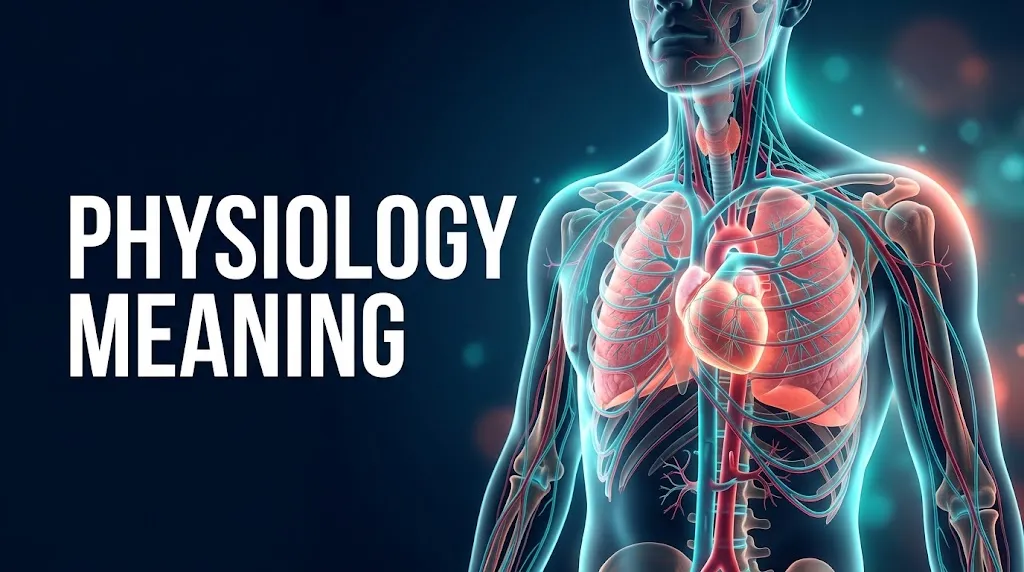
Human physiology is the branch of science that studies how the human body functions. It examines the mechanisms that keep the body working and how different organs coordinate their activities.
The human body contains many interconnected systems. Each system has specific responsibilities, but these systems also depend on one another.
Important areas of human physiology include:
- Cardiovascular physiology: Studies how the heart and blood vessels circulate blood.
- Respiratory physiology: Examines breathing and gas exchange.
- Digestive physiology: Explains how the body processes food and absorbs nutrients.
- Nervous system physiology: Studies how the brain, spinal cord, and nerves process and transmit information.
- Renal physiology: Examines how the kidneys regulate fluids, electrolytes, and waste removal.
- Endocrine physiology: Studies how hormones regulate processes such as growth, metabolism, and reproduction.
- Muscle physiology: Explains how muscles contract and generate movement.
- Reproductive physiology: Examines biological processes involved in reproduction.
Consider what happens when you play football. Your nervous system coordinates movement, your muscles contract, your lungs exchange gases, and your cardiovascular system delivers oxygen to working tissues.
Human physiology helps explain how these systems cooperate to support physical activity.
6. What Are the Main Branches of Physiology?
Physiology includes several branches that focus on particular organisms, body systems, or biological processes. These areas overlap because living organisms rely on interconnected functions.
| Branch of Physiology | What It Studies |
| Human physiology | How the human body functions |
| Animal physiology | How animals’ bodies function |
| Plant physiology | How plants grow, transport water, and respond to their environment |
| Cell physiology | How cells perform essential life processes |
| Neurophysiology | How the nervous system functions |
| Cardiovascular physiology | How the heart and blood vessels work |
| Respiratory physiology | How breathing and gas exchange occur |
| Renal physiology | How the kidneys regulate fluids and remove waste |
| Exercise physiology | How the body responds and adapts to physical activity |
| Comparative physiology | How physiological processes differ among organisms |
| Developmental physiology | How biological functions change during development |
| Environmental physiology | How organisms respond to environmental conditions |
For example, a scientist investigating how high temperatures affect an athlete’s heart rate may draw on exercise physiology, cardiovascular physiology, and environmental physiology.
Students do not need to memorize every branch immediately. Understanding the main focus of each area is a useful starting point.
7. Physiology vs. Anatomy: What Is the Difference?
Physiology and anatomy are closely Related Subjects, but they answer different questions.
Anatomy studies structure, while physiology studies function.
Anatomy explains what a body part looks like, where it is located, and how it is organized. Physiology explains what that body part does and how it performs its role.
| Anatomy | Physiology |
| Studies body structures | Studies body functions |
| Examines the shape and location of organs | Examines how organs work |
| Identifies the chambers of the heart | Explains how the heart pumps blood |
| Studies the structure of the lungs | Explains how oxygen enters the blood |
| Examines bones and joints | Explains how muscles and joints enable movement |
A simple example
Imagine studying the human heart.
Anatomy helps you identify its chambers, valves, and major blood vessels. Physiology explains how the chambers contract, how the valves control blood flow, and how the heart supplies blood to the body.
Both subjects are essential for understanding human biology and medicine. That is why many educational programs teach anatomy and physiology together.
8. Physiology vs. Psychology: How Are They Different?
Physiology and psychology are different scientific fields, although they often overlap.
And Physiology focuses on biological functions and mechanisms in living organisms. Psychology studies mental processes and behavior, including memory, emotions, learning, and decision-making.
For example, when you feel nervous before an examination, physiology can help explain why your heart beats faster, and your palms become sweaty. Psychology can investigate your thoughts, feelings, and interpretation of the situation.
| Physiology | Psychology |
| Focuses on biological functions | Focuses on mental processes and behavior |
| Studies heart rate and nerve signaling | Studies emotions, attention, and decision-making |
| Examines hormonal and bodily responses | Examines how people think, feel, and behave |
| Often uses physiological measurements | May use experiments, interviews, observations, and assessments |
The two fields can work together. Psychophysiology, for example, investigates relationships between psychological processes and physiological responses.
Although physiology and psychology are distinct, understanding both can help researchers investigate how the body and mind interact.
9. What Does Physiological Mean?
Physiological is an adjective that means relating to the functions and processes of a living organism.
It describes something connected with how the body or one of its parts works. The word appears frequently in medicine, biology, sports science, and health education.
Examples include:
- Physiological response: A bodily reaction, such as an increased heart rate during exercise.
- Physiological changes: Changes in body functions, such as adjustments in breathing during physical activity.
- Physiological process: A biological activity, such as digestion or hormone release.
- Physiological adaptation: A change in how an organism functions in response to environmental conditions or physical demands.
- Physiological function: A normal activity performed by a cell, tissue, organ, or body system.
The term does not automatically indicate illness. Many physiological responses are normal reactions to exercise, temperature, emotions, or other circumstances.
For instance, sweating during hot weather is a physiological response that helps regulate body temperature.
Remember that physiology is the scientific field, whereas physiological describes something related to the functions that the field studies.
10. Why Is Physiology Important?
Physiology is important because it helps explain how living organisms survive, grow, adapt, and maintain their internal functions.
Its applications extend beyond classrooms and laboratories into medicine, sports, agriculture, and scientific research.
Understanding health and disease
Healthcare Professionals use knowledge of physiology to understand how organs function and how diseases disrupt normal biological processes.
For example, understanding insulin and glucose regulation helps explain how the body controls blood sugar.
Supporting medical research
Physiology helps researchers investigate biological mechanisms, study how the body responds to medicines, and evaluate the effects of different interventions.
Improving athletic performance
Exercise physiology examines how the body responds to training, fatigue, recovery, and changing physical demands. This knowledge can help inform training plans and performance assessments.
Understanding plants and agriculture
Plant physiology explains how plants absorb water, transport nutrients, respond to light, and produce sugars through photosynthesis. This knowledge supports agricultural research and crop management.
Supporting education
Students studying biology, medicine, nursing, physiotherapy, and related subjects use physiology to understand the mechanisms behind life processes.
Overall, physiology connects biological theory with the way living systems actually function.
Related To Another Article: https://genzwishes.com/pupil-meaning/
11. What Does a Physiologist Do?
A physiologist is a scientist who studies how living organisms and their parts function. Depending on their specialization, physiologists may work with humans, animals, plants, cells, or biological systems.
Common responsibilities include:
- Studying how organs and body systems function.
- Conducting laboratory experiments and analyzing research data.
- Investigating how exercise, temperature, nutrition, and other factors affect organisms.
- Examining biological processes involved in health and disease.
- Teaching physiology to students.
- Supporting research in universities, laboratories, and healthcare-related organizations.
Some physiologists specialize in particular areas, such as exercise science, neurophysiology, cardiovascular function, or plant biology.
The exact duties and qualifications depend on the role. A research physiologist may need advanced scientific training, while a clinical or healthcare-related position may require additional professional qualifications.
A physiologist is not automatically a medical doctor. Their education, responsibilities, and professional credentials depend on their specialization and the country in which they work.
12. How to Use Physiology in a Sentence
Learning example sentences can help you understand how physiology appears in everyday English and academic writing.
Here are 10 examples:
- Physiology helps students understand how the human body works.
- We studied the physiology of the heart in biology class.
- Exercise can produce temporary changes in human physiology.
- Plant physiology explains how plants respond to sunlight and water.
- Human physiology is an important subject in medical education.
- The researcher studies the physiology of breathing during exercise.
- Understanding muscle physiology can help explain how movement occurs.
- Anatomy and physiology provide complementary perspectives on the human body.
- The course introduces students to the physiology of the nervous system.
- Sleep physiology examines how bodily processes change during sleep.
In these sentences, physiology refers to the study of biological functions or, depending on the context, the functioning of an organism and its systems.
Common word combinations
- Human physiology
- Exercise physiology
- Plant physiology
- Comparative physiology
- Normal physiology
- Physiology laboratory
- Physiology textbook
- Physiology research
These combinations are useful when reading scientific materials or writing about biology.
13. Common Misconceptions About Physiology
Some misunderstandings can make physiology harder to understand. Recognizing these differences helps students and general readers use the term accurately.
Misconception 1: Physiology and anatomy mean the same thing.
Correction: Anatomy focuses on structures, whereas physiology focuses on functions. They are related but distinct subjects.
Misconception 2: Physiology only studies humans.
Correction: Physiology also studies animals, plants, cells, and other aspects of living systems.
Misconception 3: Physiology only concerns illness.
Correction: Physiology examines normal biological functions as well as changes that occur during disease and other conditions.
Misconception 4: Physiological means psychological.
Correction: Physiological relates to biological functions, while psychological relates to mental processes and behavior. These processes can influence one another, but the terms are not interchangeable.
Misconception 5: Every physiological change indicates a medical problem.
Correction: Many physiological changes are normal. An increased heart rate during exercise, for example, is generally an expected response to physical activity.
Misconception 6: Physiology is only useful for medical students.
Correction: Physiology is relevant to biology students, researchers, sports scientists, plant scientists, and anyone interested in how living organisms function.
Understanding these distinctions makes the meaning of physiology easier to apply in academic and everyday contexts.
People Also Ask
A: Physiology is the scientific study of how living organisms and their parts function. It explains processes such as breathing, digestion, circulation, and movement.
A: The way your heart pumps blood, your lungs exchange gases, or your body regulates temperature are examples of physiological processes.
A: Anatomy studies the structure of living organisms, while physiology studies how their structures function. For example, anatomy examines the heart’s structure, and physiology explains how it pumps blood.
A: Physiological means related to the functions and processes of the body. A physiological response may include changes in heart rate, breathing, temperature regulation, or hormone activity.
A: Yes. Physiology is a scientific field closely associated with biology. It studies the functions and processes of living organisms at different levels, from cells to entire organisms.
Conclusion
Physiology Means the scientific study of how living organisms function. It explains how cells, tissues, organs, and body systems perform their roles and work together to support life.
From breathing and digestion to exercise, sleep, and plant growth, physiology helps explain the biological processes that make life possible.
Remember the simplest distinction: anatomy studies structure, physiology studies function, and psychology studies mental processes and behavior.
Whether you are learning a new biology term, preparing for an examination, or exploring health science, understanding physiology provides a useful foundation for learning how living things work.
If this explanation helped you understand the term, save it for revision or share it with someone learning biology. You can also explore related educational guides to build your scientific vocabulary.