
Introduction
The name Hazel means “Hazel Tree” and is also associated with a light brown, greenish-brown, or golden-brown color. Originating from the English word for the tree, Hazel became a personal name in the 19th century and is now appreciated for its natural beauty, vintage charm, and simple pronunciation.
If you are considering Hazel for a baby, researching its spiritual meaning, or wondering what the name represents, this guide covers its origin, history, symbolism, pronunciation, popularity, nicknames, and more. It also separates the name’s established meaning from cultural interpretations that do not necessarily apply to everyone.
What Does Hazel Mean?
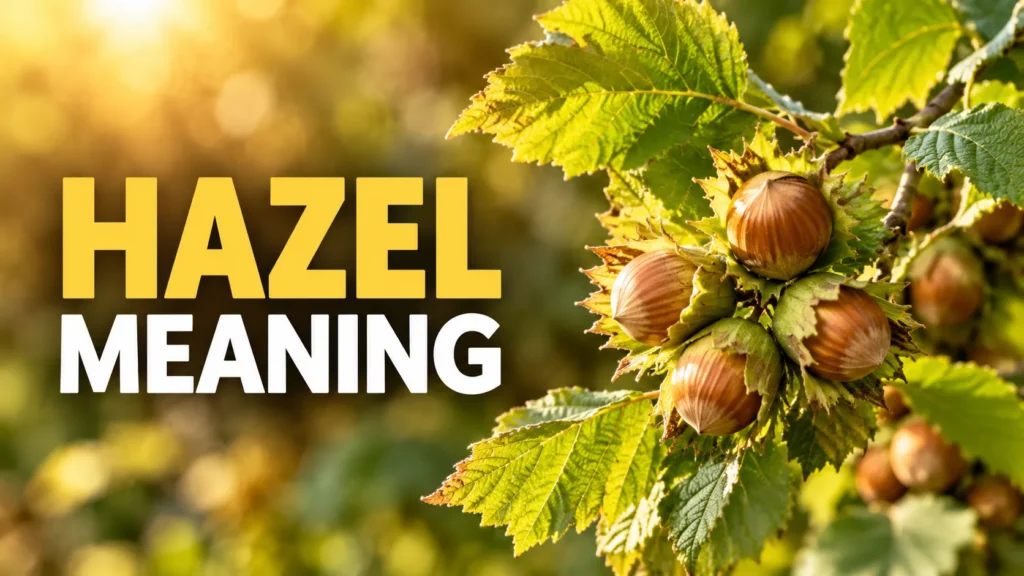
Hazel primarily means “hazel tree.” The name comes from the English word for a tree or shrub that produces edible nuts called hazelnuts. The same word is also used to describe an eye color that combines shades of brown, green, and sometimes gold.
The name has three closely related associations:
- Tree: A connection to nature, plants, and the hazel tree.
- Color: A warm, earthy shade associated with hazelnuts and hazel eyes.
- Symbolism: In some cultural traditions, the hazel tree is associated with wisdom, knowledge, and protection.
The tree and color meanings are rooted in the English word itself. The symbolic meanings, however, depend on cultural context and personal interpretation.
For parents who appreciate botanical names, Hazel offers a recognizable choice with a natural meaning and a long history as a given name.
What Is the Origin and History of the Name Hazel?
Hazel has English origins and comes from the Old English word hæsel, meaning the hazel tree. The word has older Germanic linguistic roots and originally referred to the plant rather than a person’s name.
Hazel developed into a given name during the 19th century. It became particularly popular among girls in the United States around the turn of the 20th century, later declined in use, and subsequently experienced a revival.
Its history reflects a broader tradition of English names inspired by nature. Names drawn from trees, flowers, colors, and other elements of the natural world have appealed to parents seeking meaningful alternatives to more traditional personal names.
Hazel’s vintage history is part of its modern appeal. It sounds familiar without feeling tied to a single generation, making it suitable for families who like traditional names with a botanical connection.
How Do You Pronounce Hazel?
Hazel is Pronounced HAY-zuhl. It has two syllables, with the emphasis on the first syllable.
The pronunciation can be broken down as follows:
- HAY: Rhymes with “day.”
- zuhl: A soft, unstressed second syllable.
The phonetic pronunciation is /ˈheɪ.zəl/. Source: Behind the Name.
For example, you would say, “Our daughter is named Hazel,” with a clear first syllable and a relaxed ending.
The spelling is familiar to English speakers, and the pronunciation is relatively straightforward. However, pronunciation can vary slightly with regional accents.
Is Hazel a Girl’s Name or a Boy’s Name?
Hazel is primarily used as a girl’s name today, particularly in English-speaking countries. It has also been used as a boy’s name historically and can be chosen by parents who prefer a less traditional gender association.
Its current use is strongly feminine in many naming databases, but the name itself comes from a tree and color rather than a gender-specific word.
Here is how its usage can be understood:
- For girls: Hazel is a classic, nature-inspired name with a vintage feel.
- For boys: It is an uncommon option for parents who like botanical names.
- For a gender-neutral choice: It can be considered, although many people will associate it primarily with girls.
Naming conventions vary by culture and community. Families should consider their preferences and the context in which the name will be used.
What Does Hazel Symbolize?
Hazel is often associated with nature, growth, and wisdom because of its connection to the hazel tree and its place in some European folklore traditions.
These associations add cultural depth to the name, but they should not be confused with its literal etymological meaning.
Common symbolic interpretations include:
Wisdom and knowledge: Some traditions connect hazel branches or nuts with learning and wisdom.
Growth and renewal: Like other tree-inspired names, Hazel may suggest development, resilience, and a connection to the natural world.
Protection: Hazel has protective associations in some folklore traditions, although these beliefs are not universal.
Natural beauty: The tree and color meanings give Hazel an earthy, botanical character.
Warmth and familiarity: Its traditional use as a given name may evoke a sense of comfort and timelessness for some people.
The meaning a person attaches to Hazel may depend on family traditions, cultural background, or personal experiences. There is no single symbolic interpretation that applies to everyone.
What Is the Spiritual Meaning of Hazel?
The spiritual meaning of Hazel is commonly interpreted through the natural qualities of the hazel tree and the folklore associated with it.
For people who enjoy symbolic names, Hazel may Represent Wisdom, personal growth, groundedness, and an appreciation for nature. Its tree connection can serve as a metaphor for staying rooted while continuing to develop and learn.
Some people may interpret the name as a reminder to:
- Remain curious and open to learning.
- Grow through life’s changing circumstances.
- Appreciate the natural world.
- Build strength while remaining grounded.
- Seek understanding before making important decisions.
These are personal or cultural interpretations, not universally established spiritual facts. Hazel does not have one officially recognized spiritual meaning, and the name alone cannot determine someone’s beliefs, character, or future.
If you are choosing Hazel for spiritual reasons, the most meaningful interpretation is the one that reflects your own values and traditions.
What Does Hazel Mean in the Bible?
Hazel is not generally recognized as a biblical personal name. Its established English origin comes from the Old English word for the hazel tree rather than from a biblical name tradition.
A related botanical question arises from Genesis 30:37, which describes Jacob taking branches from certain trees. Some traditional interpretations or translations have associated one of the plants in this passage with hazel, but the precise identification of the plants is not consistent across translations.
This passage does not establish Hazel as a biblical given name.
Christian families may nevertheless find personal meaning in Hazel through themes such as growth, life, creation, or the natural world. Those associations can be meaningful within a family’s faith, but they should be distinguished from the name’s documented linguistic origin.
In short: Hazel has an English botanical origin, and it does not have a clearly established biblical name meaning.
What Personality Traits Are Associated With the Name Hazel?
Hazel is sometimes described as gentle, thoughtful, grounded, creative, or nature-loving in baby-name discussions. These impressions usually come from the name’s sound, its botanical meaning, and its vintage style.
Common impressions include:
- Thoughtfulness: A name that may evoke reflection and curiosity.
- Warmth: A familiar, friendly sound.
- Creativity: An association with nature and individuality.
- Calmness: An earthy quality that some people find peaceful.
- Independence: A traditional name that still feels distinctive to many families.
These descriptions are subjective impressions rather than scientifically established personality traits. A person’s character is shaped by their experiences, relationships, environment, and choices, not simply by their name.
If you love Hazel because it sounds natural, warm, and timeless, these associations may help explain why it appeals to you.
What Does Hazel Mean When Describing Eye Color?
Hazel eyes typically contain a mixture of brown, green, and sometimes golden or amber tones. Their appearance can vary depending on lighting and the distribution of pigment in the iris.
The English word hazel is used for both the tree and this earthy eye color. The color association comes from the light brown shade of ripe hazelnuts.
Examples include:
- “She has hazel eyes” means her eyes have a mixed brown, green, or golden appearance.
- “His hazel eyes looked greener in the sunlight” describes how the eyes appeared under different lighting.
- “Her eyes are a warm hazel color” emphasizes the brown and golden tones.
Hazel eyes are not necessarily one uniform shade. Some appear mostly brown, while others show more green or gold.
Importantly, a person named Hazel does not need to have hazel eyes. The name is used independently of a person’s physical appearance.
Is Hazel a Popular Baby Name?
Hazel has experienced changing levels of popularity over time. It was a well-established girl’s name in the United States around the beginning of the 20th century, became less common during the following decades, and later returned to favor.
Its modern appeal fits several naming trends:
- Vintage names returning to use.
- Nature-inspired and botanical names.
- Short names that are relatively easy to spell.
- Traditional names with a contemporary feel.
- Names associated with natural colors.
For current U.S. rankings, consult the Social Security Administration’s official baby-name database. It provides annual rankings and historical information based on U.S. birth records.
Popularity differs by country and year, so a U.S. ranking should not be assumed to reflect usage in the United Kingdom, Canada, Australia, Pakistan, or elsewhere.
Hazel may suit parents who want a recognizable name with a long history and a natural meaning. If you prefer a genuinely rare name, check the latest statistics for your country before making a decision.
What Are the Best Nicknames for Hazel?
Hazel is short enough to use without a nickname, but it also offers several affectionate alternatives. The best choice depends on whether you prefer something simple, playful, or distinctive.
| Nickname | Style |
| Haze | Short and modern |
| Hazy | Playful and affectionate |
| Hazie | Sweet and informal |
| Zel | Brief and distinctive |
| Zellie | Cute and creative |
| Hazelnut | Warm and playful |
| H | Minimal and casual |
Haze is a straightforward everyday option, while Hazy and Hazie have a softer, more affectionate feel. Hazelnut can work as a playful family nickname.
Some of these are creative suggestions rather than established traditional diminutives. There is no requirement to shorten Hazel at all; the original name works well on its own.

- Related To Another Article: https://genzwishes.com/high-eosinophils-meaning/
What Middle Names Go Well With Hazel?
The best middle name for Hazel depends on your preferred style, family traditions, and the rhythm of the full name.
Because Hazel has two syllables, it can pair well with both short middle names and longer, more elaborate choices.
Classic middle names
- Hazel Elizabeth
- Hazel Grace
- Hazel Catherine
- Hazel Victoria
- Hazel Rose
Nature-inspired middle names
- Hazel Willow
- Hazel Ivy
- Hazel Lily
- Hazel Violet
- Hazel Fern
Modern middle names
- Hazel Quinn
- Hazel Avery
- Hazel Harper
- Hazel Wren
- Hazel Skye
Elegant middle names
- Hazel Sophia
- Hazel Eleanor
- Hazel Amelia
- Hazel Josephine
- Hazel Juliette
Say each combination aloud with the intended surname. Consider the rhythm, initials, spelling, and whether the full name feels natural when spoken.
There is no universally best middle name for Hazel. The right combination is the one that fits your family’s preferences and feels meaningful to you.
What Names Are Similar to Hazel?
If you like Hazel but want to explore alternatives, consider names with similar botanical meanings, vintage styles, or gentle sounds.
| Name | General style or association |
| Ivy | Short and botanical |
| Willow | Nature-inspired and flowing |
| Violet | Floral and vintage |
| Olive | Botanical and understated |
| Ruby | Traditional and color-inspired |
| Iris | Short and floral |
| Mabel | Vintage and warm |
| Flora | Classic and botanical |
| Rowan | Tree-inspired and often gender-neutral |
| Wren | Short and bird-inspired |
These names do not share Hazel’s exact meaning. They are alternatives for parents who appreciate its nature-inspired character or traditional style.
Ivy and Wren offer shorter options, Willow has a flowing sound, and Mabel provides a vintage alternative. Rowan may appeal to families looking for a more gender-neutral name.
People Also Ask
A: Hazel primarily means “hazel tree.” The word is also associated with a light brown, greenish-brown, or golden-brown color used to describe certain eyes.
A: Hazel’s established origin as an English given name comes from the Old English word for the hazel tree. It should not be confused with Hazael, a separate name of Hebrew origin.
A: Wisdom is a symbolic association linked to hazel-tree folklore in some traditions. It is not the literal dictionary meaning of Hazel.
A: Hazel’s rarity depends on the country and year. It has become a familiar choice in the United States in recent decades, so parents should check current national or regional statistics if rarity is important.
A: Hazel may appeal to parents who want a recognizable name with English roots, a connection to nature, a straightforward pronunciation, and a vintage yet contemporary feel. Whether it is the right choice depends on personal preference and cultural context.
Conclusion
Hazel’s Meaning Combines two closely related ideas: the hazel tree and the earthy color associated with hazel eyes. Its English roots, long history as a given name, and modern appeal make it an attractive option for families who appreciate nature-inspired names.
Beyond its literal meaning, Hazel can carry personal associations with growth, wisdom, warmth, and natural beauty. These interpretations can enrich the name’s significance, but they do not determine a person’s character or future.
Whether you are researching Hazel for a baby, exploring its spiritual associations, or simply curious about its origin, understanding the difference between its historical meaning and symbolic interpretations gives you a more complete picture.
If this guide helped you understand Hazel, consider bookmarking it and exploring other name meanings on GenzWishes.