
Introduction
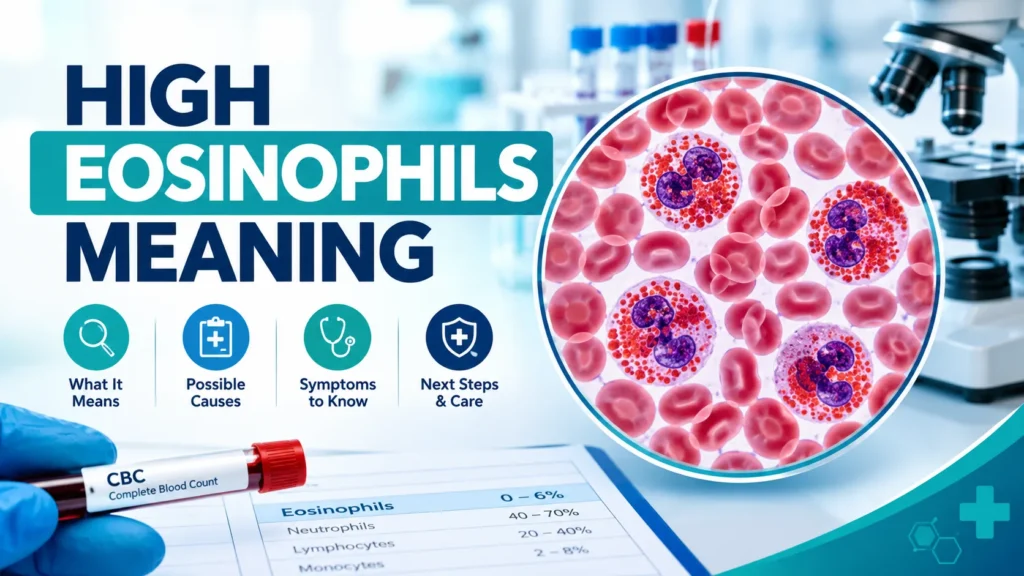
High Eosinophils Meaning: A high eosinophil count means your blood contains more eosinophils than expected. Eosinophils are a type of white blood cell that helps your immune system respond to certain infections, allergens, and other triggers. The medical term for an elevated blood eosinophil count is eosinophilia.
Common causes include allergies, asthma, eczema, certain medication reactions, and parasitic infections. Sometimes, a high count is discovered during a routine blood test without causing noticeable symptoms. Less commonly, it can be associated with inflammatory diseases or blood disorders.
A high eosinophil count does not automatically mean you have a dangerous illness or cancer. The meaning depends on your absolute eosinophil count, symptoms, medical history, medications, and other test results.
What Does High Eosinophils Mean?
High eosinophils mean that the number of eosinophils in your blood is above the expected reference range. These white blood cells participate in immune responses, especially those involving allergies and certain parasitic infections.
Eosinophils can help the body respond to particular threats. However, excessive eosinophil activity may contribute to inflammation and, in some conditions, damage to organs or tissues.
In adults, an absolute eosinophil count above 500 cells per microliter of blood is commonly considered elevated. Your laboratory’s reference range and individual medical circumstances should also be considered.
High eosinophils may be associated with:
- Seasonal allergies and allergic rhinitis.
- Asthma and certain respiratory conditions.
- Eczema and other skin disorders.
- Certain parasitic infections.
- Reactions to prescription or nonprescription medicines.
- Some autoimmune and inflammatory conditions.
- Certain blood or bone marrow disorders.
The blood test identifies an abnormal finding, but it cannot determine the exact cause on its own. A healthcare professional must interpret the result alongside your symptoms and medical history.
What Is the Normal Eosinophil Count?
A commonly used adult reference threshold is fewer than 500 eosinophils per microliter of blood. However, reference ranges can differ between laboratories, so check the range printed on your blood report.
The following categories are commonly used to describe absolute eosinophil counts in adults.
| Absolute eosinophil count | General classification |
| Below 500 cells/µL | Usually within the normal range |
| 500–1,499 cells/µL | Mild eosinophilia |
| 1,500–4,999 cells/µL | Moderate eosinophilia |
| 5,000 cells/µL or higher | Severe eosinophilia |
These categories are general guides, not a diagnosis or a measure of how sick someone is. A mildly elevated result can still deserve investigation, while a higher result does not automatically mean that organ damage has occurred.
An absolute eosinophil count of 1,500 cells/µL or higher that persists is particularly important to evaluate. Healthcare professionals may investigate for hypereosinophilia and possible organ involvement, depending on the clinical situation.
Children may have different reference ranges according to their age and the laboratory used.
What Causes High Eosinophils?
Several medical conditions can increase eosinophils. The likely cause depends on the degree of elevation, your symptoms, medication history, travel, and possible exposures.
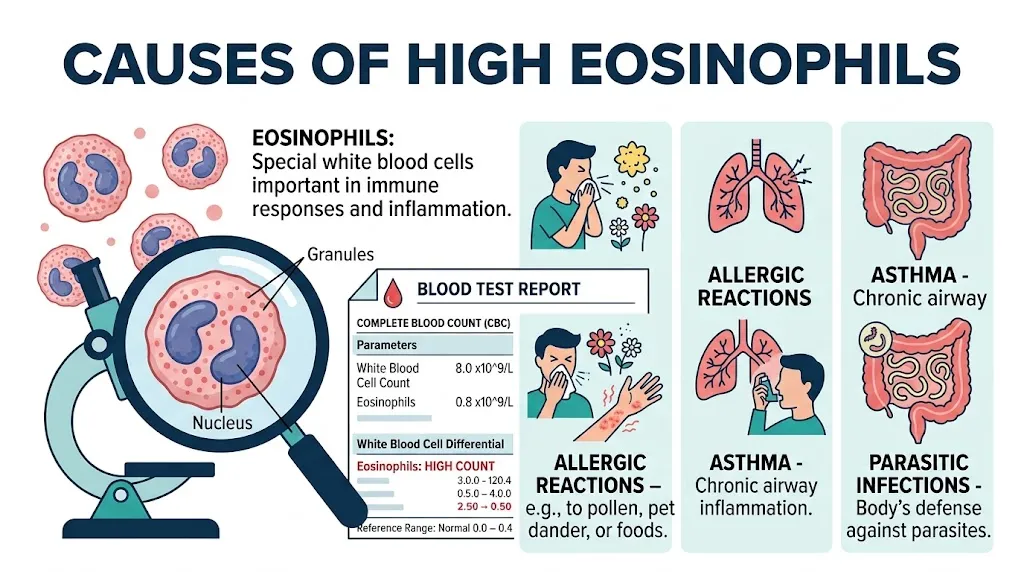
Allergies and asthma
Allergic rhinitis, seasonal allergies, eczema, and some forms of asthma are common conditions associated with increased eosinophils. The immune response to allergens can stimulate eosinophil activity.
Parasitic infections
Certain parasites, particularly tissue-invasive worms, can increase eosinophil counts. A clinician may consider your travel history, environmental exposure, and symptoms when deciding whether parasite testing is appropriate.
Not every intestinal infection causes eosinophilia, and a high count alone does not prove that you have worms.
Medication reactions
Some antibiotics and other medicines can cause eosinophil levels to rise. In certain cases, a medication reaction may also affect the skin, liver, kidneys, lungs, or other organs.
Tell your healthcare professional about all prescription medicines, over-the-counter products, and supplements you use. Do not independently stop prescribed medication without medical guidance.
Skin and inflammatory conditions
Eczema and other skin disorders may be associated with eosinophilia. Some autoimmune diseases, inflammatory conditions, and disorders affecting the digestive tract can also contribute.
Blood and bone marrow disorders
Less commonly, elevated eosinophils are associated with blood cancers, lymphoma, or other bone marrow disorders. These possibilities require evaluation based on the overall clinical picture rather than the eosinophil count alone.
Other medical conditions
Certain endocrine disorders, including adrenal insufficiency, may also be associated with eosinophilia.
In many cases, the underlying cause can be identified and treated. Persistent, substantial, or unexplained elevation may require further testing.
What Are the Symptoms of High Eosinophils?
Mild eosinophilia often causes no symptoms. Many people discover it during a complete blood count (CBC) performed for another reason.
When symptoms occur, they frequently reflect the underlying condition rather than the elevated count itself.
Possible symptoms include:
- Itching, eczema, or a skin rash.
- Sneezing, a runny nose, or other allergy symptoms.
- Coughing, wheezing, or shortness of breath.
- Abdominal pain, nausea, or diarrhea.
- Unexplained tiredness.
- Fever or unintended weight loss in some underlying conditions.
These symptoms are not specific to eosinophilia. For example, a rash may be caused by an allergy, an infection, a medication reaction, or an unrelated skin disorder.
Seek emergency medical care for severe breathing difficulty, chest pain, fainting, or swelling of the tongue or throat. These symptoms require urgent assessment and should not be attributed to a blood-test result without evaluation.
Are High Eosinophils Dangerous?
High eosinophils are not always dangerous. The level of concern depends on the cause, the degree of elevation, whether it persists, and whether any organs are affected.
A mild increase associated with an allergy may require routine evaluation and appropriate allergy management. A persistent or substantially elevated count, especially without an obvious explanation, deserves careful medical assessment.
In some conditions, excessive eosinophils can contribute to inflammation involving the heart, lungs, digestive tract, skin, or nervous system.
Hypereosinophilic syndrome is a distinct medical condition involving excessive eosinophils associated with organ damage or dysfunction. A high blood count alone does not establish this diagnosis.
Arrange a medical appointment if your result remains abnormal, is substantially elevated, or is accompanied by unexplained symptoms or other abnormal blood counts.
What Does a High Eosinophil Percentage Mean?
A CBC report may show eosinophils as a percentage of your total white blood cells. This percentage is different from the absolute eosinophil count.
The absolute eosinophil count estimates the actual number of eosinophils in a given volume of blood. It is calculated using the total white blood cell count and the eosinophil percentage.
For example, suppose your report shows:
- Total white blood cell count: 8,000 cells/µL.
- Eosinophils: 8%.
The estimated absolute eosinophil count is:
8,000 × 0.08 = 640 cells/µL
This result is above the commonly used adult threshold of 500 cells/µL.
The example is for educational purposes. Use the absolute count and laboratory reference range provided or confirmed by your healthcare professional.
An elevated percentage does not always mean the absolute count is high. Changes in other white blood cells can affect the percentage, which is why both values should be interpreted in context.
What Does a High Absolute Eosinophil Count Mean?
The absolute eosinophil count, often abbreviated as AEC, measures the number of eosinophils in a specific volume of blood.
A high AEC confirms that the number of circulating eosinophils is above the expected range. It does not identify the underlying cause by itself.
When evaluating the result, a healthcare professional may consider:
- The exact AEC and the laboratory reference range.
- Whether previous blood tests showed similar results.
- Whether you have allergies, asthma, or skin symptoms.
- Recent medicines and possible medication reactions.
- Travel history and possible parasite exposure.
- Other CBC results.
- Symptoms suggesting that an organ may be affected.
A mild elevation may be monitored or investigated according to your circumstances. A persistent or substantially elevated count may require more extensive evaluation.
Do not diagnose yourself from a single number. The same count can have different explanations in different people.
Can High Eosinophils Mean Cancer?
High eosinophils can sometimes be associated with certain blood cancers, lymphomas, or other cancers. However, an elevated eosinophil count does not mean that you have cancer.
Allergies, asthma, medication reactions, and certain parasitic infections are among the many possible noncancerous causes.
A clinician may investigate further when eosinophilia is persistent and unexplained, particularly if it occurs alongside other abnormal blood counts, enlarged lymph nodes, unexplained fever, night sweats, or unintended weight loss.
Depending on the findings, additional investigations may include a repeat CBC, blood smear, targeted laboratory tests, imaging, or specialist assessment.
Cancer testing is not automatically necessary for every mildly elevated eosinophil result. Decisions should be based on a complete medical assessment.
How Do Doctors Diagnose the Cause of High Eosinophils?
The first step is usually to review a CBC with differential and confirm the absolute eosinophil count.
The evaluation may include the following steps.
Medical history and examination
Your clinician may ask about allergies, asthma, skin changes, digestive symptoms, medications, supplements, travel, and possible environmental exposures.
Repeat blood testing
A repeat CBC may help establish whether the elevation was temporary or persistent. The timing depends on the count, symptoms, and suspected cause.
Additional laboratory tests
Depending on the situation, testing may include a blood smear, kidney or liver tests, inflammatory markers, or investigations for particular infections.
Imaging or specialist investigations
Imaging, organ-specific tests, or more specialized investigations may be appropriate when symptoms or initial results suggest a particular condition.
A hematologist may be involved when eosinophilia is substantial, persistent, or unexplained.
Not everyone needs every test. A good diagnostic plan focuses on the most likely causes and the possibility of complications.
How Are High Eosinophils Treated?
Treatment depends on the cause. There is no single medicine or treatment plan suitable for everyone with eosinophilia.
Examples of cause-specific treatment include:
- Allergies Or Asthma: Appropriate allergy management or asthma treatment.
- Medication reactions: A clinician may recommend changing or stopping the suspected medicine.
- Parasitic infections: Treatment selected for the identified or strongly suspected parasite.
- Inflammatory conditions: Treatment based on the underlying disease.
- Blood or bone marrow disorders: Specialist-directed treatment when necessary.
In certain conditions, clinicians use corticosteroids or other medicines to control excessive eosinophil activity. These treatments require medical supervision because their benefits and risks depend on the diagnosis.
Do not take steroids, deworming medicines, or other drugs simply because your eosinophil count is high. Unnecessary treatment can cause harm or delay the correct diagnosis.
How Can You Lower High Eosinophils Naturally?
There is no proven natural remedy that reliably lowers eosinophils regardless of the cause. The most effective approach is to identify and address the underlying condition.
While following your clinician’s advice, you can take practical steps:
- Follow your prescribed treatment plan.
- Avoid known allergy triggers when appropriate.
- Keep a record of symptoms and possible medication reactions.
- Maintain a balanced diet and normal hydration.
- Attend recommended follow-up appointments and blood tests.
- Discuss herbal products and supplements with your clinician before using them.
A healthy lifestyle supports general well-being, but it cannot replace treatment for a parasitic infection, medication reaction, inflammatory disorder, or another underlying condition.
There is no universal diet for eosinophilia. Do not eliminate entire food groups solely because your blood report shows high eosinophils unless a healthcare professional recommends it for a specific diagnosis.
When Should You See a Doctor for High Eosinophils?
Arrange a medical appointment if your blood report shows an elevated eosinophil count, particularly when the elevation is persistent, substantial, unexplained, or accompanied by symptoms.
Contact a healthcare professional promptly if you develop a new widespread rash after starting a medicine, fever with a rash, worsening breathing symptoms, persistent abdominal problems, or unexplained weight loss.
Seek emergency care for severe breathing difficulty, chest pain, fainting, confusion, or swelling of the tongue or throat.
If the elevation is mild and you feel well, a clinician can determine whether monitoring, repeat testing, or further investigation is appropriate.
Before your appointment, prepare:
- A copy of your complete blood report.
- A list of your medicines and supplements.
- Any previous blood-test results.
- Notes about recent symptoms, illnesses, travel, or possible exposures.
These details can help your clinician decide which explanations and investigations are most relevant.
- Related To Another Article: https://genzwishes.com/blue-blood-meaning-in-text/
High Eosinophils in Children: What Does It Mean?
In Children, an elevated eosinophil count can be associated with allergies, eczema, asthma, certain parasitic infections, medication reactions, and other conditions.
The interpretation depends on the child’s age, laboratory reference range, symptoms, and medical history. Adult reference ranges should not automatically be applied to every child.
A pediatrician may review skin symptoms, respiratory problems, digestive complaints, possible exposures, and other test results before deciding whether further testing is necessary.
Parents should not give a child deworming medicines, steroids, or supplements solely because a blood report shows high eosinophils. Treatment depends on the cause.
If a child has breathing difficulty, swelling of the tongue or throat, fainting, or another severe symptom, seek emergency medical care.
People Also Ask
A: It means the number of eosinophils is above the expected reference range. Possible causes include allergies, asthma, medication reactions, parasitic infections, and other conditions. The result alone cannot identify the cause.
A: An absolute eosinophil count above 500 cells/µL is commonly considered elevated in adults. The laboratory’s reference range and the person’s clinical circumstances should also be considered.
A: No. Allergies, asthma, eczema, medication reactions, autoimmune conditions, and certain blood disorders can also cause elevated eosinophils. A high result does not prove that an infection is present.
A: Sometimes. A count may return to the normal range when a temporary trigger resolves. However, the outcome depends on the underlying cause. Persistent or unexplained elevation should be evaluated.
A: A mild elevation is not automatically an emergency and may be associated with a common allergic condition. Your absolute count, symptoms, other blood results, and medical history determine the appropriate follow-up.
Conclusion
High Eosinophils: This means your blood contains more eosinophils than expected. This finding can be associated with allergies, asthma, medication reactions, certain infections, and other medical conditions.
The most useful next step is to review your absolute eosinophil count, check your laboratory’s reference range, and discuss the result with a healthcare professional. Persistent, substantial, or unexplained elevation may require further investigation.
Remember that an elevated eosinophil count is a laboratory finding, not a diagnosis by itself. Identifying and treating the underlying cause is more important than trying to lower the number without understanding why it is high.
If this guide helped you understand your blood report, bookmark it for reference and explore other reliable health-information articles.