Introduction
Have you ever walked into a beautifully decorated hotel, admired an elegant silk gown, or enjoyed a feast that looked almost too beautiful to eat? The English Word Sumptuous helps describe experiences like these. It communicates a sense of luxury, richness, abundance, and impressive quality.
Sumptuous means luxurious, splendid, or impressive, especially because something is rich in appearance, quality, or abundance. The word commonly describes meals, clothing, interiors, celebrations, and other things that create an impression of grandeur.
For example, a meal served with several delicious courses might be called a sumptuous feast, while a room filled with elegant furnishings and elaborate decorations might be described as a sumptuous interior.
In this guide, you will discover the sumptuous meaning in simple words, learn how to pronounce it, explore its synonyms and antonyms, and understand how to use it naturally in sentences.
1. What Does Sumptuous Mean?
The word sumptuous is an adjective used to describe something luxurious, magnificent, rich, or impressive. It often suggests high quality, considerable expense, elaborate decoration, or generous abundance.
In everyday English, the word helps readers picture something more impressive than ordinary. A sumptuous dinner, for instance, may feature several carefully prepared dishes, attractive presentation, and a generous selection of food.
Simple definition: Sumptuous means very luxurious, rich, splendid, or impressive in appearance, quality, or abundance.
Consider these examples:
- The hotel served a sumptuous breakfast to its guests.
- She wore a sumptuous gown to the formal celebration.
- The mansion featured sumptuous interiors and antique furniture.
- The family prepared a sumptuous feast for the holiday.
In each example, the word creates an impression of richness or exceptional quality.
However, sumptuous does not always mean that something is expensive. A beautifully presented meal or a visually rich display may be described as sumptuous because of its appearance and abundance, even when its actual cost is unknown.
The context determines which aspect of luxury the word emphasizes.
2. Sumptuous Meaning in Simple Words
In simple English, sumptuous means very fancy, rich, beautiful, or luxurious. It is a useful word when ordinary adjectives such as nice, good, or beautiful do not fully describe the experience.
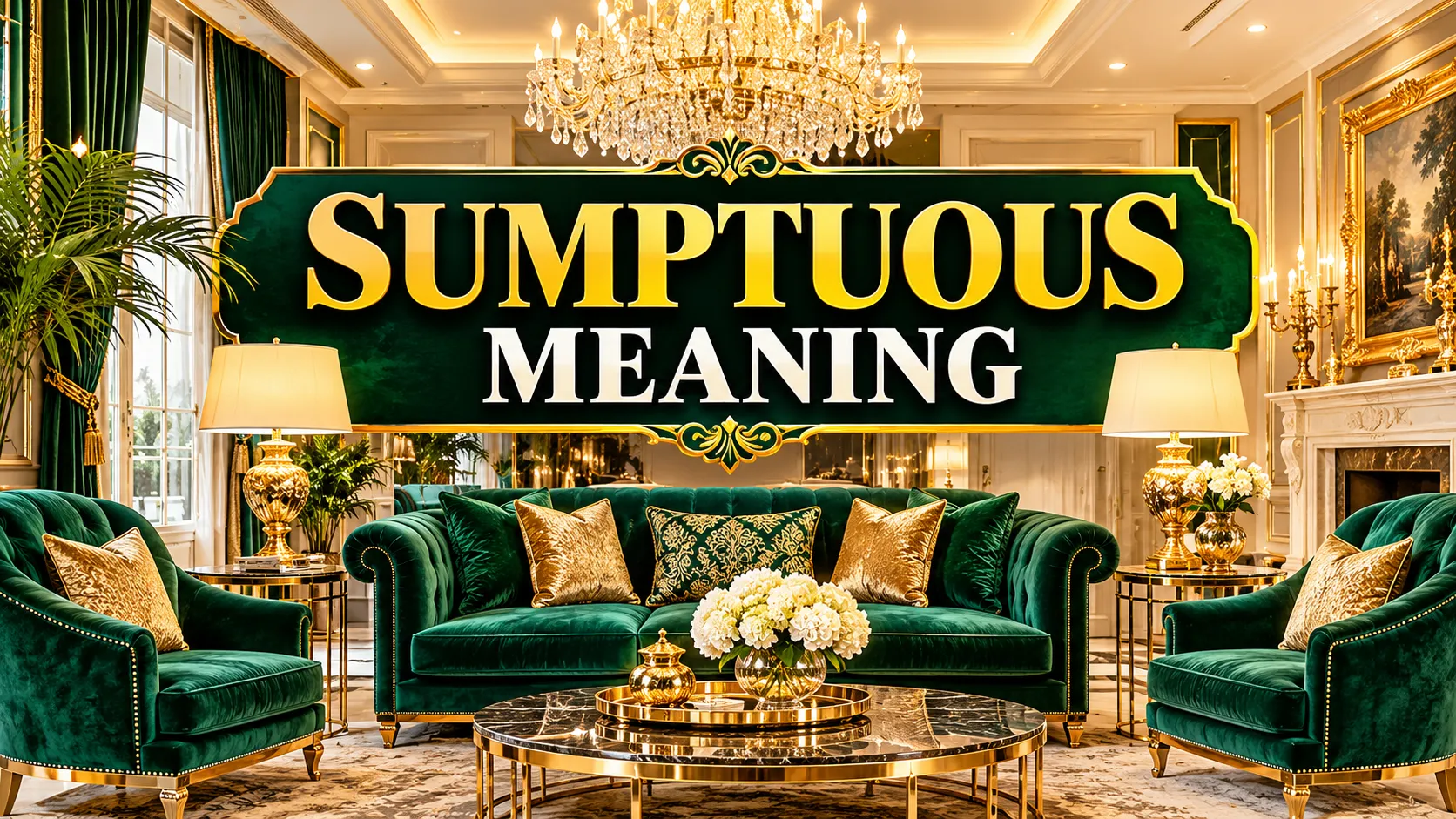
Imagine entering a grand room with velvet curtains, polished wooden furniture, sparkling lights, and elegant decorations. Calling it a sumptuous room suggests that it looks exceptionally rich and impressive.
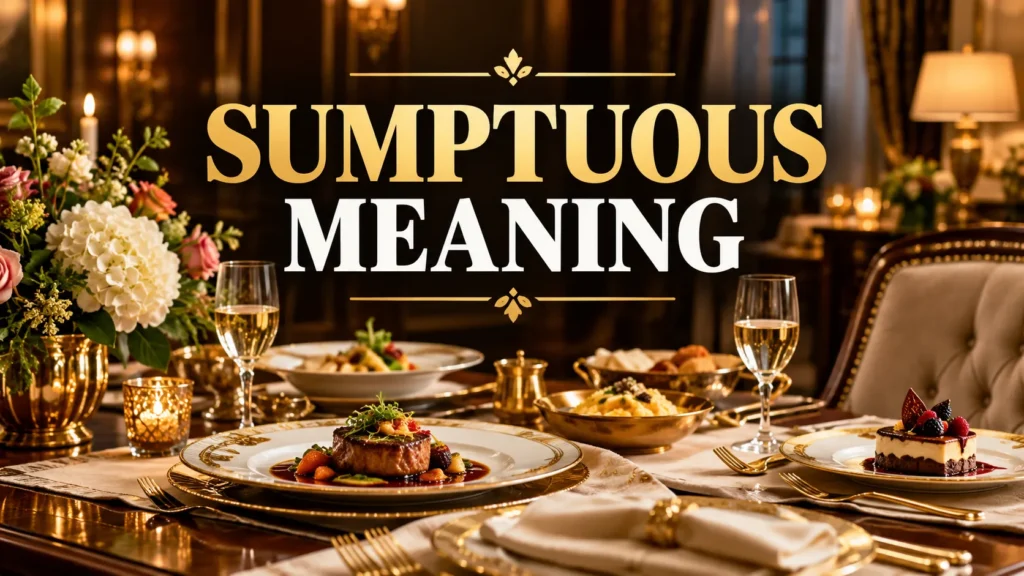
The same idea applies to food. A table filled with carefully prepared dishes, colorful desserts, fresh fruit, and beautifully arranged plates might feature a sumptuous meal.
Here are some easy examples:
- Sumptuous food: A rich, abundant, or impressive meal.
- Sumptuous clothing: Clothing that looks luxurious or uses rich, high-quality materials.
- Sumptuous surroundings: An elegant, richly decorated environment.
- Sumptuous furniture: Furniture that looks grand, refined, or luxurious.
- Sumptuous celebrations: Events with elaborate arrangements and impressive details.
Think of sumptuous as a more descriptive alternative to fancy when you want to emphasize richness, grandeur, or indulgence.
For example, “We had a fancy dinner” is straightforward. “We enjoyed a sumptuous dinner” creates a stronger impression of an abundant, impressive dining experience.
Nevertheless, the word is not appropriate for every attractive object. A small, simple flower may be pretty without being sumptuous. The adjective works best when the thing being described has a sense of richness, abundance, or grandeur.
3. How to Pronounce Sumptuous
The word sumptuous is pronounced approximately SUMP-chu-us, with the main stress on the first syllable.
Its pronunciation is represented as /ˈsʌmp.tʃu.əs/.
To make the pronunciation easier, divide it into three parts:
- Sump: Begin with a sound similar to the beginning of “summer.”
- Chu: Pronounce this part like “chew.”
- Us: Finish with a short, unstressed sound.
Now combine the parts: SUMP-chu-us.
The first syllable should receive the strongest emphasis. Avoid giving every syllable equal stress, because that can make the word sound unnatural.
Try practicing with these sentences:
- The chef prepared a sumptuous dinner.
- We stayed in a sumptuous hotel.
- The palace had sumptuous decorations.
- She selected a sumptuous fabric for her dress.
Practicing complete sentences helps you become familiar with the pronunciation and the contexts in which the word naturally appears.
If you are learning English, listening to a reliable dictionary’s British and American audio pronunciations can help you refine your pronunciation further.
4. Origin and Etymology of Sumptuous
The word sumptuous entered English through French and ultimately comes from Latin. Its history is closely connected with expense, expenditure, and costly display.
The Latin adjective sumptuosus meant costly, while the related noun sumptus referred to expenditure or expense.
These historical connections help explain the word’s modern association with luxury and grandeur. Something sumptuous traditionally suggests considerable resources, rich materials, or an impressive display.
For example, a sumptuous banquet may involve abundant food and elaborate preparation. A sumptuous palace may feature expensive materials, grand architecture, and richly decorated rooms.
Over time, the word’s use expanded beyond strictly expensive things. Writers now also use it to describe beautiful illustrations, rich colors, luxurious fabrics, and impressive visual experiences.
This development makes sumptuous a particularly expressive adjective. It can communicate both the physical qualities of an object and the overall impression that the object creates.
When you encounter the word in historical writing, travel descriptions, fashion articles, or restaurant reviews, remember its underlying connection with richness and impressive quality.
5. Synonyms of Sumptuous
Synonyms are words that have similar meanings. Several adjectives overlap with sumptuous, but each emphasizes a slightly different quality.
Learning these distinctions helps you choose the most accurate word instead of repeating sumptuous throughout your writing.
| Synonym | Meaning | Example |
| Luxurious | Comfortable, high-quality, or expensive | A luxurious hotel |
| Lavish | Abundant, generous, or elaborate | A lavish celebration |
| Opulent | Rich and displaying wealth | An opulent palace |
| Magnificent | Exceptionally impressive or beautiful | A magnificent building |
| Splendid | Excellent, grand, or attractive | A splendid dinner |
| Grand | Impressive in scale or appearance | A grand ballroom |
| Extravagant | Excessive in spending or display | An extravagant party |
| Elegant | Refined, graceful, and stylish | An elegant interior |
| Plush | Soft, comfortable, or luxurious | Plush hotel furnishings |
| Deluxe | A superior or upgraded version | A deluxe suite |
| Rich | Full, abundant, or luxurious in quality | Rich decorative fabrics |
| Elaborate | Detailed, complex, or carefully developed | Elaborate decorations |
Examples of synonyms in sentences
- Luxurious: The travelers stayed in a luxurious resort beside the ocean.
- Lavish: The company organized a lavish anniversary celebration.
- Opulent: Visitors admired the opulent design of the historic palace.
- Magnificent: The guests were impressed by the magnificent architecture.
- Splendid: We enjoyed a splendid meal with our relatives.
- Elegant: She wore an elegant dress to the ceremony.
- Extravagant: The family planned an extravagant celebration.
- Elaborate: The restaurant displayed an elaborate dessert arrangement.
Although these words share similar meanings, they are not always interchangeable.
Use lavish when abundance or generosity matters, opulent when visible wealth is important, and elegant when refined style is the main quality. Choose sumptuous when you want to convey a rich, impressive, or indulgent overall effect.
6. Antonyms of Sumptuous
Antonyms are words that express an opposite or contrasting meaning.
Since sumptuous suggests richness, luxury, and grandeur, its antonyms often describe something simple, ordinary, modest, or lacking elaborate decoration.
| Antonym | Meaning | Example |
| Plain | Simple and undecorated | A plain room |
| Simple | Not elaborate or complicated | A simple meal |
| Ordinary | Normal rather than exceptional | An ordinary hotel room |
| Modest | Limited in size, expense, or display | A modest celebration |
| Basic | Providing only essential features | Basic accommodation |
| Spartan | Extremely simple and lacking comfort | A spartan bedroom |
| Unpretentious | Not attempting to appear impressive | An unpretentious restaurant |
| Humble | Modest in appearance or status | A humble home |
Examples of antonyms in sentences
- They chose a simple meal instead of a sumptuous feast.
- The couple held a modest celebration with close relatives.
- The apartment had plain furniture and minimal decorations.
- The travelers stayed in basic accommodation.
- His room was functional and unpretentious rather than luxurious.
These contrasts are useful in both conversation and descriptive writing.
Remember that an antonym does not always mean something is bad. A simple meal can be delicious, a modest home can be beautiful, and plain decorations can look elegant.
Choose an opposite word based on the quality you want to contrast. If you are describing expense, inexpensive may be suitable. If you are describing appearance, plain or simple may be more accurate.
7. Sumptuous in a Sentence: 15 Examples
The easiest way to understand an adjective is to see it used naturally. Sumptuous often appears before nouns related to food, clothing, architecture, hospitality, and visual design.
Here are 15 original example sentences:
- The chef prepared a sumptuous dinner for the wedding guests.
- We enjoyed a sumptuous breakfast before starting our journey.
- The historic palace featured sumptuous interiors and elaborate decorations.
- She wore a sumptuous velvet gown to the formal event.
- The restaurant became famous for its sumptuous seafood feast.
- The travelers booked a sumptuous suite overlooking the ocean.
- The family arranged a sumptuous banquet for the festival.
- The designer selected sumptuous fabrics for the new collection.
- The ballroom looked sumptuous beneath its sparkling chandeliers.
- The hotel welcomed its visitors with sumptuous rooms and attentive service.
- The guests admired the sumptuous furnishings in the royal residence.
- The book contained sumptuous illustrations of historical buildings.
- The couple celebrated their anniversary with a sumptuous dinner.
- The resort offered sumptuous accommodation surrounded by beautiful gardens.
- The museum displayed sumptuous costumes from an earlier period.
What these sentences teach us
Notice that sumptuous usually appears before a noun, such as dinner, gown, interior, or accommodation.
The adjective adds information about the richness or impressive quality of that noun.
For example, “The room was decorated” tells us that someone decorated the room. “The room was sumptuously decorated” suggests that the decorations were rich, elaborate, and luxurious.
This makes the word particularly useful in descriptive writing, travel reviews, hospitality content, and formal English.
8. How Sumptuous Is Used in Everyday English
Although sumptuous is not as common in casual conversation as fancy or beautiful, it appears frequently in writing that describes quality, richness, or luxury.
Understanding the most common contexts will help you recognize the word and use it more naturally.
Sumptuous food
Food is one of the most familiar contexts for this adjective. A sumptuous meal may contain several courses, rich ingredients, generous portions, or carefully arranged dishes.
Example: “The restaurant served a sumptuous dinner for the visiting guests.”
The word describes the overall dining experience rather than simply stating that the food tastes good.
Sumptuous clothing
In fashion, sumptuous describes garments and fabrics that appear rich, elegant, or luxurious.
Example: “The designer created a sumptuous evening gown using velvet and intricate embroidery.”
This use often appears in fashion reviews, clothing descriptions, and discussions of formal wear.
Sumptuous homes and interiors
The adjective can describe homes, hotel rooms, furniture, and other indoor spaces with luxurious materials or elaborate decoration.
Example: “The mansion featured sumptuous bedrooms, polished floors, and ornate furnishings.”
Sumptuous events
Formal dinners, weddings, banquets, and anniversary celebrations may be described as sumptuous when their food, decorations, or arrangements create an impressive display.
Example: “The hosts organized a sumptuous reception for their guests.”
Sumptuous art and scenery
Writers sometimes use the word to describe rich colors, detailed illustrations, visually impressive landscapes, and elaborate artistic presentations.
Example: “The film featured sumptuous costumes and beautifully designed sets.”
In everyday conversation, you can often use fancy, luxurious, or impressive instead. However, sumptuous is useful when you want your description to sound more vivid, polished, and specific.
9. Sumptuous vs. Luxurious vs. Lavish vs. Opulent
These four adjectives are closely related, but they do not communicate the same thing.
| Word | Main emphasis | Example |
| Sumptuous | Richness, abundance, or impressive quality | A sumptuous feast |
| Luxurious | Comfort, quality, and expense | A luxurious hotel |
| Lavish | Generosity, abundance, or elaborate spending | A lavish wedding |
| Opulent | Visible wealth and grandeur | An opulent palace |
Sumptuous vs. luxurious
Sumptuous often emphasizes richness, impressive appearance, or indulgence. Luxurious more directly emphasizes comfort, superior quality, or an expensive experience.
Example: “The hotel served a sumptuous dinner in its luxurious restaurant.”
The dinner is sumptuous because of its impressive quality and presentation. The restaurant is luxurious because of its comfort and high-end surroundings.
Sumptuous vs. lavish
Lavish often suggests abundance, generosity, or elaborate spending. Sumptuous emphasizes the rich or impressive nature of the thing being described.
Example: “The couple planned a lavish wedding with a sumptuous dinner.”
The wedding is lavish because of the scale and generosity of the arrangements. The dinner is sumptuous because it is rich and impressive.
Sumptuous vs. opulent
Opulent particularly suggests wealth, grandeur, and visible richness. Sumptuous has a similar association with luxury but is especially natural when describing food, fabrics, furnishings, and indulgent experiences.
Example: “The opulent palace contained sumptuous silk curtains.”
The palace displays wealth and grandeur, while the curtains have a rich and luxurious appearance.
Which word should you choose?
Use sumptuous for something rich or impressive, luxurious for comfort and high quality, lavish for abundance, and opulent for visible wealth.
These distinctions are flexible rather than absolute, but they make your English more precise.
10. Common Collocations With Sumptuous
A collocation is a combination of words that Frequently Appears together in natural language.
Learning collocations is useful because knowing a word’s definition is only part of learning how to use it. You also need to know which nouns commonly accompany it.
| Collocation | Meaning |
| Sumptuous meal | A rich or impressive meal |
| Sumptuous feast | An abundant and impressive spread of food |
| Sumptuous dinner | A special dinner with rich food or presentation |
| Sumptuous banquet | An elaborate formal meal |
| Sumptuous breakfast | An impressive breakfast with abundant choices |
| Sumptuous interior | A richly decorated indoor space |
| Sumptuous surroundings | Luxurious or impressive surroundings |
| Sumptuous fabrics | Rich-looking or luxurious materials |
| Sumptuous gown | An impressive and luxurious-looking dress |
| Sumptuous furnishings | Rich or elegant furniture |
| Sumptuous accommodation | Impressive, luxurious lodging |
| Sumptuous illustrations | Beautiful and richly detailed illustrations |
| Sumptuous setting | An impressive or luxurious environment |
| Sumptuous decorations | Elaborate and attractive decorative details |
| Sumptuous spread | An abundant and impressive selection of food |
How to use collocations naturally
Instead of writing, “The hotel had very nice rooms,” you could write, “The hotel featured sumptuous interiors and elegant furnishings.”
Instead of saying, “We ate a big dinner,” you could say, “We enjoyed a sumptuous dinner with several delicious courses.”
The second versions provide a clearer picture of the experience.
However, do not force the adjective into every sentence. Good writing uses the word when it adds meaningful information, not simply to make ordinary things sound expensive.
11. Is Sumptuous a Positive Word?
Yes. Sumptuous generally carries a positive or appreciative connotation because it often describes beauty, richness, luxury, abundance, or impressive quality.
For example:
- The hotel offered sumptuous accommodation.
- She looked stunning in her sumptuous evening gown.
- The restaurant served a sumptuous feast.
- Visitors admired the sumptuous decorations in the palace.
In these sentences, the word helps communicate admiration or appreciation.
However, its effect can change according to the surrounding context. Sometimes sumptuous suggests excessive expense or extravagance, especially when the writer wants to criticize an unfair or wasteful display of wealth.
Consider this sentence: “The officials attended a sumptuous banquet while local families struggled to afford basic food.”
Here, sumptuous still describes an elaborate and luxurious meal, but the contrast creates a critical tone.
Therefore, the word itself is not necessarily negative. The writer’s attitude and the circumstances determine whether the description feels complimentary or critical.
When using sumptuous in your own writing, consider whether you want to express admiration, describe a luxurious experience neutrally, or highlight excessive spending.
Related To Another Article: https://genzwishes.com/1640-2audrey-name-meaning/
12. Common Mistakes to Avoid When Using Sumptuous
Understanding the definition is important, but using the word correctly also means knowing what it does not mean.
These common mistakes can help English learners and writers use sumptuous with greater confidence.
Mistake 1: Treating sumptuous as another word for delicious
Sumptuous often describes food, but it does not mean the same thing as delicious.
Delicious focuses primarily on taste. Sumptuous emphasizes richness, abundance, presentation, or an impressive dining experience.
Correct examples:
- The soup was delicious.
- The restaurant served a sumptuous feast.
A meal can be sumptuous without every individual dish necessarily being delicious.
Mistake 2: Assuming sumptuous always means expensive
Expense is strongly associated with the word, but it is not the only consideration.
A meal can be described as sumptuous because it is abundant and beautifully presented. A richly illustrated book might also be called sumptuous because of its visual quality.
Mistake 3: Using sumptuous for every attractive object
Sumptuous is stronger than pretty or nice. It usually describes something that creates an impression of richness, grandeur, or luxury.
A simple flower may be pretty, while an elaborate floral display in a grand ballroom might be sumptuous.
Mistake 4: Confusing sumptuous with sumptuously
Sumptuous is an adjective, while sumptuously is an adverb.
Correct: “The hotel has sumptuous rooms.”
Correct: “The hotel rooms were sumptuously decorated.”
Incorrect: “The hotel has sumptuously rooms.”
The adjective describes the rooms, while the adverb describes the manner of decoration.
Mistake 5: Confusing sumptuous with sumptuousness
Sumptuousness is a noun referring to the quality of being sumptuous.
Correct: “The sumptuousness of the interior impressed the visitors.”
The noun refers to the quality itself, rather than directly describing the interior.
Mistake 6: Using it when a simpler adjective is more natural
In informal conversation, people often say fancy, beautiful, expensive, or luxurious. Sumptuous can sound more formal and descriptive.
Choose the word that fits your audience and purpose instead of trying to make every sentence sound sophisticated.
13. Related Forms of Sumptuous
The word sumptuous has related grammatical forms that appear in different types of sentences.
Learning these forms will expand your vocabulary and help you understand the word in more complex writing.
Sumptuously
Sumptuously is an adverb. It describes an action or condition that displays richness, luxury, or impressive quality.
Examples:
- The ballroom was sumptuously decorated.
- The guests dined sumptuously during the celebration.
- The book was sumptuously illustrated with detailed artwork.
- The historic suite was sumptuously furnished.
In these sentences, the adverb explains how something was decorated, illustrated, or furnished.
Sumptuousness
Sumptuousness is a noun that refers to the quality of being sumptuous, luxurious, or impressive.
Examples:
- The sumptuousness of the palace surprised the visitors.
- The designer’s work is known for its sumptuousness.
- The hotel combined modern comfort with the sumptuousness of a historic estate.
This noun is less common in everyday conversation than sumptuous itself, but it can be useful in formal or descriptive writing.
Sumptuous
The original word is an adjective that describes a noun.
Examples:
- A sumptuous feast
- A sumptuous bedroom
- Sumptuous fabrics
- Sumptuous surroundings
A simple way to remember the distinction is that sumptuous describes something, sumptuously explains how something is done or presented, and sumptuousness names the quality itself.
People Also Ask
A: Sumptuous means luxurious, rich, splendid, or impressive, particularly in appearance, quality, or abundance. It commonly describes meals, clothing, interiors, and elaborate experiences.
A: In simple words, sumptuous means very fancy, rich, beautiful, or luxurious. For example, a sumptuous meal is an impressive meal with rich food or abundant presentation.
A: Yes, sumptuous can mean fancy in the sense of being luxurious, rich, elaborate, or impressive. However, it often conveys a stronger sense of richness or grandeur than the informal word fancy.
A: Common synonyms include luxurious, lavish, opulent, magnificent, splendid, and grand. The best choice depends on whether you want to emphasize comfort, abundance, wealth, or beauty.
A: Common antonyms include plain, simple, ordinary, modest, and basic. These words describe things that lack the richness, luxury, or elaborate appearance associated with sumptuous.
Conclusion
The word Sumptuous Describes something luxurious, rich, magnificent, or impressive. It is especially useful when writing about meals, clothing, interiors, hotels, celebrations, and artwork.
Understanding the sumptuous meaning helps you choose more precise vocabulary when describing a grand setting, an elaborate event, or an exceptional dining experience. Remember that sumptuous, lavish, opulent, and luxurious have related meanings, but each emphasizes slightly different qualities.
To use the word confidently, practice its pronunciation, learn common combinations such as “sumptuous feast” and “sumptuous interior,” and pay attention to how writers use it in context.
If this guide helped you improve your English vocabulary, save it for future reference and explore related word-meaning articles on GenzWishes. Learning a few precise adjectives can make your writing clearer, more expressive, and more memorable.