
Introduction
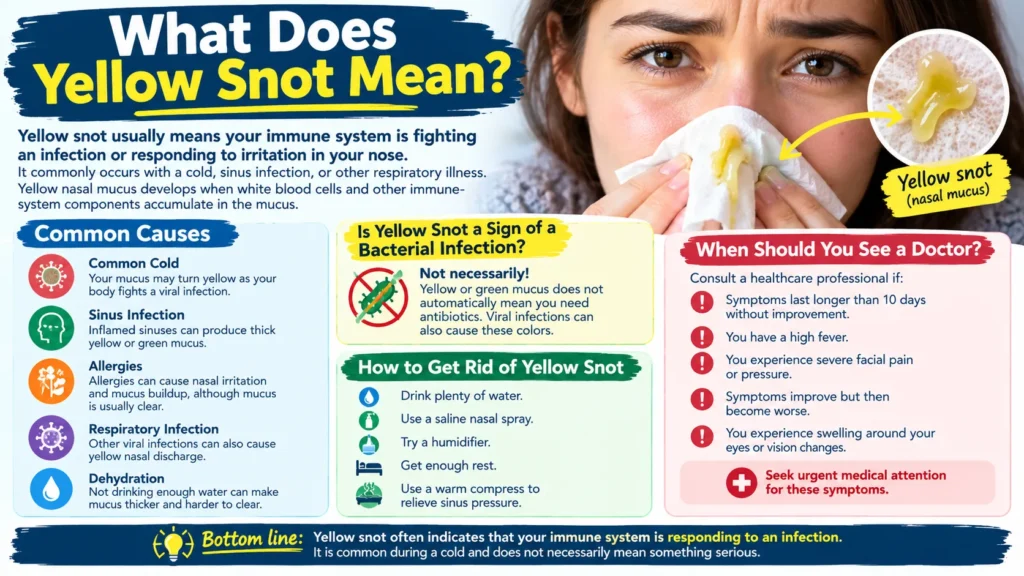
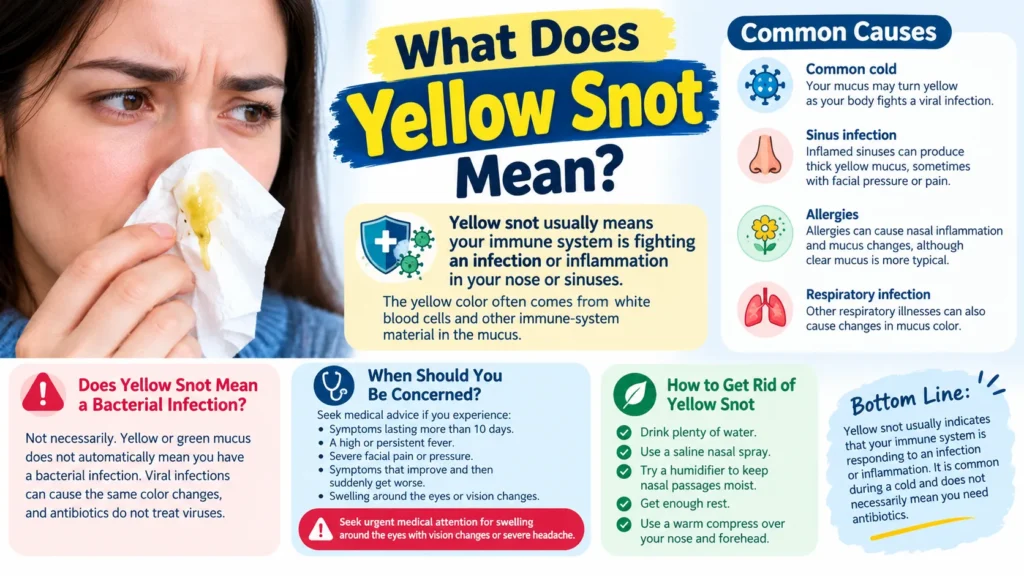
Yellow snot usually means your immune system is responding to an infection or inflammation in your nasal passages. It commonly appears during a cold, but it can also occur with sinus inflammation and other respiratory conditions. Yellow Mucus Alone does not mean you have a bacterial infection or need antibiotics.
The color of your nasal discharge can change throughout an illness. Your other symptoms, how long they last, and whether you are getting better or worse provide more useful clues than mucus color alone.
In this guide, you will discover what yellow nasal mucus means, why it develops, how to manage it safely, and when you should seek medical attention.
1. What Does Yellow Snot Mean?
Yellow snot is nasal mucus that has changed from its usual clear appearance to a yellow or yellowish-white color. This change commonly occurs when your body responds to a respiratory infection, such as the common cold.
Your nose produces mucus to trap dust, germs, and other particles. It also keeps your nasal passages moist and helps protect your respiratory system.
When your immune system responds to an infection, immune cells and other cellular material can accumulate in your mucus. This process can make the discharge look cloudy, yellow, or green.
Yellow nasal mucus may occur alongside several symptoms:
- A runny or blocked nose.
- Sneezing and throat irritation.
- Coughing or postnasal drip.
- Mild facial pressure.
- Tiredness or a fever.
These symptoms frequently occur during a common cold and often improve with time.
However, yellow snot does not identify the exact cause of your illness. Viral infections, bacterial infections, and sinus inflammation can produce similar-looking mucus.
The main takeaway: Yellow snot often accompanies an ordinary respiratory illness. Pay attention to how you feel and how your symptoms develop instead of judging your health by color alone.
2. Why Does Nasal Mucus Turn Yellow?
Your immune system plays an important role in changing the appearance of nasal mucus.
When a virus enters your respiratory tract, your body activates its defenses. Immune cells move into affected tissues to help fight the infection. These cells, along with inflammatory substances and cellular debris, can change mucus from clear to cloudy or yellow.
Inflammation can also increase mucus production and slow its movement through your nasal passages. As a result, your discharge may become thicker and more noticeable.
During a common cold, your mucus may follow this general pattern:
- Early symptoms: Your nose produces thin, clear, watery mucus.
- Increasing congestion: Inflammation makes the mucus thicker or cloudier.
- Immune response: The discharge may turn yellow or green as immune cells and cellular material accumulate.
- Recovery: The mucus gradually decreases or becomes clearer as your symptoms improve.
Not everyone experiences these stages in the same order. Some people develop yellow mucus early, while others never notice a significant color change.
Yellow mucus also does not indicate the severity of an infection. Someone with yellow discharge may have a mild cold, while another person with clear mucus may feel quite unwell.
Understanding this process helps explain why mucus color alone cannot tell you whether an illness is serious.
3. What Are the Most Common Causes of Yellow Snot?
Several conditions can cause yellow nasal discharge. Your other symptoms and the duration of your illness can help a healthcare professional determine the likely cause.
The common cold
A common cold is one of the most frequent reasons for yellow snot. The infection causes inflammation in your nasal passages, increases mucus production, and activates your immune system.
You may initially experience sneezing and a watery nose before the discharge becomes thicker or yellow.
Most uncomplicated colds improve gradually with time and supportive care.
Sinus inflammation
Your sinuses are air-filled spaces around your nose, cheeks, and forehead. When their lining becomes inflamed, mucus may not drain as easily as usual.
This can cause yellow or green nasal discharge, congestion, facial pressure, headaches, and a reduced sense of smell.
Sinus inflammation often follows a cold and does not always involve a bacterial infection.
Other respiratory infections
Other respiratory viruses can also change mucus color. Yellow discharge may accompany coughing, a sore throat, congestion, and general tiredness.
Mucus color alone cannot distinguish one respiratory virus from another.
Allergies and nasal irritation
Allergies commonly cause clear, watery mucus, sneezing, and itchy eyes or nose. However, mucus can become thicker when nasal inflammation, congestion, or an additional respiratory infection occurs.
Dust, smoke, and other airborne irritants can also aggravate your nasal passages.
Dry air and dehydration
Dry indoor air can irritate your nose and make secretions feel thicker. Not drinking enough fluids can also contribute to thick mucus.
These factors may affect mucus consistency, although they do not necessarily explain its yellow color.
Identifying the possible cause helps you choose appropriate care instead of assuming that every episode of yellow snot requires medication.
4. Does Yellow Snot Mean You Have a Bacterial Infection?
No. Yellow snot does not automatically mean you have a bacterial infection.
Both viral and bacterial respiratory infections can produce yellow or green nasal discharge. A common cold may cause mucus to change color as your immune system responds to the virus.
Antibiotics do not treat viruses, so yellow mucus alone is not a reason to take them.
Certain symptom patterns can make a bacterial sinus infection more concerning.
Consider contacting a healthcare professional if:
- Your nasal symptoms continue for more than 10 days without improvement.
- You initially improve but then develop worse congestion, discharge, fever, or facial pain.
- You experience several days of significant fever with thick nasal discharge or facial pain.
- Your symptoms are severe or continue to interfere with daily activities.
These patterns may suggest a bacterial sinus infection, but they do not confirm one by themselves.
A healthcare professional can evaluate your symptoms and determine whether antibiotics or another treatment may help.
Avoid taking leftover antibiotics or using someone else’s prescription. Unnecessary antibiotics can cause side effects and contribute to antibiotic resistance.
Remember: The combination of symptoms and their progression matters more than whether your mucus looks yellow or green.

5. Yellow Snot and a Common Cold: What Is the Difference?
Yellow snot and a common cold are closely related, but they are not the same thing.
Yellow snot describes the appearance of nasal mucus. A common cold is a viral respiratory infection that can cause a runny nose, sneezing, congestion, a sore throat, and coughing.
The mucus color may change during a cold without indicating that the illness has become more serious.
| Feature | Yellow snot during a cold | Symptoms that may suggest sinusitis |
| Nasal discharge | May become yellow or thick | May be yellow or green |
| Congestion | Common | Common and sometimes persistent |
| Facial pressure | May be mild | May be more noticeable |
| Headache | Sometimes occurs | May accompany facial pressure |
| Duration | Often improves within about 7–10 days | Persistent or worsening symptoms deserve evaluation |
| Antibiotics | Usually unnecessary for a viral cold | May be appropriate for selected bacterial infections |
These patterns overlap. You cannot reliably distinguish a viral cold from a bacterial sinus infection by mucus color alone.
A typical cold gradually improves. If you feel better and then become significantly worse, or if symptoms persist beyond 10 days without improvement, seek medical advice.
6. Can Yellow Snot Mean a Sinus Infection?
Yes. Yellow snot can occur with sinusitis, which is inflammation of the tissue lining your sinuses.
Your sinuses normally drain mucus through small openings into your nasal passages. When inflammation narrows these openings, mucus may accumulate and contribute to congestion and pressure.
Sinusitis can develop after a cold. Viruses cause most acute sinus infections, although bacteria can cause some cases.
Possible symptoms include:
- Pressure or tenderness around your cheeks, forehead, or eyes.
- A blocked nose or difficulty breathing through your nose.
- A headache that accompanies congestion.
- Mucus draining down the back of your throat.
- A reduced sense of smell.
- Coughing or bad breath.
- Fever or tiredness.
The duration and progression of your symptoms help determine whether you need medical evaluation.
For example, symptoms lasting more than 10 days without improvement, worsening symptoms after initial recovery, or severe facial pain may warrant medical assessment.
Most uncomplicated sinus infections improve without antibiotics. A healthcare professional can determine whether supportive care, watchful waiting, or prescription treatment is appropriate.
Seek urgent medical care if sinus symptoms include swelling or redness around an eye, changes in vision, confusion, a stiff neck, or a severe headache accompanied by concerning symptoms.
7. What Does Thick or Sticky Yellow Mucus Mean?
Thick or sticky yellow mucus can develop when nasal inflammation changes mucus production and drainage.
Your nose produces Mucus Continuously to trap particles and maintain moisture inside the nasal passages. During a cold or sinus illness, inflammation can slow mucus movement and increase congestion.
Dry air or inadequate fluid intake can also make secretions feel thicker.
Thick yellow mucus may accompany:
- A common cold.
- Nasal congestion.
- Sinus inflammation.
- Postnasal drip.
- Dry indoor air or nasal irritation.
However, thickness does not tell you whether an infection is viral or bacterial.
If you have thick yellow discharge but your symptoms are mild and gradually improving, supportive care may be enough.
Try drinking fluids regularly, using a clean humidifier when the air is dry, and using saline nasal spray as directed.
A saline nasal rinse may also help remove excess mucus. If you use one, follow the product instructions and use distilled, sterile, or previously boiled and cooled water. Never use untreated tap water for nasal irrigation.
Contact a healthcare professional if thick discharge persists, develops a foul smell, occurs mainly on one side, or accompanies significant pain, fever, or worsening symptoms.
8. Why Is Your Snot Yellow in the Morning?
Yellow snot in the morning can occur because mucus accumulates while you sleep and becomes more noticeable when you wake up.
During the night, mucus continues to move through your nasal passages and may drain down the back of your throat. Sleeping in a dry room can also make secretions feel thicker.
Morning yellow mucus may be associated with:
- A common cold.
- Nasal congestion.
- Sinus inflammation.
- Dry indoor air.
- Allergies accompanied by congestion or another respiratory illness.
- Postnasal drip.
If your nose feels blocked when you wake up but improves throughout the day, dryness or temporary congestion may contribute to the problem.
You can try drinking water after waking, using saline nasal spray as directed, and keeping your sleeping environment comfortably humidified.
However, morning symptoms do not automatically mean the problem is harmless. Persistent one-sided discharge, a foul smell, repeated nosebleeds, facial pain, or symptoms lasting more than 10 days without improvement deserve medical attention.
Notice whether your symptoms improve, remain unchanged, or become worse over time. That information can help a healthcare professional evaluate the cause.
9. What Does Yellow Snot in Children Mean?
Yellow snot in children commonly occurs during a cold or another respiratory infection.
A child’s nasal discharge may begin clear and become thicker, cloudy, yellow, or green as the illness progresses. This color change alone does not mean the child needs antibiotics.
Parents and caregivers should pay attention to the child’s overall condition rather than focusing only on the mucus.
Watch for:
- Difficulty breathing.
- Unusual sleepiness or difficulty waking.
- Poor drinking or signs of dehydration.
- Persistent or high fever.
- Significant facial pain or swelling.
- Symptoms that worsen after initial improvement.
- Nasal discharge that persists beyond 10 days without improvement.
Seek urgent medical attention if a child has difficulty breathing, is difficult to wake, develops swelling around the eyes, or appears seriously unwell.
Age matters when evaluating a fever. A temperature of 38°C (100.4°F) or higher in a baby younger than three months requires prompt medical assessment.
For mild symptoms, saline nasal drops or spray may help loosen secretions. Gentle suction can help clear a baby’s nose when necessary.
Do not give children adult cold medicines or use over-the-counter cough and cold products without checking age restrictions and appropriate guidance from a healthcare professional.
If yellow mucus is accompanied by persistent symptoms, fever, or worsening discomfort, consult your child’s healthcare provider.
10. How Long Does Yellow Snot Usually Last?
Yellow snot often improves as the underlying cold or respiratory illness resolves.
For an uncomplicated common cold, symptoms commonly improve within about 7–10 days, although some symptoms, particularly coughing, may last longer.
The exact duration varies depending on the cause, your general health, and whether complications develop.
| Duration or pattern | What it may mean | What to do |
| A few days with mild cold symptoms | A common respiratory infection may be developing | Rest, drink fluids, and monitor symptoms |
| Yellow mucus that gradually improves | The underlying illness may be resolving | Continue supportive care as needed |
| More than 10 days without improvement | Possible sinusitis or another condition | Contact a healthcare professional |
| Symptoms improve and then become worse | A secondary infection or complication may have developed | Seek medical assessment |
| Persistent fever or significant facial pain | A condition requiring further evaluation may be present | Contact a healthcare professional promptly |
| Eye swelling, vision changes, confusion, or a stiff neck | Possible serious complication | Seek emergency medical care |
These timeframes are general guidance, not a diagnosis. Severe symptoms should not be ignored simply because they have lasted only a short time.
If your mucus remains yellow but your congestion and other symptoms are steadily improving, the color alone may not be concerning.
If symptoms persist, worsen, or repeatedly return, a healthcare professional can help identify the cause.
11. How to Get Rid of Yellow Snot Safely
The best way to manage yellow snot is to address the underlying cause and relieve congestion while your body recovers.
For many people with mild Cold Symptoms, supportive care is sufficient.
Drink fluids regularly
Water and other suitable fluids help maintain hydration. This can make thick secretions easier to manage, particularly if you have not been drinking enough.
You do not need to force excessive amounts of water. Drink according to your needs and any medical advice you have received.
Use saline nasal spray.
Saline spray can moisturize your nasal passages and help loosen mucus.
Follow the product instructions and use the spray as directed.
Consider a saline nasal rinse.
A saline rinse may help remove excess mucus and particles from your nasal passages.
Use distilled, sterile, or previously boiled and cooled water. Clean and dry the irrigation device according to its instructions.
Never use untreated tap water for nasal rinsing.
Rest and recover
Getting enough sleep and allowing yourself time to recover can help you manage an ordinary respiratory illness.
Avoid smoking and exposure to secondhand smoke, dust, or strong chemical fumes that may irritate your nose.
Add moisture to dry air
A clean humidifier may help if your indoor air is dry. Follow the manufacturer’s cleaning instructions to prevent the device from spreading microorganisms.
Use medicines carefully
Some people may benefit from appropriate over-the-counter medicines for congestion, pain, or fever. The best choice depends on your age, medical history, other medicines, and symptoms.
Ask a pharmacist or healthcare professional if you are unsure which medicine is suitable.
Antibiotics are not appropriate for an ordinary viral cold. A clinician can determine whether a bacterial infection is likely and whether prescription treatment is necessary.
Avoid putting essential oils, garlic, or other irritating substances inside your nose. These remedies can irritate or injure nasal tissues rather than safely treating the cause.
If your symptoms persist beyond 10 days without improvement, worsen after improving, or become severe, seek medical advice instead of relying solely on home remedies.
Related To Another Article: https://genzwishes.com/what-does-bombardino-crocodilo-mean/
12. When Should You See a Doctor About Yellow Snot?
Yellow nasal discharge by itself usually does not require an urgent medical visit. However, accompanying symptoms can indicate that you need professional assessment.
Contact a healthcare professional if:
- Your symptoms last longer than 10 days without improvement.
- You feel better initially but then become noticeably worse.
- You have a persistent fever.
- You experience severe or increasing facial pain.
- Your nasal discharge has a persistent foul smell.
- The discharge comes mainly from one nostril and does not resolve.
- You experience repeated sinus infections.
- You have a weakened immune system or another condition that increases your risk of complications.
Seek emergency medical care if you develop swelling or redness around an eye, vision changes, confusion, a stiff neck, or a severe headache accompanied by other concerning symptoms.
Difficulty breathing also requires prompt medical attention.
A healthcare professional may ask when your symptoms started, whether they are improving, and whether you have a fever, facial pain, or other symptoms.
They may examine your nose and throat and assess your sinuses. Additional testing is not always necessary for uncomplicated symptoms.
Treatment depends on the underlying cause. A viral infection generally requires supportive care, while selected bacterial infections may benefit from antibiotics.
If you are concerned about your symptoms, it is better to seek appropriate advice than to diagnose yourself based on mucus color.
13. What Is the Difference Between Yellow and Green Snot?
Yellow And Green snot can both occur during respiratory infections. Neither color reliably identifies the type of germ causing the illness.
The colors can change as mucus accumulates immune cells, inflammatory substances, and cellular debris.
Green mucus may look darker than yellow mucus, but that does not automatically mean the infection is more severe or that antibiotics are necessary.
| Mucus color | Possible explanation | What to remember |
| Clear | Normal nasal secretions or allergies | Common and not usually concerning by itself |
| White | Congestion or thickened mucus | May occur during a cold |
| Yellow | Immune response, often during a respiratory infection | Does not prove a bacterial infection |
| Green | Similar immune and inflammatory processes | Does not automatically mean a more serious infection |
| Pink or red | Blood mixed with mucus | May result from irritation, but persistent or significant bleeding needs assessment |
| Brown | Dried blood, dirt, smoke, or other particles | Consider exposure and accompanying symptoms |
| Black | Inhaled particles or, rarely, a serious medical condition | Persistent black mucus warrants prompt medical assessment |
This comparison provides general information rather than a diagnostic tool.
When deciding whether to seek care, consider how long symptoms have lasted, whether you have a fever, whether facial pain is present, and whether you are getting better or worse.
A person with yellow mucus and mild symptoms that are improving may need only supportive care. Someone with either yellow or green mucus and persistent fever or worsening facial pain may need medical evaluation.
The overall pattern matters more than the shade of your snot.
People Also Ask
A: Yellow snot commonly means your immune system is responding to an infection or inflammation in your nasal passages. It frequently occurs during a common cold but can also accompany sinusitis.
A: It can be. Yellow mucus commonly appears during respiratory infections, including viral colds. However, its color alone cannot confirm an infection or identify whether it is viral or bacterial.
A: No. Yellow mucus alone is not a reason to take antibiotics. Antibiotics do not treat viral infections, and many sinus infections improve without them. A healthcare professional can determine whether antibiotics are appropriate.
A: Yes. Nasal mucus often changes from clear to cloudy, yellow, or green during a cold. This change can occur as your immune system responds to the virus.
A: Thick yellow mucus may develop when inflammation slows mucus drainage or changes its consistency. Dry air and inadequate hydration can also contribute to thick secretions.
Conclusion
Yellow snot most often appears when Your Immune system responds to an infection or inflammation in your nasal passages. A common cold is a frequent cause, but sinusitis and other conditions can produce similar symptoms.
Remember that yellow mucus does not automatically mean you have a bacterial infection or need antibiotics. Your symptoms, how long they last, and whether they improve provide more useful information than color alone.
For mild symptoms, drinking fluids, resting, using saline nasal spray, and avoiding nasal irritants may help you feel more comfortable.
Seek medical advice if your symptoms persist beyond 10 days without improvement, worsen after initial recovery, or accompany persistent fever or significant facial pain. Get emergency care for serious warning signs such as eye swelling with vision changes, confusion, or a stiff neck.
Understanding what yellow nasal mucus can and cannot tell you helps you respond calmly, choose appropriate self-care, and recognize when professional guidance is necessary.
Health disclaimer: This article provides general educational information and does not replace professional medical advice, diagnosis, or treatment. Consult a qualified healthcare professional about persistent, severe, or concerning symptoms.