Introduction
Have you ever felt your Eyelid Flutter Unexpectedly while working, scrolling through your phone, or relaxing? An eye twitch can be annoying, especially when it keeps returning throughout the day. You might wonder whether it means you are tired, stressed, or experiencing a more serious health problem.
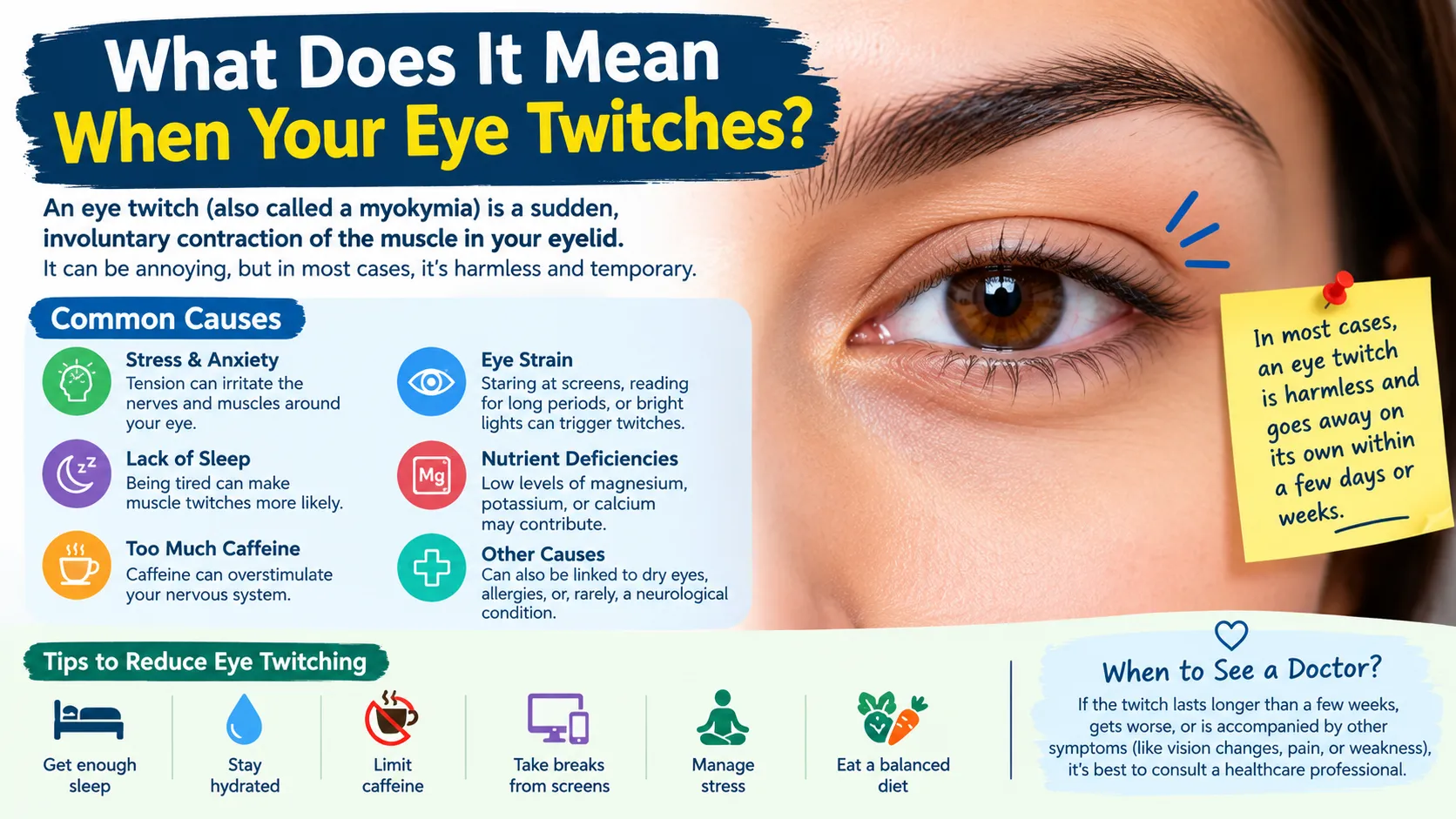
What does it mean when your eye twitches? In most cases, it means the muscles in or around your eyelid are contracting involuntarily. Common triggers include stress, tiredness, caffeine, eye strain, and dry eyes. Most mild eyelid twitches disappear without specific treatment.
However, persistent spasms, forceful eyelid closure, twitching that spreads across your face, or vision changes deserve medical attention. Understanding the possible causes can help you decide what to do next.
1. What Does It Mean When Your Eye Twitches?
Eye twitching usually refers to small, involuntary movements of the muscles in or around your eyelid. These movements happen without your control and may feel like fluttering, pulsing, or repeated blinking.
The most common mild form is called eyelid myokymia. It often affects one eyelid, particularly the lower eyelid, and may come and go for several days.
Common triggers include:
- Stress or emotional tension
- Lack of sleep
- Excessive caffeine consumption
- Dry or irritated eyes
- Prolonged screen use
- Eye strain and fatigue
- Certain medications
An occasional eyelid twitch usually does not indicate a serious health problem. It may improve when you get enough rest, reduce excessive caffeine, and address eye irritation.
However, not every type of twitching is the same. Some conditions cause stronger spasms that close the eyelid or affect muscles elsewhere on the face.
Pay attention to how often the twitch occurs, how long it lasts, and whether other symptoms appear. These details can help an eye care professional understand what might be causing it.
2. What Causes Eye Twitching?
Several everyday factors can trigger eyelid twitching. Sometimes, more than one factor contributes to the problem, making it difficult to identify a single cause.
Stress and anxiety: Emotional pressure may trigger or worsen twitching. You might notice it more often during examinations, demanding work, family difficulties, or periods of poor sleep.
Sleep deprivation: Insufficient sleep can make eyelid twitching more likely. A consistent sleep schedule may help reduce this trigger.
Caffeine: Coffee, tea, energy drinks, and other caffeinated products can contribute to twitching, particularly when you consume large amounts.
Eye strain: Extended screen use, reading for long periods, or working without breaks may contribute to eye discomfort and twitching.
Dry eyes: Dryness or irritation on the surface of the eye may contribute to eyelid spasms.
Medication effects: Some medicines can contribute to muscle twitching. If the symptom begins after starting a medication, discuss it with your prescribing clinician or pharmacist.
Other possible contributors include bright light, nicotine, and alcohol.
The exact trigger is not always obvious. Pay attention to your sleep, caffeine intake, screen habits, and eye symptoms to identify possible patterns.
If the twitching continues despite addressing common triggers, consult an eye care professional rather than assuming stress is the only explanation.
3. What Does It Mean When Your Upper Eyelid Twitches?
An upper eyelid twitch usually means that small muscles around your eyelid are contracting involuntarily. Like lower eyelid twitching, it is often temporary and harmless.
You might notice your upper eyelid flutter while reading, working on a computer, or trying to fall asleep. The sensation can be distracting even when other people cannot see the movement.
Possible triggers include:
- Poor sleep
- Stress or anxiety
- Excessive caffeine
- Dry eyes
- Eye irritation
- Fatigue
The location of the twitch does not reliably identify its cause. An upper eyelid twitch does not automatically indicate a neurological problem or a nutritional deficiency.
Try getting adequate sleep, reducing excessive caffeine, and taking regular breaks from screens. If your eyes feel dry, ask a pharmacist or eye care professional whether lubricating eye drops are appropriate.
Pay attention to changes in the pattern. If the twitching persists for several weeks, becomes forceful, closes your eyelid, or occurs alongside other symptoms, arrange a medical assessment.
4. What Does It Mean When Your Lower Eyelid Twitches?
Lower eyelid twitching is a common form of eyelid myokymia. It often feels like a small ripple or flutter beneath your eye.
This type of twitching may appear unexpectedly and disappear for a while before returning. It commonly affects one eye and usually does not interfere with vision.
Possible contributing factors include tiredness, stress, caffeine, dry eyes, and eye strain.
For example, someone who spends several hours working on a laptop, sleeps poorly, and drinks multiple caffeinated beverages may experience twitching because of a combination of triggers.
To help, prioritize sleep, take regular screen breaks, and reduce excessive caffeine. If you have dryness or irritation, address those symptoms as well.
Lower eyelid twitching does not reliably indicate a vitamin deficiency, impending illness, or future event. Its location alone cannot establish a diagnosis.
If the twitching lasts for several weeks, spreads to other facial muscles, or occurs with redness, swelling, drooping, or difficulty opening your eye, arrange a medical evaluation.
5. What Does It Mean When Your Left or Right Eye Twitches?
People often search for the meaning of left-eye or right-eye twitching because they want to know whether the side has special significance. Cultural traditions sometimes associate these movements with luck, money, or upcoming events.
From a medical perspective, the side of the twitch alone does not reliably reveal its cause or predict what will happen to you.
A twitch in your left eye may have the same everyday triggers as a twitch in your right eye. These include tiredness, stress, caffeine, and eye irritation.
Both eyes may also twitch at different times. Some medical conditions can affect both eyelids or involve other facial muscles.
Does left-eye twitching mean good or bad luck?
Some cultural traditions associate left-eye twitching with good luck, bad luck, or future events. Interpretations vary between cultures and communities.
However, there is no reliable scientific evidence that a left-eye twitch predicts good news, bad news, money, or an upcoming event.
Does right-eye twitching have a special meaning?
Similarly, a right-eye twitch is not a medically established prediction of success, financial gain, or misfortune.
You can appreciate cultural traditions without confusing them with medical explanations. If your eye keeps twitching, focus on its duration, severity, associated symptoms, and possible physical triggers.
6. Can Stress and Anxiety Cause Eye Twitching?
Yes. Stress and anxiety can trigger or worsen eyelid twitching in some people. The symptom may become more noticeable during periods of emotional pressure or poor sleep.
When you experience stress, your daily habits may change. You might sleep less, consume more caffeine, or spend longer periods concentrating on screens. These factors can contribute to twitching.
The twitch itself may then make you anxious, creating a Frustrating Cycle.
To help manage possible stress-related twitching, consider these steps:
- Maintain a regular sleep schedule.
- Take short breaks during demanding tasks.
- Try slow breathing or another relaxation technique.
- Reduce excessive caffeine intake.
- Make time for physical activity appropriate to your health.
- Address ongoing sources of stress when possible.
These measures may help when stress contributes to the symptom, although they cannot guarantee that the twitch will stop.
Do not assume that anxiety explains every episode. If the twitching persists, becomes forceful, spreads across your face, or affects your vision, seek medical advice.
7. Can Lack of Sleep, Caffeine, or Screen Time Make Your Eye Twitch?
Yes. Lack of sleep, excessive caffeine, and prolonged screen use can contribute to eyelid twitching, although their effects vary from person to person.
Understanding these everyday triggers can help you identify habits that may be making your symptoms worse.
Lack of sleep
Fatigue is a common trigger. Try maintaining consistent bedtimes and wake-up times while allowing enough time for sleep.
Caffeine
Large amounts of caffeine may aggravate twitching. If you regularly drink coffee, strong tea, or energy drinks, consider reducing your intake and observing whether your symptoms improve.
Screen time
Long periods of screen use can contribute to eye strain and dryness, especially when you blink less frequently or work in an uncomfortable environment.
Try these habits:
- Look away from your screen regularly.
- Blink naturally and completely.
- Adjust screen brightness and text size for comfort.
- Position your screen at a comfortable distance.
- Take breaks during prolonged computer work.
- Avoid rubbing irritated eyes.
The 20-20-20 rule offers a simple reminder to take visual breaks: every 20 minutes, look at something about 20 feet away for at least 20 seconds. It may help make screen breaks easier to remember, but it is not a guaranteed treatment for twitching.
If changing your habits does not help, consider an eye examination to check for dryness, irritation, or vision problems.
8. How Long Does Eye Twitching Usually Last?
The duration depends on the type of twitching and its underlying cause. A mild eyelid twitch may last only a few seconds or minutes before disappearing, but it can return intermittently over several days.
Some episodes continue for days or weeks, particularly when contributing factors remain present. However, prolonged twitching should not automatically be attributed to fatigue or stress.
Use this general guide to understand when to monitor the symptom and when to seek advice.
| Duration or pattern | What it may mean | Recommended action |
| A few seconds or minutes | Often a temporary muscle twitch | Observe whether it returns. |
| Intermittent twitching over several days | Possible everyday triggers or eye irritation | Review sleep, caffeine, and screen habits. |
| Twitching that continues for one to two weeks | May need assessment if it is not improving | Consider arranging medical advice. |
| Twitching that persists for several weeks | Needs evaluation to identify the cause | See an eye care professional. |
| Forceful closure or twitching with other symptoms | May indicate something beyond an ordinary eyelid twitch | Seek prompt medical assessment. |
These are practical guidelines rather than a diagnostic timetable. The NHS advises seeking medical advice when a twitch lasts more than two weeks, while other eye care resources recommend assessment sooner for certain symptoms.
Do not wait for a specific duration if your eyelid closes completely, your vision changes, or the twitching spreads across your face.
9. How Can You Stop Eye Twitching Naturally?
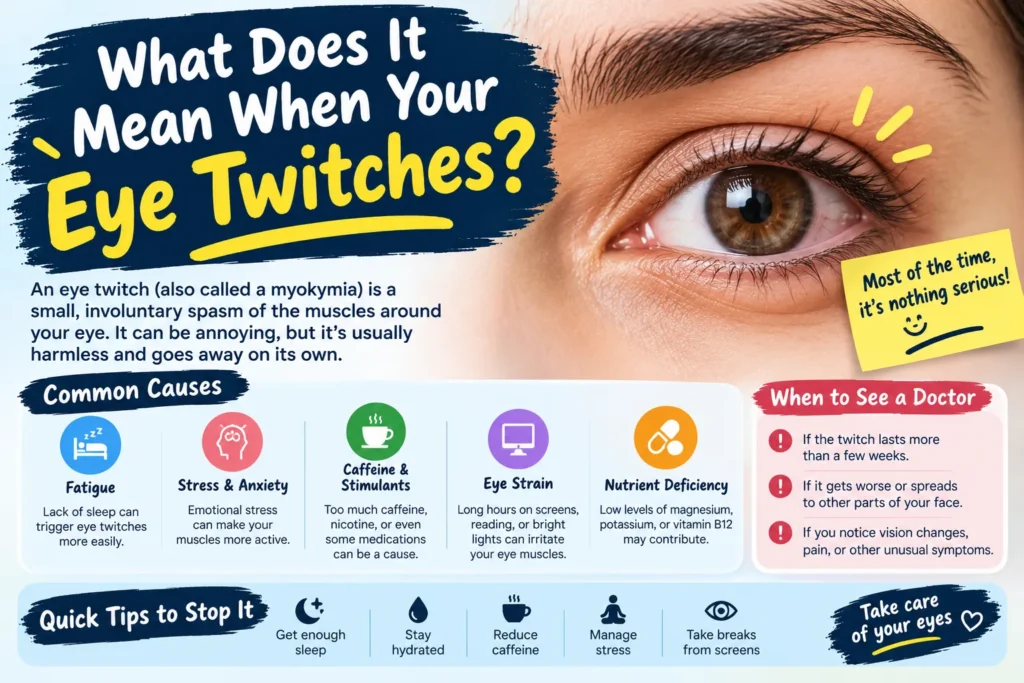
Most mild eyelid twitches improve without Specific Treatment. You can try several simple measures to reduce common triggers and make your eyes more comfortable.
Get enough sleep. Maintain a consistent sleep schedule and address habits that interfere with restful sleep.
Reduce excessive caffeine. Consider how much coffee, tea, or energy drinks you consume. Reduce your intake if you suspect caffeine contributes to twitching.
Manage stress. Relaxation, physical activity, and regular breaks may help reduce stress-related triggers.
Take screen breaks. Avoid prolonged periods of uninterrupted close-up work. Adjust your workspace for visual comfort.
Address dry eyes. Lubricating eye drops, often called artificial tears, may help when dryness contributes to the problem. Follow the product instructions and ask an eye care professional for advice if you are unsure which product to use.
Avoid rubbing your eyes. Rubbing can worsen irritation. If your eyes itch or feel uncomfortable, investigate the underlying cause.
Review possible medication effects. Some medicines can contribute to twitching. Ask your prescribing clinician or pharmacist whether a medication could be involved.
Do not stop a prescribed medicine or start supplements solely because your eyelid is twitching. If the symptom continues, a healthcare professional can help determine whether further evaluation or treatment is necessary.
10. When Should You Worry About Eye Twitching?
Most isolated eyelid twitches are harmless. However, certain symptoms suggest that you should seek medical attention instead of relying on home care.
Arrange an appointment with an eye care professional if:
- The twitching persists for more than two weeks.
- Your eyelid closes completely during spasms.
- You have difficulty opening your eye.
- The twitching spreads to other parts of your face.
- Your eyelid begins to droop.
- Your eye becomes red or swollen or develops discharge.
- You experience ongoing irritation or discomfort.
- The twitching interferes with everyday activities.
- Your vision changes or the symptoms become increasingly troublesome.
A clinician may examine your eye, review your medications and habits, and determine whether further investigation is necessary.
When is eye twitching an emergency?
Seek emergency medical care if twitching occurs alongside sudden facial weakness, difficulty speaking, sudden vision loss, a severe sudden headache, or other sudden neurological symptoms.
These symptoms are not typical of a simple eyelid twitch and may indicate a serious medical problem.
Do not wait for the twitching to stop before seeking help when emergency warning signs are present.
Related To Another Article: https://genzwishes.com/what-does-yellow-snot-mean/
11. What Medical Conditions Can Cause Persistent Eye Twitching?
Although everyday triggers account for many cases, some medical conditions can cause more persistent or forceful spasms. The pattern of movement and the presence of other symptoms help distinguish these conditions from ordinary twitching.
Eyelid myokymia
This is the common, usually mild form of eyelid twitching. It often affects one eyelid and typically resolves without treatment.
Benign essential blepharospasm
This less common movement disorder causes involuntary blinking or eyelid contractions. In more severe cases, the eyelids may close forcefully and interfere with vision or everyday activities.
Hemifacial spasm
This condition causes involuntary contractions on one side of the face. The movements may begin around the eye and spread to the cheek or mouth.
Other neurological conditions
Certain neurological disorders can involve facial or eyelid movements. However, an ordinary isolated eyelid twitch is not, by itself, evidence of a neurological disease.
A healthcare professional considers the movement pattern, duration, other symptoms, medical history, and examination findings before determining whether a condition may be responsible.
Persistent or unusual twitching deserves professional assessment rather than self-diagnosis. A clinician can decide whether you need an eye examination, medication review, or referral to another specialist.
12. Can Eye Twitching Mean a Vitamin or Magnesium Deficiency?
Eye twitching alone does not establish that you have a vitamin or mineral deficiency. Although nutritional problems can affect health in different ways, a twitch by itself cannot identify a particular deficiency.
You may encounter online claims that eyelid twitching always indicates low magnesium, vitamin B12 deficiency, or another nutritional problem. These claims oversimplify a symptom that has many possible causes.
Stress, fatigue, caffeine, and eye irritation are common explanations for mild eyelid twitching.
Avoid taking high-dose supplements solely to treat this symptom. Unnecessary supplements can cause side effects, interact with medicines, or delay appropriate assessment.
If you have other symptoms, dietary concerns, or risk factors for a nutritional deficiency, speak with a healthcare professional. They can determine whether testing or dietary changes are appropriate.
The best approach is to investigate persistent symptoms instead of assuming that a specific nutrient is responsible.
13. How Do Doctors Diagnose and Treat Persistent Eye Twitching?
A healthcare professional usually starts by asking about your symptoms and examining your eyes. The goal is to understand the type of movement, identify possible triggers, and determine whether another condition requires attention.
They may ask:
- When did the twitching start?
- Does it affect one eye or both?
- Does your eyelid close completely?
- Are other facial muscles involved?
- Do you have pain, redness, swelling, or vision changes?
- How much sleep do you get?
- How much caffeine do you consume?
- Which medications do you take?
- Do you have other medical conditions?
The examination and symptom pattern help the clinician decide whether the twitching is likely to be a common eyelid spasm or something that needs additional investigation.
Mild eyelid twitching generally does not require specific treatment. If a treatable cause is identified, the clinician may recommend addressing it.
For certain persistent movement disorders, treatments may include botulinum toxin injections or other specialist-directed therapies. These treatments are not necessary for ordinary, short-lived eyelid twitching.
The appropriate approach depends on the diagnosis rather than the twitching symptom alone.
14. Common Myths About Eye Twitching: What Is Actually True?
Eye twitching has attracted many cultural Interpretations and health myths. Understanding the difference between a traditional belief and a medically supported explanation can prevent unnecessary worry.
| Common belief | What you should know |
| Left-eye twitching predicts bad luck. | The side of the twitch does not reliably predict future events. |
| Right-eye twitching means money is coming. | There is no established medical evidence that it predicts financial gain. |
| Every eye twitch indicates a serious disease. | Most mild eyelid twitches are harmless and temporary. |
| Eye twitching always means magnesium deficiency. | A twitch alone cannot establish a nutritional deficiency. |
| Eye twitching is always caused by stress. | Stress is one possible trigger, but other factors may contribute. |
| Eye twitching always needs medication. | Mild cases often resolve without specific treatment. |
| An eye twitch predicts something bad will happen. | Eyelid twitching is a physical symptom, not a reliable prediction of future events. |
| Upper eyelid twitching is always dangerous. | The location alone does not establish the cause or seriousness. |
| Lower eyelid twitching always means tiredness. | Fatigue is one possible trigger, but it is not the only explanation. |
| A twitching eye means you need supplements. | Supplements are not automatically necessary or appropriate. |
Cultural beliefs may be meaningful to individuals and communities, and interpretations can differ between traditions. However, they should not replace medical information when symptoms persist or warning signs develop.
The most useful approach is to pay attention to your physical symptoms, identify possible triggers, and seek appropriate care when necessary.
People Also Ask
A: It usually means that the muscles in or around your eyelid are contracting involuntarily. Common triggers include stress, tiredness, caffeine, eye strain, and dry eyes.
A: Usually not. Most mild eyelid twitches are harmless. Persistent spasms, forceful eyelid closure, facial weakness, or vision changes require appropriate medical attention.
A: Repeated twitching may be associated with poor sleep, stress, excessive caffeine, dry eyes, irritation, or prolonged screen use. If it persists, consult an eye care professional.
A: An upper eyelid twitch is commonly a temporary muscle spasm. Its location alone does not reveal the underlying cause.
A: Lower eyelid twitching is a common form of eyelid myokymia. It often improves without treatment, although persistent symptoms deserve assessment.
Conclusion
So, what does it mean when your Eye Twitches? In most cases, it means your eyelid muscles are reacting to a temporary trigger such as stress, tiredness, caffeine, eye strain, or dryness.
Getting enough sleep, reducing excessive caffeine, taking screen breaks, and addressing irritation may help. However, persistent twitching, forceful eyelid closure, facial spasms, or vision changes should not be ignored.
Remember that the location of the twitch does not reliably predict future events or establish a diagnosis. Pay attention to its duration and associated symptoms, and consult a healthcare professional when appropriate.
If this guide helped answer your question, consider bookmarking it for future reference and sharing it with someone who has similar concerns. Explore other GenzWishes articles for straightforward explanations of everyday terms and questions.