Introduction
Have you ever noticed a baby who wants to stay in their parent’s arms almost all day? The moment someone puts them down, they start crying. When their favorite person leaves the room, they immediately want them back. Parents often describe this behavior using the expression Velcro baby.
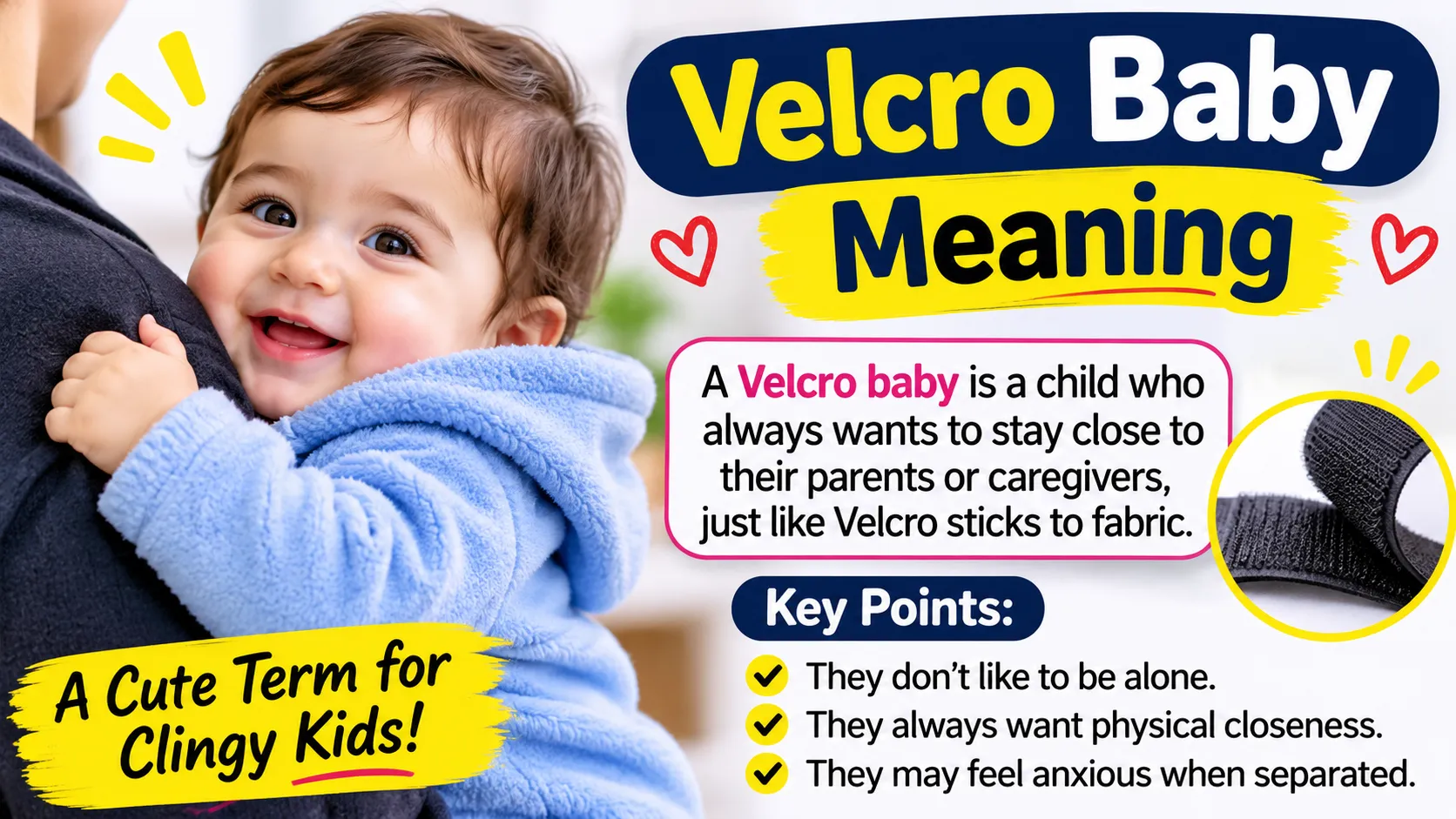
The Velcro baby meaning refers to an infant or Young Toddler who strongly prefers staying physically close to a parent or caregiver. These babies may constantly want to be carried, cuddled, or kept within sight.
Although caring for a clingy baby can sometimes feel exhausting, this behavior is often part of normal emotional and social development. It does not automatically mean something is wrong or that parents are doing anything incorrectly.
In this guide, you’ll learn what a Velcro baby is, why babies become clingy, the common signs, when this stage starts and ends, and practical ways to support your little one.
1. What Does Velcro Baby Mean?
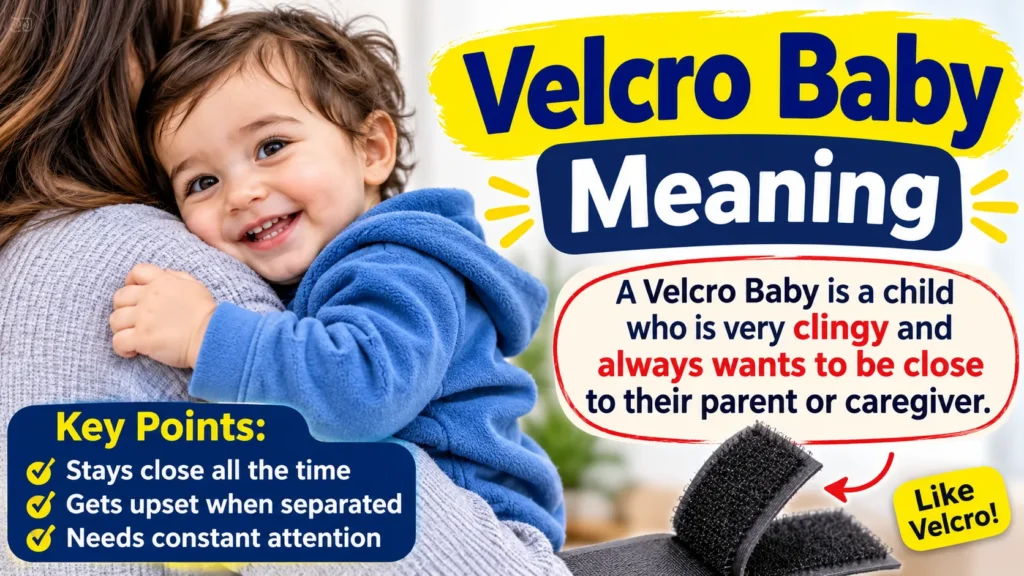
A Velcro baby is an informal parenting term for a baby who strongly prefers staying close to a parent or caregiver. These babies often want to be held, carried, cuddled, or kept within someone’s sight throughout the day.
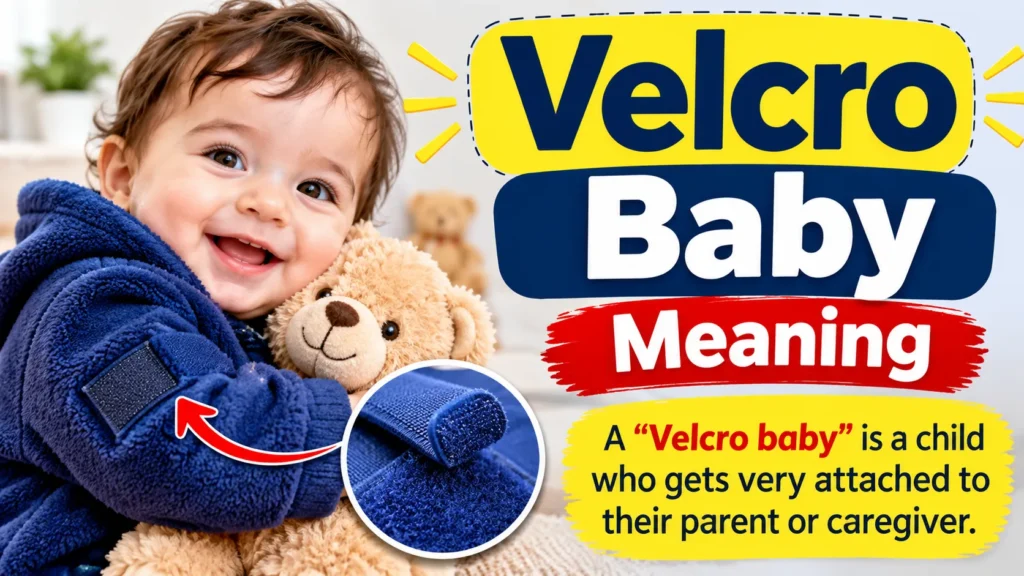
The expression compares a clingy baby to Velcro, a fastening material that sticks firmly to another surface. Similarly, these babies seem attached to their favorite caregiver and may become upset when someone puts them down or walks away.
For example, a Velcro baby might:
- Cry whenever their mother or father leaves the room.
- Prefer being carried instead of sitting independently.
- Want physical contact even when their basic needs are met.
- Become uncomfortable when unfamiliar people hold them.
- Reach out whenever their favorite person walks away.
- Have difficulty settling without a familiar caregiver nearby.
However, every baby has a different personality and comfort level. Some infants naturally seek more attention, while others become clingy during particular developmental stages.
In simple words: A Velcro baby is a baby who wants constant closeness, attention, and reassurance from their favorite caregiver.
It is important to understand that Velcro baby is not a medical diagnosis. It is simply a popular expression parents use to describe clingy behavior.
2. Why Is It Called a Velcro Baby?
The expression comes from the familiar fastening material called Velcro, which attaches two surfaces through tiny hooks and loops.
People use this comparison because some babies seem almost impossible to separate from their parents. They want to remain in someone’s arms, follow their caregiver’s movements, and become upset when physical contact ends.
Imagine a mother trying to prepare dinner while her baby keeps reaching for her. She picks the little one up, provides comfort, and puts them down again. Within seconds, the baby wants another cuddle.
That is exactly the kind of behavior the expression describes.
The phrase is generally affectionate rather than negative. Parents use it to explain a baby’s strong desire for comfort, attention, and closeness.
It also captures a familiar parenting experience: having a little person who believes personal space is an optional concept!
3. What Are the Signs of a Velcro Baby?
Not every baby who enjoys cuddling is necessarily a Velcro baby. However, certain repeated behaviors may suggest that an infant strongly prefers constant physical contact.
Here are some common signs.
1. Always Wants to Be Held
One of the most recognizable signs is a strong preference for being carried. The baby may become upset when placed in a crib, play area, or another safe location.
2. Cries When You Leave the Room
A clingy baby may react when a parent disappears from sight. Even a short separation can lead to crying, reaching, or searching for the caregiver.
3. Prefers One Particular Parent
Some babies strongly prefer one caregiver, often the person who spends the most time comforting, feeding, or caring for them.
They might reject another familiar person even when that person tries to soothe them.
4. Wants Constant Physical Contact
These babies may enjoy sitting on a parent’s lap, resting against their chest, or being carried around the house.
5. Struggles With Independent Play
A baby may become uncomfortable when playing alone, even when surrounded by interesting toys.
They may repeatedly look for their caregiver or communicate their desire for attention through sounds and gestures.
6. Wakes Up When Put Down
Some babies become unsettled when a caregiver transfers them from their arms to a crib or another sleep surface.
However, frequent waking can have several explanations, including normal infant sleep patterns.
7. Becomes Upset Around Unfamiliar People
A baby may become nervous when someone unfamiliar approaches or attempts to hold them.
8. Needs Extra Comfort During Difficult Moments
Hunger, tiredness, teething discomfort, illness, and changes in routine can increase a baby’s need for attention.
These signs can occur occasionally or repeatedly. Their meaning depends on the baby’s age, temperament, health, and developmental stage.
4. Why Do Some Babies Become Velcro Babies?
There is no single reason why a baby becomes Especially Clingy. Several developmental, emotional, and environmental factors can influence this behavior.
1. Natural Personality and Temperament
Every baby has an individual temperament. Some infants are naturally more sensitive to sounds, unfamiliar people, environmental changes, and physical separation.
These babies may need additional reassurance to feel comfortable.
2. Developing Emotional Attachment
Babies gradually develop strong emotional connections with the people who care for them.
A familiar caregiver provides comfort, protection, and reassurance. Therefore, a baby may repeatedly seek that person’s presence.
3. Separation Anxiety
Separation anxiety is a common developmental experience during infancy.
As babies become more aware of their surroundings and recognize familiar people, they may react when a parent leaves.
4. Object Permanence
Object permanence refers to understanding that people and objects continue to exist even when they cannot be seen.
As this ability develops, babies may become more aware when their caregivers disappear from view.
5. Developmental Changes
Learning new skills, exploring unfamiliar surroundings, and experiencing developmental changes can temporarily affect a baby’s behavior.
During these periods, some infants seek additional physical contact and reassurance.
6. Hunger, Tiredness, or Discomfort
A baby who is hungry, sleepy, uncomfortable, or overstimulated may become more demanding.
Sometimes what looks like clinginess is simply a way of communicating an unmet need.
7. Changes in Daily Routine
Travel, moving homes, starting childcare, or changes in caregiving arrangements can make babies seek extra reassurance.
A familiar routine often helps infants feel more secure.
Understanding these possible causes can help parents respond with patience instead of assuming their baby is behaving badly.
5. At What Age Does the Velcro Baby Stage Start?
There is no fixed age when every baby becomes a Velcro baby.
Some infants prefer constant physical contact from their earliest weeks. Others become noticeably clingier during the second half of their first year.
Separation anxiety commonly becomes more noticeable around 8 to 9 months, although its timing varies.
The CDC identifies being shy, clingy, or fearful around strangers and reacting when a caregiver leaves as common social and emotional milestones by 9 months.
Here is a general overview:
| Baby’s age | Common behavior |
| Newborn to 3 months | Needs frequent feeding, comfort, warmth, and physical contact |
| 4 to 6 months | May begin showing stronger preferences for familiar caregivers |
| 7 to 9 months | Clinginess and reactions to separation may become more noticeable |
| 10 to 18 months | Separation anxiety may become particularly strong |
| 18 to 24 months | Many children gradually become more comfortable with short separations |
These are general developmental patterns, not strict rules. Babies develop at different rates, and their behavior can change over time.
Parents should focus on their child’s individual development instead of comparing them with another baby.
6. When Does the Velcro Baby Stage End?
The Velcro baby stage does not have one universal ending date.
Many babies gradually become more comfortable exploring their surroundings as they grow, develop new skills, and gain confidence in familiar environments.
For some children, clinginess decreases during toddlerhood. Others continue seeking extra reassurance during unfamiliar situations, illness, tiredness, or major changes.
Separation anxiety often becomes easier to manage as children develop independence and become more comfortable with familiar routines.
Parents should remember that becoming independent does not mean a child stops needing affection. Children continue to benefit from comfort, emotional support, and predictable caregiving as they grow.
Rather than expecting a baby to stop being clingy by a particular birthday, focus on gradual progress and the child’s individual development.
7. Is Having a Velcro Baby Normal?
Yes. Wanting closeness and reassurance is generally a normal part of infant development.
Babies cannot explain their emotions using words. Instead, they communicate through crying, reaching, facial expressions, and physical contact.
A baby who wants to stay close may simply be expressing a need for comfort and security.
The CDC includes clinginess around strangers and reactions to a caregiver leaving among common 9-month developmental milestones.
It is also important to understand that responding to a baby’s needs does not mean automatically spoiling them.
Parents can provide comfort while gradually introducing age-appropriate opportunities for exploration and independent play.
However, sudden or unusual changes in behavior deserve attention, especially when accompanied by signs of illness, pain, feeding difficulties, or other concerning symptoms.
8. Velcro Baby vs. High-Needs Baby: What’s the Difference?
People sometimes use the expressions Velcro baby and high-needs baby interchangeably. However, they describe slightly different patterns of behavior.
A Velcro baby mainly refers to an infant who strongly prefers physical closeness and becomes uncomfortable when separated from a caregiver.
A high-needs baby is an informal term for an infant who may require additional attention, soothing, and support across several areas of daily life.
Here is a simple comparison:
| Velcro Baby | High-Needs Baby |
| Strong preference for physical contact | May require extra attention in several areas |
| Becomes upset during separation | May struggle with different daily routines |
| Prefers staying near a familiar caregiver | May need frequent soothing |
| Often wants to be carried | May have difficulty settling |
| Seeks repeated reassurance | May show heightened sensitivity |
A baby can display characteristics of both categories.
Neither expression is a formal medical diagnosis. They are informal descriptions that help parents communicate their experiences.
The main difference is that Velcro baby describes a strong preference for closeness, while high-needs baby describes a broader pattern of requiring additional care and attention.
9. Velcro Baby vs. Separation Anxiety
Although these expressions are closely related, they do not mean The Same Thing.
Velcro baby describes a baby who strongly prefers physical closeness and caregiver attention.
Separation anxiety describes the emotional distress a child may experience when separated from a familiar caregiver.
A baby can show clingy behavior without experiencing intense separation anxiety. Similarly, separation anxiety can occur in children who are not constantly clingy.
For example, a baby might happily play independently while their mother sits nearby but begin crying when she leaves the room.
That reaction may be related to separation anxiety rather than a general preference for being held.
The American Academy of Pediatrics explains that most babies develop stronger separation anxiety around 9 months, after developing a better understanding that people continue to exist when they are out of sight.
Separation anxiety is a common developmental experience. However, persistent or unusually intense distress that interferes with everyday life may deserve professional attention.
10. Why Does My Baby Suddenly Become Clingy?
A baby who was previously comfortable playing independently may suddenly start demanding more attention.
This change can be confusing, especially for parents who are used to having some personal space.
Several factors can explain sudden clinginess.
Illness or Physical Discomfort
Babies often seek additional comfort when they feel unwell. Fever, ear discomfort, teething, or other physical problems can change their behavior.
Changes in Sleep
Poor sleep, overtiredness, and changes in sleeping routines may make a baby more dependent on familiar comfort.
New Developmental Skills
Learning to crawl, stand, explore, and recognize familiar people can bring new experiences that temporarily affect behavior.
Unfamiliar Environments
A new home, childcare setting, unfamiliar visitors, or travel may increase a baby’s need for reassurance.
Changes in Family Routine
Changes in caregiving arrangements or a parent’s availability can sometimes affect how comfortable a baby feels.
If the behavior changes suddenly and comes with unusual crying, fever, feeding problems, breathing difficulties, or signs of pain, contact a healthcare professional rather than assuming it is simply a clingy phase.
11. How to Deal With a Velcro Baby
Parenting a baby who constantly wants attention can be physically and emotionally demanding.
The good news is that gentle routines and supportive strategies can make daily life easier.
1. Respond to Your Baby’s Needs
When your baby cries or reaches for you, try to understand what they need.
They may be hungry, tired, uncomfortable, frightened, or simply looking for reassurance.
Responding consistently can help your baby feel secure.
2. Introduce Short Independent Play Sessions
Place your baby in a safe, age-appropriate play area while you remain nearby.
Start with short periods and gradually increase the time as your baby becomes more comfortable.
Never leave a young baby unattended in an unsafe environment.
3. Create Predictable Daily Routines
Consistent feeding, sleeping, and playtime routines can make the day more predictable.
Babies often feel more comfortable when they understand what usually happens next.
4. Let Other Trusted Caregivers Help
Encourage another familiar caregiver to participate in feeding, playing, and comforting when appropriate.
This can help your baby become comfortable receiving care from more than one trusted person.
5. Use Babywearing Safely
A properly fitted baby carrier may help some parents manage daily activities while keeping their baby close.
Always follow the carrier manufacturer’s age, weight, positioning, and safety instructions. Keep the baby’s face visible and airway clear.
6. Practice Gentle Separation
Start with brief separations in familiar environments.
For example, you can step away for a moment while another trusted adult stays with your baby.
Return calmly and consistently so your child gradually becomes familiar with the experience.
7. Stay Calm During Difficult Moments
Babies can respond to the emotional environment around them.
Try to remain calm, speak gently, and avoid treating normal crying as intentional misbehavior.
8. Take Care of Yourself
Looking after a clingy baby can leave parents exhausted.
Ask trusted family members or caregivers for help, take breaks when possible, and make time for rest.
If you feel overwhelmed, place your baby safely in their crib or another appropriate sleep space and step away briefly to regain your composure.
Remember, parents need care and support too.
12. How to Help a Velcro Baby Become More Independent
Supporting independence does not mean forcing a baby to spend long periods alone.
Instead, create small opportunities for your child to explore while knowing that a familiar caregiver is available.
Here are some helpful approaches:
- Play peek-a-boo: This simple game introduces the idea that people can disappear and return.
- Stay within sight: Allow your baby to explore while you remain nearby.
- Encourage floor play: Provide a safe space with suitable toys for age-appropriate exploration.
- Introduce familiar caregivers: Let trusted family members participate in everyday activities.
- Use predictable goodbyes: Say goodbye calmly rather than suddenly disappearing.
- Celebrate little progress: Encourage moments when your baby comfortably explores independently.
- Keep routines consistent: Familiar activities can help your baby feel more secure.
- Offer age-appropriate toys: Interesting and safe toys can encourage curiosity and exploration.
The goal is to build confidence gradually, not to eliminate the need for affection.
Every child has their own pace. Some babies become comfortable exploring independently sooner than others.
Related To Another Article: https://genzwishes.com/what-does-igh-mean-in-text/
13. Does Having a Velcro Baby Mean You Are Spoiling Your Baby?
No. Having a clingy baby does not automatically mean you are spoiling them.
Infants have limited ways to communicate their needs. Crying, reaching, and wanting physical contact are natural forms of communication.
Providing comfort helps babies feel protected and supported.
Parents do not need to ignore every cry to encourage independence. Instead, they can respond warmly while introducing small opportunities for exploration as their child becomes developmentally ready.
It is also important to recognize that babies have different temperaments. One child may happily play alone for several minutes, while another may prefer constant interaction.
Neither behavior automatically reflects the quality of parenting.
A loving response to your baby’s needs is not a parenting failure. You can offer affection, establish routines, and encourage independence without making your child feel ignored.
14. When Should You Worry About a Clingy Baby?
Most clingy behavior during infancy is not a reason for Immediate Concern.
However, parents should pay attention when clinginess appears alongside other unusual symptoms or significant changes.
Consider contacting a pediatrician if:
- Your baby suddenly becomes extremely distressed without an obvious explanation.
- Clinginess is accompanied by fever or signs of physical discomfort.
- Your baby has difficulty feeding or shows concerning changes in appetite.
- Your baby cries unusually often and cannot be comforted.
- You notice concerns about growth or developmental progress.
- Your baby loses a skill they previously developed.
- Separation-related distress seriously interferes with everyday activities.
Seek urgent medical care if your baby has difficulty breathing, is unusually difficult to wake, or shows other emergency warning signs.
A pediatrician can help identify whether the behavior is related to normal development, discomfort, illness, or another concern.
One additional safety point matters for exhausted parents: never fall asleep with your baby on a couch or armchair. If your baby falls asleep while being held, transfer them to a separate, firm, flat sleep surface on their back.
Safe sleep is important even when your little one prefers sleeping in someone’s arms.
People Also Ask
Understanding the Velcro baby meaning often leads to additional questions about infant behavior, attachment, and parenting. Here are five common questions with straightforward answers.
People Also Ask
A: A Velcro baby is a baby who wants to stay close to their parent or caregiver most of the time. They may cry when put down, prefer being carried, and become upset when their favorite person leaves the room.
A: A Velcro baby is neither automatically good nor bad. The term describes clingy behavior that is often a normal part of infant development. Babies naturally need comfort, affection, and reassurance from familiar caregivers.
A: Some babies show clingy behavior from birth, while others become more attached during the second half of their first year. Separation anxiety commonly becomes noticeable around 8 to 9 months, although every baby develops differently.
A: There is no fixed timeline. Many babies gradually become more comfortable with independence during toddlerhood. However, some children continue seeking extra reassurance during unfamiliar situations, illness, or stressful changes.
A: No. Comforting and holding a baby does not automatically spoil them. Responsive caregiving helps infants feel secure. Parents can provide affection while gradually encouraging independent exploration when their baby is ready.
Conclusion
Understanding the Velcro Baby Meaning helps parents recognize why some babies constantly seek physical contact, attention, and reassurance. Although caring for a clingy baby can sometimes feel exhausting, this behavior is often connected to normal development, individual temperament, and emotional attachment.
The most helpful approach is to respond to your baby’s needs, maintain predictable routines, encourage gentle exploration, and support independence without rushing the process.
Remember that every baby develops differently. Your little one does not need to follow someone else’s timeline to become confident and comfortable exploring the world.
If you found this guide helpful, save it for later or share it with another parent who might be wondering why their little one always wants to stay close.