Introduction
Have you ever received a message containing just three letters: “IGH”? If you are unfamiliar with texting slang, you might wonder whether it is a typo, an abbreviation, or a hidden message.
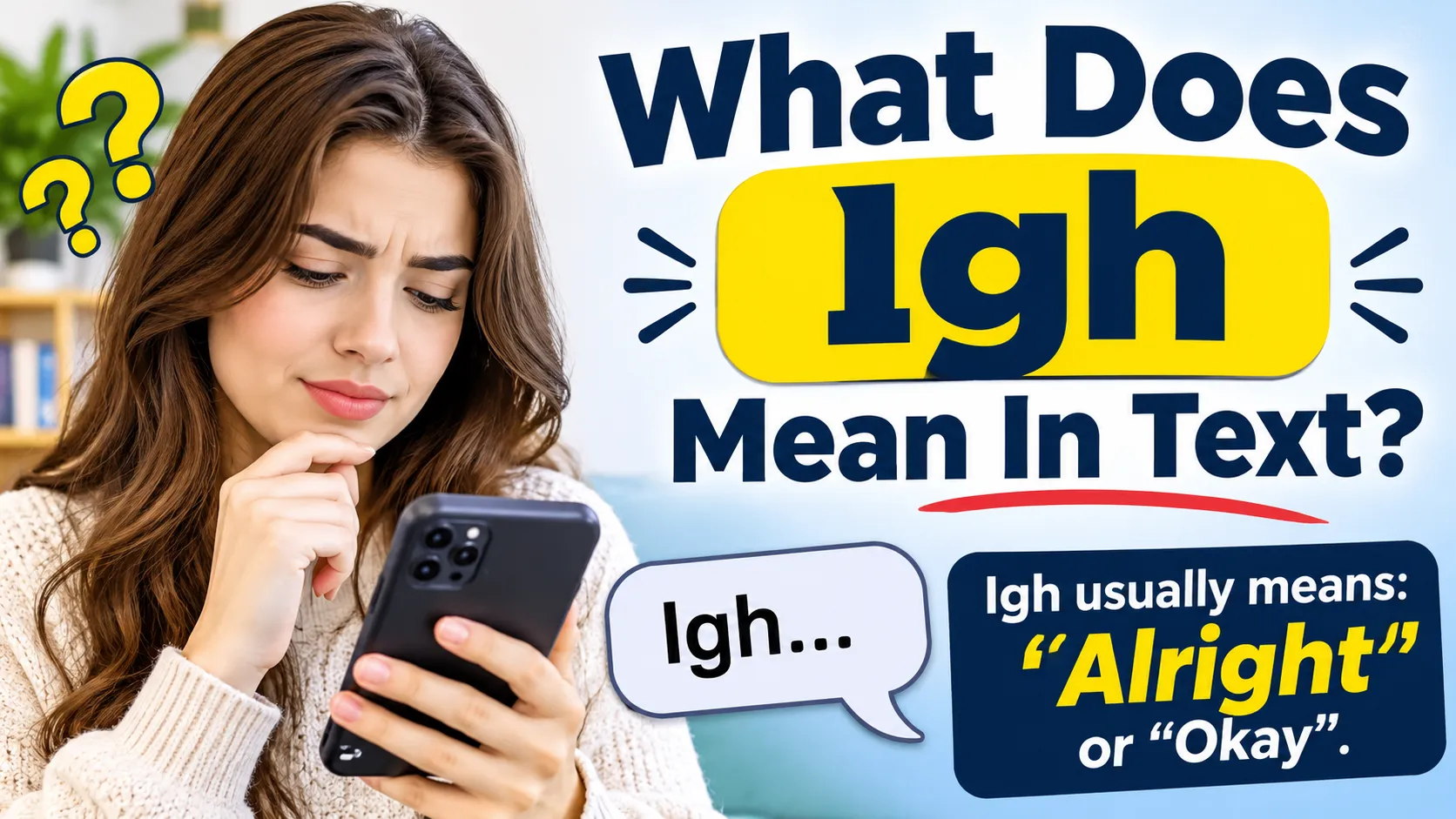
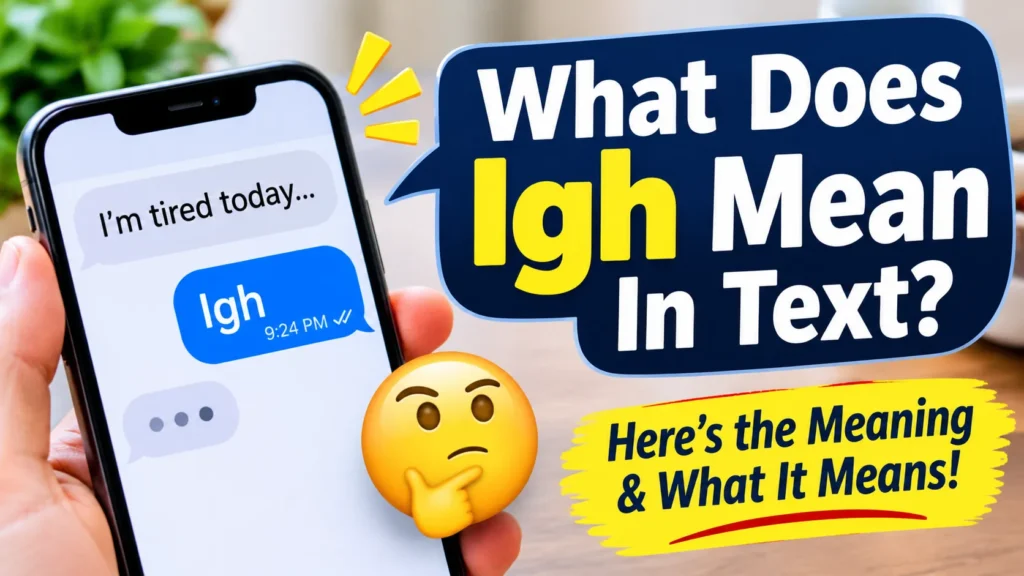
IGH usually means “Alright” or “Okay” in text messages. It is an informal, shortened spelling associated with expressions such as “aight” and “ight.” People use it to show agreement, acknowledge information, or accept a suggestion.
However, its tone can change depending on the conversation. Sometimes it sounds friendly and relaxed, while other times it can suggest reluctant acceptance or a dry response.
Let’s explore what IGH means, how people use it on social media, and how to respond when someone sends it.
1. What Does IGH Mean in Text?
IGH usually means “Alright” or “Okay” in texting. It is an informal slang expression that people use when they want to acknowledge something or agree without writing a complete sentence.
For example:
Person A: Are we meeting at 6 tonight?
Person B: IGH.
Here, IGH means “Alright” or “Okay.” The person confirms that the suggested time works.
People commonly use IGH to communicate:
- Agreement with an idea or suggestion.
- Acceptance of a plan.
- Understanding of a message.
- Casual acknowledgment.
- Reluctant acceptance in certain situations.
The exact tone depends on the surrounding conversation.
The easiest way to remember IGH is to understand it as a casual texting version of “Alright.”
2. What Does IGH Stand For?
IGH generally does not stand for an official phrase with a separate word for each letter. Instead, it is an informal shortened spelling associated with “Alright.”
It is closely related to other casual spellings, including AIGHT and IGHT.
Here is how these expressions relate:
- All right: The original two-word expression.
- Alright: A commonly used spelling.
- Aight: An informal pronunciation-based spelling.
- Ight: A shortened slang variation.
- Igh: A clipped variation sometimes used in texting.
These forms are related, but they should not be treated as a strict historical progression.
For example:
Friend: Are you coming to the party?
You: Igh, I’ll be there.
The response communicates agreement.
So, when someone asks what IGH stands for, the most accurate explanation is that it is an informal, shortened spelling of “Alright,” not a standardized acronym.
3. How Is IGH Used in Text Messages?
People use IGH in everyday conversations to keep their messages short and casual. It can communicate several things depending on the situation.
Here are its most common uses.
To show agreement
Friend: Let’s watch a movie tonight.
You: IGH, sounds good!
The response shows that you accept the suggestion.
And to acknowledge information
Person A: I’ll send you the pictures tomorrow.
Person B: Igh.
The sender acknowledges the information without adding unnecessary details.
To accept a plan
Friend: Let’s meet outside the restaurant at 7.
You: IGH, see you there.
The response confirms the arrangement.
And to give a casual reply
Person A: I finally finished my homework.
Person B: Igh, nice!
Here, IGH keeps the conversation relaxed.
4. What Does IGH Mean Depending on Tone?
Although IGH generally means “Alright” or “Okay,” it does not always communicate the same emotion.
The sender’s wording, punctuation, relationship, and previous messages can influence its tone.
Friendly agreement
Example:
Friend: Want to grab some food later?
You: Igh, I’m down!
Meaning: The person is happy to accept the invitation.
Neutral acknowledgment
Example:
Person A: The class starts at 9 tomorrow.
Person B: Igh, thanks.
Meaning: The person understands the information.
Reluctant acceptance
Example:
Friend: We have to wake up at 5 tomorrow.
You: Igh, fine.
Meaning: The person accepts the situation but might not be excited.
Dry or dismissive response
Example:
Person A: I already explained everything to you.
Person B: Igh.
Meaning: Depending on the disagreement, this short response might sound uninterested or suggest that the sender wants to end the discussion.
Remember that these are possible interpretations, not fixed meanings. A single short message cannot reliably reveal someone’s feelings.
5. IGH Meaning in Different Texting Situations
Understanding real conversations makes texting slang much easier to interpret.
Here are some examples showing how people might use IGH in different situations.
Example 1: Making plans
Person A: Are you free this weekend?
And Person B: Yeah.
Person A: Let’s go shopping on Saturday.
And Person B: Igh, sounds good.
Meaning: The person agrees to the shopping plan.
Example 2: Changing a meeting time
Person A: Can we meet at 8 instead of 7?
Person B: Igh.
Meaning: The person accepts the new time.
Example 3: Receiving good news
Person A: I passed my driving test!
Person B: Igh, congratulations!
Meaning: The sender acknowledges the news and responds positively.
Example 4: Accepting a suggestion
Person A: We should order pizza tonight.
Person B: Igh, I’m hungry anyway.
Meaning: The person agrees with the suggestion.
Example 5: Reluctant acceptance
Person A: You need to clean your room before going outside.
Person B: Igh, I’ll do it.
Meaning: The person agrees but might not feel enthusiastic.
Example 6: Ending a conversation
Person A: Okay, I’ll talk to you tomorrow.
Person B: Igh, later.
Meaning: The person acknowledges the message and casually ends the conversation.
6. What Does IGH Mean on Snapchat, Instagram, TikTok, and WhatsApp?
IGH generally carries the same basic meaning across popular social media platforms. It does not automatically develop a completely different definition simply because someone uses it on another app.
However, the context in which people use it can vary.
IGH meaning on Snapchat
On Snapchat, IGH usually means “Alright” or “Okay.” People might use it when replying to snaps, making plans, or acknowledging messages.
Example:
Friend: Are you coming over later?
You: Igh.
Meaning: You understand or accept the plan.
IGH meaning on Instagram
On Instagram, people may use IGH in direct messages and casual conversations.
Example:
Friend: I’ll send you the pictures tonight.
You: Igh, waiting.
Meaning: You acknowledge the message and expect the pictures.
IGH meaning on TikTok
TikTok users may use IGH in comments or direct messages to express casual agreement.
Example:
User A: We should try this challenge.
User B: Igh 😂
Meaning: The person casually agrees with the suggestion.
IGH meaning on WhatsApp
On WhatsApp, IGH can appear in private conversations and group chats.
Example:
Friend: Don’t forget your notebook tomorrow.
You: Igh, I won’t forget.
Meaning: You understand the reminder.
The main takeaway is simple: the platform usually does not change the core meaning. The conversation determines the intended tone.
7. What Does IGH Mean From a Guy or Girl?
If a guy or girl sends you IGH, the basic meaning is generally the same: “Alright” or “Okay.”
There is no established gender-specific definition for this expression. Both guys and girls can use it to acknowledge information, accept suggestions, or respond casually.
When a guy sends IGH
A guy might use IGH to agree with your suggestion or confirm a plan.
Example:
You: Are we still meeting tomorrow?
Him: Igh, definitely.
Meaning: He is confirming the arrangement.
When a girl sends IGH
A girl might use the same expression to acknowledge a message or accept a suggestion.
Example:
You: I’ll call you after dinner.
Her: Igh, okay.
Meaning: She understands and accepts what you said.
Does IGH indicate romantic interest?
Not necessarily. IGH is not a special romantic expression. Someone using it in a flirty conversation does not automatically mean they are interested in you.
Pay attention to the overall conversation rather than interpreting one short response as proof of someone’s feelings.
8. IGH vs IGHT vs AIGHT vs Other Text Slang
IGH is related to several Informal Texting Expressions. Some communicate similar meanings, while others express completely different emotions.
Here is a quick comparison:
| Slang | Meaning | Common use |
| IGH | Alright / Okay | Short acknowledgment |
| IGHT | Alright | Casual agreement |
| AIGHT | Alright | Informal agreement |
| OK | Okay | General acknowledgment |
| BET | Sounds good / Agreed | Confident agreement |
| K | Okay | Very short response |
| UGH | Frustration or annoyance | Expressing disappointment |
| ALR | Alright | Shortened texting form |
IGH vs IGHT
IGH and IGHT are closely related informal spellings. Both can communicate “Alright” or “Okay” in casual conversations.
IGH vs AIGHT
AIGHT is another informal spelling of “Alright.” IGH is a more clipped variation, while AIGHT is closer to the commonly recognized pronunciation.
IGH vs OK
Both expressions can acknowledge information or show agreement. However, OK is more widely understood and suitable for formal and informal conversations.
IGH vs BET
BET usually communicates confident agreement or acceptance.
Example:
Friend: I’ll pick you up at 6.
You: Bet!
IGH can communicate similar acceptance, but it often sounds more relaxed.
IGH vs UGH
These expressions look somewhat similar but have different meanings.
- IGH: Usually means Alright or okay.
- UGH: Expresses frustration, annoyance, or disappointment.
For example:
“Can we leave now?”
“IGH.”
This communicates agreement.
“Ugh, I don’t want to leave.”
This expresses frustration.
Understanding this distinction helps prevent confusion when reading informal messages.
9. More IGH Texting Examples You Can Easily Understand
Sometimes a short conversation explains slang better than a long definition. These additional examples show how IGH can fit naturally into everyday digital communication.
- Friend: Did you finish the assignment?
You: Igh, finally! - Friend: I’ll call you in ten minutes.
You: IGH, no problem. - Friend: Let’s play games tonight.
You: Igh, I’m ready. - Friend: Can you bring your headphones?
You: IGH, I’ll bring them. - Friend: We need to leave early tomorrow.
You: Igh, understood. - Friend: I’ll see you after school.
You: Igh, later! - Friend: Do you want to try this restaurant?
You: IGH, why not? - Friend: I’ll share the notes with you.
You: Igh, thanks!
These examples demonstrate that IGH usually works as a quick acknowledgment or expression of agreement.
10. How to Respond When Someone Texts IGH
Your response should match the situation. Since IGH usually communicates acknowledgment or agreement, you do not always need to send another message.
Here are some natural replies.
When they agree with your plan:
- Perfect, see you there!
- Sounds good!
- Great, see you soon.
- Cool, I’ll be there.
- Awesome, let’s do it.
And when they acknowledge your message:
- Thanks!
- Appreciate it.
- Got it.
- Okay, great.
- No problem.
When their response sounds reluctant:
- Everything okay?
- Are you sure?
- We can change the plan if you want.
- No pressure!
- Let me know what works for you.
When they are ending the conversation:
- Talk later!
- See you tomorrow.
- Take care!
- Catch you later.
- Have a good one!
The best response is one that matches the mood instead of forcing the conversation to continue.
11. When Should You Use IGH?
IGH works best in informal conversations where both people understand texting slang.
It makes quick exchanges feel relaxed and natural, especially when a complete sentence is unnecessary.
Good situations to use IGH:
- Chatting with close friends.
- Confirming casual plans.
- Replying to everyday messages.
- Communicating in group chats.
- Responding to social media messages.
- Having relaxed conversations with people familiar with slang.
Example:
Friend: Let’s play games tonight.
You: Igh, sounds fun!
This is a natural informal exchange.
Situations where you should avoid IGH:
- Sending professional emails.
- Communicating with clients.
- Writing formal assignments.
- Contacting teachers or employers.
- Responding to important business messages.
Instead, use clearer expressions such as “Okay,” “Understood,” “Certainly,” or “Sounds good.”
These alternatives communicate your message more professionally.
Related To Another Article: https://genzwishes.com/what-does-gmfu-mean/
12. Is IGH Rude, Dry, or Disrespectful?
IGH is not automatically rude or disrespectful. It is generally a casual acknowledgment or expression of agreement.
However, some people might interpret it as dry or dismissive depending on the situation.
For example:
Friend: I really appreciate everything you did for me today.
You: Igh.
This response might sound emotionally distant because the original message deserves a warmer acknowledgment.
A better response would be:
“You’re welcome! I’m always happy to help.”
Now consider another conversation:
Friend: I’ll meet you at 8.
You: Igh, see you then.
Here, the expression sounds perfectly normal because the conversation is simply about confirming a plan.
How can you tell whether IGH sounds rude?
Consider these clues:
- Previous message: Was the conversation friendly or tense?
- Punctuation: Did the sender use a period, exclamation mark, or ellipsis?
- Additional words: Did they write only IGH or include a friendly sentence?
- Relationship: Are you close friends or just getting to know each other?
- Follow-up: Did they continue the conversation or stop responding?
None of these clues proves someone’s feelings on its own.
The safest approach is to consider the complete conversation instead of assuming that one short reply is disrespectful.
13. Does IGH Have Other Meanings?
IGH can appear in different online contexts, but its most RecognizableTexting interpretation is “Alright” or “Okay.”
You might find websites or user-submitted slang entries suggesting alternative expansions. However, these are not necessarily established meanings and should not be treated as universal definitions.
For example, someone might interpret IGH as “I’m Good Here” in a particular conversation. That interpretation could make sense if someone is declining an offer, but it is not the standard meaning readers should automatically assume.
Similarly, a sender might use the expression in a personal or community-specific way.
If you receive an unfamiliar message, consider these questions:
- What was the previous message about?
- Was the person agreeing with a suggestion?
- Were they acknowledging information?
- Did they seem reluctant or enthusiastic?
- Is there additional context that changes the interpretation?
In ordinary texting, understanding IGH as “Alright” is the safest starting point.
People Also Ask
A: IGH usually means “Alright” or “Okay” in text messages. People use it to agree, acknowledge information, or accept a suggestion in casual conversations.
A: On Snapchat, IGH generally means “Alright” or “Okay.” Someone might use it to confirm plans, respond to a snap, or acknowledge a message.
A: IGH is generally a shortened slang spelling associated with “Alright.” It is not a standardized acronym with an official word for each letter.
A: The meaning generally stays the same regardless of who sends it. A guy or girl can use IGH to express agreement, acknowledgment, or casual acceptance. The conversation provides clues about the intended tone.
A: Yes, they are closely related informal spellings. Both are commonly used to communicate “Alright” or “Okay” in casual text conversations, although their spelling differs.
Conclusion
So, what does IGH mean in text? In most everyday Conversations, IGH means “Alright” or “Okay.” It is an informal slang expression associated with shortened forms such as AIGHT and IGHT.
People use it to agree with plans, acknowledge messages, accept suggestions, and keep conversations moving. You may encounter it on Snapchat, Instagram, TikTok, WhatsApp, and other messaging platforms.
However, its tone can change depending on the situation. Sometimes it sounds friendly and relaxed, while other times it might communicate reluctant acceptance or a dry response.
The next time someone sends you IGH, remember that it usually means “Alright.” Consider the surrounding conversation before deciding whether the sender is agreeing, feeling reluctant, or simply acknowledging your message.
If you found this explanation helpful, share it with someone who is learning modern texting slang and explore more internet slang meanings on GenzWishes.