Introduction
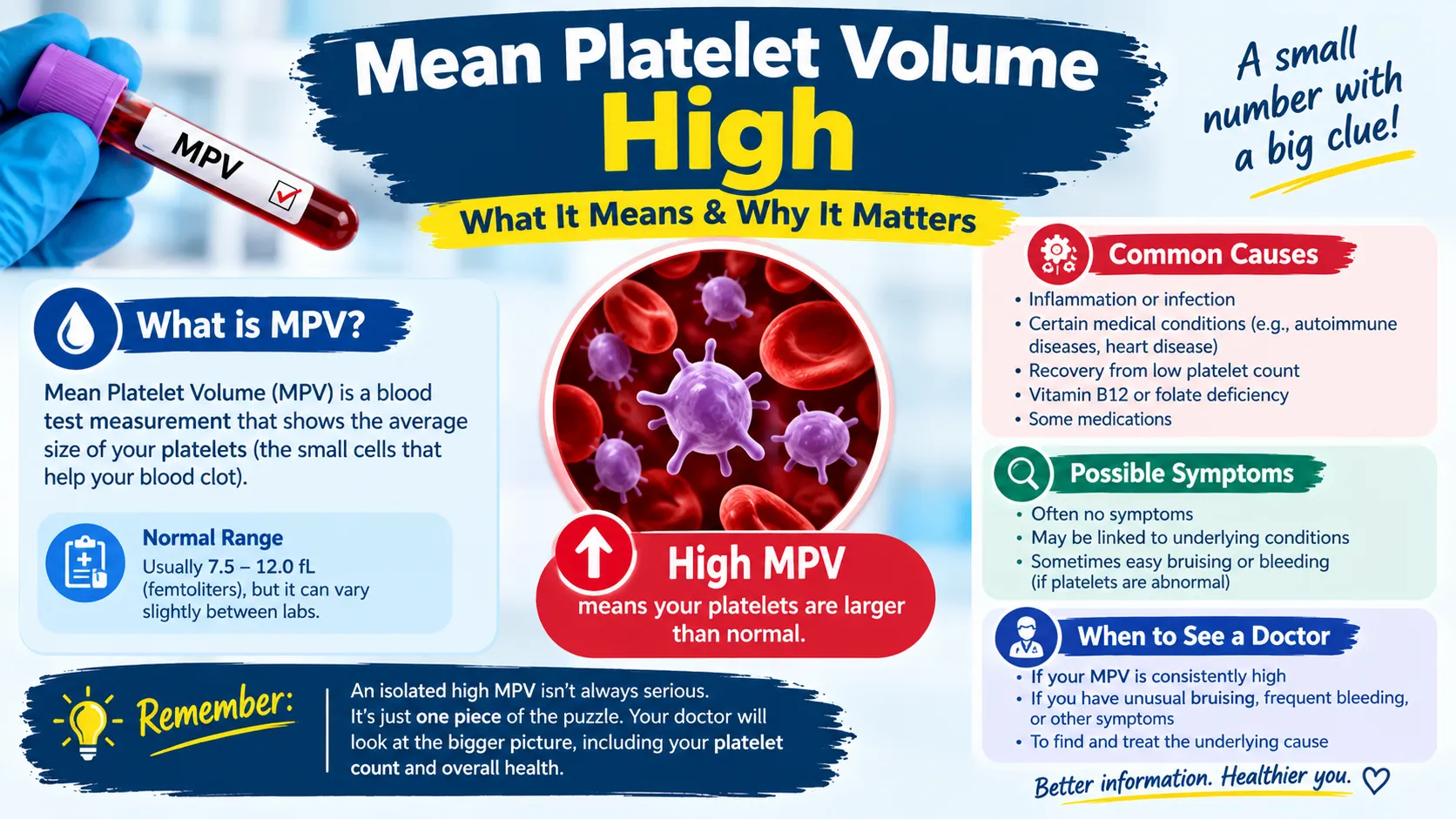
Finding a high Mean Platelet Volume (MPV) on your blood test can raise questions about your health. You may wonder whether it indicates an infection, inflammation, a platelet disorder, or something more serious. Understanding what this result measures can help you make sense of your report.
A high mean platelet volume means that the average size of your platelets is above the reference interval used by your laboratory. Larger platelets are often younger platelets recently released from the bone marrow. However, several biological and laboratory factors can influence this measurement.
An elevated MPV does not automatically mean you have a serious medical condition. It cannot independently diagnose cancer, diabetes, heart disease, or a blood clot. Doctors interpret it alongside your platelet count, other complete blood count (CBC) results, medical history, and symptoms.
This guide explains what an elevated MPV means, its possible causes, how to interpret different platelet-count combinations, and when you should seek medical advice.
1. What Does Mean Platelet Volume High Mean?
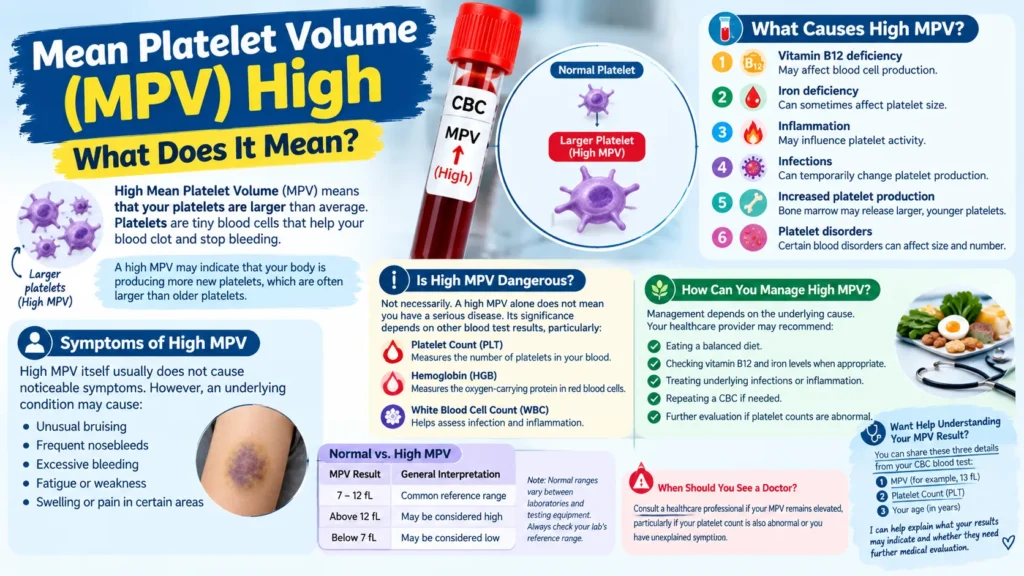
A high mean platelet volume means that your platelets are larger than the average size expected by your laboratory. Platelets are tiny blood components that help control bleeding by gathering at damaged blood vessels and supporting clot formation.
Your bone marrow continuously produces new platelets. Newly released platelets are generally larger than older ones. Therefore, an elevated MPV may reflect increased platelet production or changes in platelet turnover.
However, a high result does not identify the exact cause.
Possible explanations include:
- Increased platelet turnover.
- Immune thrombocytopenia (ITP).
- Certain bone marrow disorders.
- Pregnancy-related conditions, including preeclampsia.
- Some inflammatory and metabolic conditions.
- Laboratory measurement and sample-handling differences.
These possibilities do not mean that everyone with elevated MPV has one of these conditions.
Doctors consider several findings before deciding whether an abnormal result requires further investigation.
For example, high MPV with a normal platelet count may have a different significance from high MPV with a substantially reduced platelet count.
Important takeaway: An elevated MPV is a laboratory finding, not a diagnosis. The complete blood report provides much more useful information than this number alone.
2. What Is Mean Platelet Volume (MPV)?
Mean platelet volume, commonly called MPV, is a measurement of the average size of platelets in a blood sample.
Platelets, also known as thrombocytes, are small cell fragments produced by specialized cells in your bone marrow. They circulate through your bloodstream and help prevent excessive bleeding.
When a blood vessel becomes damaged, platelets gather around the injured area. They stick together and support the formation of a blood clot that slows or stops bleeding.
An MPV measurement is usually included in a complete blood count (CBC) or a related platelet assessment.
However, MPV and platelet count measure different things.
- MPV: Measures the average size of platelets.
- Platelet count: Measures the number of platelets in a specific volume of blood.
Your blood report may also include other platelet measurements.
| Blood measurement | What it tells you |
| MPV | Average platelet size |
| Platelet count | Number of platelets in your blood |
| PDW | Variation in platelet size |
| PCT | Proportion of blood volume occupied by platelets |
These measurements provide different information. Healthcare professionals consider them together when evaluating platelet production and possible blood-related problems.
3. What Is the Normal Mean Platelet Volume Range?
The normal mean platelet volume range varies between laboratories because different blood analyzers and testing methods can produce different reference intervals.
Some laboratories use an adult reference range around 7–9 fL, while others use different intervals. There is no single universally accepted MPV cutoff that applies to every laboratory.
Your laboratory’s printed reference range is the most important guide when interpreting your result.
MPV is measured in femtoliters (fL), an extremely small unit of volume.
For example, a blood report might show:
| MPV result | How to interpret it |
| 7.0 fL | May be normal or low, depending on the laboratory |
| 8.5 fL | Within some common reference intervals |
| 10.0 fL | Within many laboratory intervals |
| 11.5 fL | May be normal or elevated |
| 12.5 fL | May exceed some laboratory upper limits |
| 13.0 fL | May be flagged as high |
These examples are illustrative, not universal diagnostic cutoffs.
A result of 11.5 fL may be normal in one laboratory and elevated in another. Always compare your result with the reference interval printed on your own report.
Why do MPV ranges differ?
Several factors contribute to differences between laboratories:
- The type of blood analyzer.
- The measurement technology used.
- The anticoagulant in the blood collection tube.
- The time between collecting and analyzing the sample.
- Laboratory-specific reference intervals.
Platelets can change size after blood collection, and different analyzers may report different measurements. Therefore, comparing results from different laboratories can sometimes be misleading.
If you are monitoring an abnormal result, your healthcare provider may prefer comparisons using the same laboratory and testing method.
4. What Causes High Mean Platelet Volume?
Several conditions and biological processes can Contribute To Elevated mean platelet volume. In many cases, the result reflects changes in platelet production, turnover, or size.
The underlying cause cannot be identified from MPV alone.
Here are some possible explanations.
1. Increased platelet turnover
When platelets are destroyed or removed more quickly than usual, your bone marrow may release additional young platelets. These newly released platelets are often larger, which can increase MPV.
This pattern may occur when the body tries to replace platelets that are being lost or destroyed.
2. Immune thrombocytopenia (ITP)
ITP is an immune-related condition in which the immune system mistakenly attacks platelets.
The bone marrow may respond by producing and releasing additional platelets. Some newly released platelets are larger, potentially increasing MPV.
However, high MPV alone cannot confirm ITP. Doctors consider platelet count, bleeding symptoms, medical history, and other findings.
3. Inflammation
Inflammatory processes can affect platelet production and activity. Some inflammatory conditions have been associated with changes in MPV.
However, the relationship is not straightforward. Research has reported different MPV patterns in different inflammatory diseases.
An elevated result does not independently confirm that inflammation is present.
4. Diabetes
Research has investigated associations between elevated MPV and diabetes, particularly in studies examining platelet activity and metabolic health.
However, MPV is not a diagnostic test for diabetes.
Healthcare professionals use blood glucose measurements and HbA1c testing to assess blood sugar levels.
5. Cardiovascular conditions
Some studies have associated higher MPV with cardiovascular diseases and increased platelet activity.
Researchers continue to investigate the relationship between platelet size and cardiovascular health.
However, these associations do not mean that an elevated MPV independently predicts a heart attack, stroke, or blood clot.
6. Preeclampsia
Preeclampsia is a pregnancy-related condition involving high blood pressure and possible complications affecting organs such as the kidneys and liver.
Changes in platelet measurements, including MPV, may occur in affected patients.
Pregnant individuals with high blood pressure, severe headaches, vision changes, upper abdominal pain, or other concerning symptoms need prompt medical assessment.
7. Myeloproliferative disorders
Myeloproliferative neoplasms are conditions involving abnormal blood cell production in the bone marrow.
Some of these disorders affect platelet numbers and sizes.
Doctors use additional blood tests and, when appropriate, specialized investigations to evaluate these conditions. MPV alone cannot establish a diagnosis.
8. Hemolytic anemia
Hemolytic anemia occurs when red blood cells are destroyed faster than the body can replace them.
Certain conditions involving increased blood cell destruction may also affect platelet measurements. The complete blood count and additional tests help doctors investigate the underlying problem.
9. Laboratory-related factors
Sometimes, an elevated result reflects testing conditions rather than a new medical problem.
Differences in analyzers, anticoagulants, sample storage, and the time between collection and analysis can influence MPV.
This is one reason doctors may review the original report or recommend repeat testing when an unexpected result does not fit the clinical picture.
5. What Are the Symptoms of High MPV?
High MPV itself usually does not cause recognizable symptoms. It is a laboratory measurement rather than a disease.
If an underlying condition affects platelet production, platelet destruction, or blood clotting, you may experience symptoms related to that condition.
Possible symptoms associated with platelet-related disorders include:
- Unexplained bruising.
- Frequent nosebleeds.
- Bleeding gums.
- Small red or purple spots on the skin.
- Bleeding that takes longer than expected to stop.
- Unusually heavy menstrual bleeding.
- Unexplained fatigue or weakness.
Some people with elevated MPV have no symptoms and discover the result during routine blood testing.
It is important to understand that these symptoms are not specific to high MPV. They may occur for several medical reasons.
When symptoms need urgent attention
Seek urgent medical attention if you experience uncontrolled bleeding, sudden weakness on one side of your body, difficulty speaking, severe chest pain, or sudden difficulty breathing.
Do not wait for another blood test if you develop symptoms that could indicate a medical emergency.
6. Is High Mean Platelet Volume Dangerous?
High mean platelet volume is not automatically dangerous. Its significance depends on why the result is elevated and whether other blood measurements are abnormal.
For example, someone with a slightly elevated MPV, normal platelet count, and no concerning symptoms may need a different assessment from someone with high MPV and a significantly reduced platelet count.
Doctors may investigate an elevated result when it occurs alongside:
- Abnormally low or high platelet counts.
- Unexplained bleeding or bruising.
- Persistent abnormalities in other CBC measurements.
- Signs of an underlying inflammatory or blood disorder.
- Concerning symptoms or relevant medical history.
Some research has linked higher MPV with cardiovascular conditions. However, these associations do not establish that an individual with high MPV has a dangerous clotting problem.
You should not use an isolated MPV result to estimate your personal risk of a heart attack, stroke, or blood clot.
The best approach is to review the complete blood report with a healthcare professional.
7. What Does High MPV With Normal Platelet Count Mean?
High MPV with a normal platelet count means that the average size of your platelets is elevated, but the total number of platelets remains within the laboratory’s reference interval.
This combination may represent an isolated MPV abnormality.
For some individuals, it may have limited clinical significance, especially when the remaining CBC results are normal and there are no concerning symptoms.
Possible explanations include:
- Normal biological variation.
- Differences between laboratory analyzers.
- Changes in platelet production or turnover.
- Certain inflammatory or metabolic conditions.
- Sample-handling or measurement-related factors.
Your healthcare provider may compare the result with previous blood tests to determine whether the finding is persistent.
A repeat CBC may be appropriate in some situations, depending on your medical history and other findings.
Importantly, a normal platelet count does not automatically mean that every aspect of platelet function is normal. MPV and platelet count measure different characteristics.
Example:
Imagine your blood report shows:
| Test | Result |
| MPV | Above laboratory range |
| Platelet count | Within laboratory range |
| Other CBC measurements | Within laboratory ranges |
This pattern does not automatically indicate a blood disorder.
Your doctor may consider your medical history, previous results, symptoms, and testing conditions before deciding whether further investigation is necessary.
8. What Does High MPV and Low Platelet Count Mean?
High MPV combined with a low platelet count is a pattern that deserves medical attention.
A low platelet count is called thrombocytopenia. It means your blood contains fewer platelets than the laboratory’s expected range.
When platelet destruction increases, the bone marrow may release larger, younger platelets to compensate. This process can result in high MPV alongside a reduced platelet count.
One possible explanation is immune thrombocytopenia (ITP), although other conditions can produce similar findings.
Doctors may investigate:
- Immune-related platelet destruction.
- Certain infections.
- Medication-related effects.
- Increased platelet consumption.
- Other conditions involving blood cell production.
- Bone marrow and blood disorders.
The platelet count is particularly important in this situation because a significantly reduced count may increase bleeding risk.
Your doctor may recommend a repeat CBC, examination of a peripheral blood smear, and additional investigations depending on the findings.
A blood smear can help identify unusually large platelets, platelet clumping, and other abnormalities.
Do not attempt to diagnose ITP or another blood disorder using the MPV value alone.
Seek prompt medical assessment if you notice unusual bruising, repeated nosebleeds, bleeding gums, or unexplained red or purple spots on your skin.
9. What Does High MPV and High Platelet Count Mean?
High MPV with a high platelet count means your blood contains more platelets than the laboratory’s Expected Range and that their average size is also elevated.
A high platelet count is called thrombocytosis.
Thrombocytosis can occur for several reasons.
Reactive thrombocytosis
This type develops in response to another condition. Possible triggers include:
- An infection.
- Inflammation.
- Iron deficiency.
- Recent surgery.
- Tissue injury.
- Certain other medical conditions.
In many cases, the platelet count improves when the underlying cause is addressed.
Primary thrombocytosis
Some bone marrow disorders cause the body to produce excessive numbers of platelets.
Essential thrombocythemia is one example of a myeloproliferative neoplasm that can lead to persistently elevated platelet counts.
High MPV alongside thrombocytosis does not establish which type is present.
Doctors may review your medical history, iron levels, inflammatory markers, blood smear, and other blood measurements.
Persistent unexplained abnormalities may require specialist assessment and additional testing.
10. Can High MPV Be a Sign of Cancer?
High MPV alone is not a reliable sign of cancer and cannot diagnose any type of cancer.
Some research has investigated associations between MPV and certain cancers. Researchers have explored whether changes in platelet size and activity may provide information about inflammation, disease processes, or prognosis.
However, an association found in a research study does not mean that a person with elevated MPV has cancer.
Many other factors can influence platelet size, including platelet turnover, inflammatory conditions, pregnancy-related conditions, and laboratory variation.
If your MPV is elevated, your healthcare provider will consider other findings before recommending additional tests.
Depending on your symptoms and CBC results, the doctor may investigate persistent platelet abnormalities or other unexplained blood changes.
Do not assume you have cancer because your blood report marks MPV as high.
An isolated high MPV result is not sufficient evidence of cancer.
11. How Is High Mean Platelet Volume Diagnosed?
High MPV is identified through a blood test, usually as part of a complete blood count.
The laboratory uses an automated blood analyzer to measure platelet characteristics and calculate the average platelet volume.
However, identifying an elevated number is only the first step. Doctors must determine whether it has clinical significance.
1. Complete blood count (CBC)
A CBC provides information about platelet count, red blood cells, white blood cells, and other blood measurements.
2. Review of platelet count
The platelet count helps doctors understand whether high MPV occurs with a normal, low, or high number of platelets.
3. Peripheral blood smear
A blood smear allows laboratory professionals to examine blood cells under a microscope. It may help identify unusually large platelets, platelet clumping, or other abnormalities.
4. Review of medical history
Your doctor may ask about recent infections, pregnancy, medications, previous blood test results, and existing medical conditions.
5. Additional blood tests
Depending on the findings, a healthcare professional may recommend tests for iron status, vitamin deficiencies, inflammation, blood sugar, or other possible underlying conditions.
6. Further specialist investigations
Persistent or unexplained abnormalities may require assessment by a hematologist.
Some patients may need specialized testing to investigate possible bone marrow disorders.
Not everyone with high MPV needs all these investigations. The next steps depend on the complete clinical picture.
12. How Is High MPV Treated?
There is no single treatment specifically designed to lower mean platelet volume.
Treatment focuses on identifying and managing the underlying condition, if one exists.
For example:
Treating immune thrombocytopenia
A healthcare professional may recommend treatment based on platelet count, bleeding symptoms, and the patient’s overall condition.
Managing infections
If an infection is responsible for changes in platelet measurements, treating the infection may help related blood abnormalities improve.
Managing inflammatory conditions
Treatment of an underlying inflammatory disorder may improve associated blood abnormalities.
Addressing metabolic conditions
People with diabetes or other metabolic conditions may benefit from appropriate medical care, blood sugar management, and lifestyle guidance.
Managing bone marrow disorders
Certain bone marrow conditions require specialist evaluation and individualized treatment.
Treatment decisions should never depend on MPV alone.
Do not start aspirin, blood thinners, iron supplements, or other medication simply because your MPV is elevated. These treatments can be inappropriate or harmful in certain situations.
Related To Another Article: https://genzwishes.com/what-does-elope-mean/
13. Can You Lower High Mean Platelet Volume Naturally?
There is no proven home remedy that directly lowers MPV in every person.
However, maintaining good general health can support normal blood production and help manage certain conditions associated with changes in platelet measurements.
Consider these healthy habits.
Eat a balanced diet
Include vegetables, fruits, whole grains, legumes, and appropriate sources of protein. A balanced diet helps provide nutrients needed for normal blood cell production.
Address nutritional deficiencies
Iron, vitamin B12, and folate deficiencies can affect blood health. However, supplements should only be taken when a deficiency or medical need has been identified.
Stay physically active
Regular physical activity supports cardiovascular and metabolic health. Choose activities that are appropriate for your fitness level and medical condition.
Manage blood sugar
People with diabetes should follow their healthcare provider’s recommendations for monitoring and managing blood glucose.
Avoid smoking
Smoking can negatively affect cardiovascular health. Avoiding tobacco is an important step toward better overall health.
Attend recommended medical checkups
Follow-up testing can help your healthcare provider determine whether an abnormal MPV result persists or changes.
Remember that these habits do not guarantee a reduction in MPV. The most effective approach is to identify and address the reason behind the abnormal result.
14. When Should You See a Doctor About High MPV?
You should discuss a high MPV result with your Healthcare Provider, particularly if other CBC measurements are abnormal or you have unexplained symptoms.
A medical assessment is especially important when you experience:
- Repeated or unexplained bruising.
- Frequent nosebleeds.
- Bleeding gums.
- Blood in your urine or stool.
- Unusual skin spots or persistent bleeding.
- An abnormal platelet count.
- Persistent changes in other blood measurements.
Some symptoms require emergency care rather than a routine appointment.
Seek emergency medical attention for:
- Uncontrolled or severe bleeding.
- Sudden facial drooping.
- Sudden weakness on one side of the body.
- Sudden difficulty speaking.
- Severe chest pain.
- Sudden shortness of breath.
When discussing your results with your doctor, consider asking:
- Is my MPV significantly above the laboratory’s reference range?
- Is my platelet count normal?
- Do my other CBC results show any abnormalities?
- Should I repeat the blood test?
- Do I need additional investigations?
- Could any medication or recent illness affect my result?
These questions can help you understand your results and make informed decisions about follow-up care.
People Also Ask
A: High mean platelet volume means your platelets are larger than the reference range used by your laboratory. Larger platelets are often newly produced platelets released from the bone marrow. However, this result alone cannot identify a specific disease.
A: High MPV is not automatically dangerous. Its significance depends on your platelet count, other CBC measurements, symptoms, and underlying health conditions. A healthcare professional can determine whether further testing is necessary.
A: Possible causes include increased platelet turnover, immune thrombocytopenia, certain inflammatory conditions, cardiovascular and metabolic conditions, pregnancy-related complications, and some bone marrow disorders. Laboratory variation can also affect the result.
A: High MPV alone does not indicate that someone has cancer. Although researchers have studied associations between MPV and certain cancers, this measurement cannot diagnose cancer or establish an individual’s cancer risk.
A: There is no universal method for lowering MPV naturally. Treatment depends on the underlying cause, if one is identified. A balanced diet, regular physical activity, appropriate management of existing conditions, and medical follow-up can support overall health.
Conclusion
A high mean platelet volume result means that Your Platelets are larger than the expected average for your laboratory. Although this finding can be associated with changes in platelet production, inflammation, and certain medical conditions, it does not automatically indicate a serious disease.
The most important step is to interpret MPV alongside your platelet count, other CBC measurements, symptoms, and medical history.
If your result is elevated, discuss it with your healthcare provider to determine whether you need repeat testing or additional investigations.
Remember, understanding the complete blood report is much more useful than focusing on one abnormal number. If this guide helped you understand your results, consider bookmarking it for future reference.