Introduction
Have you ever looked at a doctor’s name and noticed the letters DO written after it? You might wonder what those letters mean, whether that person is a fully qualified physician, or how a DO differs from an MD.
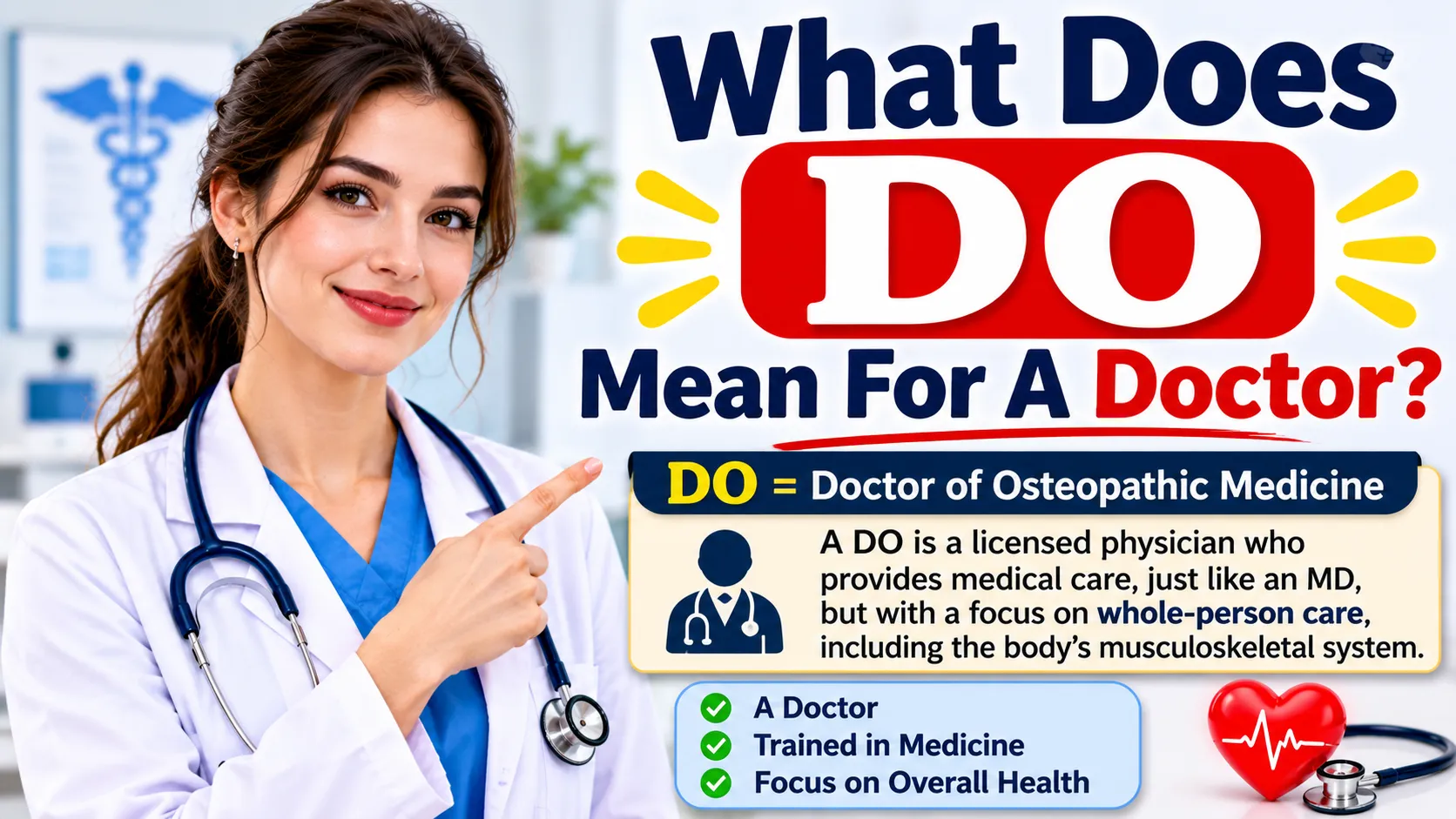
DO stands for Doctor of Osteopathic Medicine. It is a professional medical degree awarded to graduates of accredited osteopathic Medical Schools in the United States. DO physicians are fully licensed doctors who can diagnose illnesses, prescribe medications, perform surgery, and specialize in different areas of medicine after completing the required training and licensing.
The main distinction is that osteopathic medical education includes additional training in osteopathic principles, whole-person healthcare, and osteopathic manipulative treatment (OMT).
But there is much more to understand about this qualification. Let’s explore what DO means for a doctor, how these physicians receive their education, what they can do, and how their qualifications compare with MD doctors.
What Does DO Mean for a Doctor?
DO means Doctor of Osteopathic Medicine. It is a medical degree earned by physicians who graduate from an accredited osteopathic medical school in the United States.
When you see DO after a doctor’s name, it identifies the physician’s medical degree and educational background.
For example:
- Dr. James Smith, DO
- Dr. Sarah Johnson, DO
- Dr. Michael Brown, MD
The first two physicians have Doctor of Osteopathic Medicine degrees, while the third has a Doctor of Medicine degree.
DO physicians receive comprehensive medical education covering subjects such as anatomy, physiology, pharmacology, pathology, diagnosis, and patient treatment.
They also receive additional education in osteopathic principles and manipulative medicine.
An important point is that DOs are not less-qualified versions of physicians. In the United States, properly licensed DOs have the same broad authority to practice medicine as MDs.
Simply put: DO means Doctor of Osteopathic Medicine, a medical degree that prepares physicians to diagnose, treat, and help prevent illnesses.
What Is a Doctor of Osteopathic Medicine?
A Doctor of Osteopathic Medicine is a physician trained to provide comprehensive medical care.
Osteopathic medicine follows a whole-person approach. This means physicians consider more than the symptoms a patient experiences. They also examine how different body systems, lifestyle factors, physical activity, and overall health may affect a person’s condition.
For example, imagine someone experiencing recurring back discomfort.
A DO might evaluate the patient’s muscles, joints, movement, posture, medical history, and other relevant factors before recommending an appropriate treatment plan.
Depending on the diagnosis, treatment could involve medication, physical rehabilitation, lifestyle recommendations, or osteopathic manipulative treatment.
However, osteopathic medicine is not an alternative to modern scientific medicine.
DO physicians use established medical knowledge, diagnostic tests, prescription medications, surgical procedures, and other evidence-based treatments when appropriate.
The goal is to understand the patient as a whole rather than focus exclusively on one symptom.
What Does DO Stand for in Medical Terms?
In American healthcare, DO stands for Doctor of Osteopathic Medicine.
It identifies the professional medical degree earned through osteopathic medical education.
Here are some related medical abbreviations worth understanding:
| Abbreviation | Full meaning |
| DO | Doctor of Osteopathic Medicine |
| MD | Doctor of Medicine |
| OMT | Osteopathic Manipulative Treatment |
| OMM | Osteopathic Manipulative Medicine |
| GME | Graduate Medical Education |
| CME | Continuing Medical Education |
| USMLE | United States Medical Licensing Examination |
| COMLEX-USA | Comprehensive Osteopathic Medical Licensing Examination |
These terms frequently appear in medical education, physician qualifications, and healthcare discussions.
Remember that abbreviations can have different meanings in other contexts. When DO appears after an American physician’s name, it generally identifies a Doctor of Osteopathic Medicine.
What Is the Difference Between a DO and an MD?
The primary difference between a DO and an MD is their medical education pathway and the additional osteopathic training included in DO programs.
MD stands for Doctor of Medicine, while DO stands for Doctor of Osteopathic Medicine.
Both qualifications prepare students to become physicians. Both groups study medical sciences, complete clinical training, and pursue postgraduate residency education.
However, DO education includes additional instruction in osteopathic principles and osteopathic manipulative treatment.
DO vs. MD Comparison Table
| Feature | DO | MD |
| Full form | Doctor of Osteopathic Medicine | Doctor of Medicine |
| Medical school | Osteopathic medical school | Allopathic medical school |
| Medical education | Generally four years | Generally four years |
| Clinical training | Yes | Yes |
| Residency | Required for standard physician practice pathways | Required for standard physician practice pathways |
| Prescribe medication | Yes, when licensed | Yes, when licensed |
| Perform surgery | Yes, with appropriate training | Yes, with appropriate training |
| Medical specialties | Broad range | Broad range |
| Osteopathic training | Additional training included | Not part of standard MD education |
| Licensing examinations | COMLEX-USA; some also take USMLE | USMLE is the traditional pathway |
Both degrees lead to careers as fully licensed physicians in the United States.
One important clarification is that whole-person healthcare is not exclusive to DOs. Many MD physicians also emphasize preventive care, patient communication, and comprehensive treatment.
The main educational distinction is the additional osteopathic training included in DO programs.
Which Is Better: DO or MD?
Neither degree is automatically better than the other.
DO and MD physicians receive extensive medical education and can pursue many of the same specialties. The quality of an individual doctor’s care depends on factors beyond the letters after their name.
For example, a DO with extensive experience in family medicine may provide excellent care for someone managing diabetes. An MD with similar qualifications and experience may provide equally excellent care.
When comparing physicians, consider:
- Their medical qualifications.
- Their clinical experience.
- Their specialty training.
- Their communication skills.
- Their approach to patient care.
- Their ability to explain treatment options.
If you are interested in osteopathic manipulative treatment, you can also ask whether a DO offers this service.
The bottom line: Choose a qualified physician based on your healthcare needs, not simply whether their degree says DO or MD.
How Does a Doctor Become a DO?
Becoming a Doctor of Osteopathic Medicine requires years of education, examinations, and practical medical training.
The educational pathway is designed to prepare students for the responsibilities of diagnosing and treating patients.
Here are the major stages.
1. Complete an Undergraduate Degree
Students generally complete an undergraduate degree before applying to an osteopathic medical school.
Many choose subjects related to biology, chemistry, physics, or other scientific disciplines.
Medical schools also establish specific prerequisite requirements for applicants.
2. Attend an Osteopathic Medical School
After completing their undergraduate education, students apply to an accredited college of osteopathic medicine.
DO medical school generally takes four years.
Students study subjects such as:
- Human anatomy.
- Physiology.
- Biochemistry.
- Pharmacology.
- Pathology.
- Medical diagnosis.
- Clinical medicine.
- Osteopathic principles.
- Osteopathic manipulative medicine.
During the later stages of medical school, students participate in clinical rotations to gain experience in different medical specialties.
3. Complete Medical Licensing Examinations
DO students commonly take the COMLEX-USA examination series.
Some also take the United States Medical Licensing Examination (USMLE).
These examinations evaluate medical knowledge, clinical reasoning, and the ability to make appropriate healthcare decisions.
4. Complete Residency Training
After graduating from medical school, DO physicians enter postgraduate residency programs.
Residency provides supervised clinical experience in a selected specialty.
For example, a physician interested in emergency medicine will complete the appropriate residency training for that field.
The length of residency varies depending on the specialty and training pathway.
5. Obtain Medical Licensure
Physicians must meet the licensing requirements established by the state where they intend to practice.
Requirements include appropriate medical education, accepted licensing examinations, and postgraduate training.
The important distinction is that earning a DO degree does not automatically provide permission to practice medicine. A physician must also obtain the required medical license.
AACOM provides additional information about osteopathic education and licensing requirements.

What Can a DO Doctor Do?
A licensed DO physician can perform many of the same professional duties as an MD.
Their responsibilities depend on their specialty, clinical experience, training, and medical license.
Common responsibilities include:
- Diagnosing illnesses and medical conditions.
- Performing physical examinations.
- Prescribing medications.
- Ordering laboratory tests.
- Reviewing medical imaging.
- Developing treatment plans.
- Managing chronic diseases.
- Providing preventive healthcare.
- Referring patients to specialists.
- Performing surgical procedures when appropriately trained.
- Monitoring patients during treatment and recovery.
For example, a DO family physician can treat common infections, monitor blood pressure, manage diabetes, and recommend preventive health measures.
A DO surgeon can perform operations after completing the required surgical training.
This means DO physicians are not limited to hands-on treatment or musculoskeletal problems. They can practice throughout the medical profession.
What Is Osteopathic Manipulative Treatment (OMT)?
Osteopathic Manipulative Treatment, commonly called OMT, is a hands-on treatment approach used by appropriately trained DO physicians.
It involves specific manual techniques to evaluate and treat selected problems involving muscles, joints, and other structures of the body.
Depending on the patient’s condition, OMT techniques may involve:
- Gentle pressure.
- Stretching.
- Resistance.
- Joint movement.
- Soft-tissue techniques.
- Other manual methods.
For example, a physician may consider OMT as one part of a treatment plan for certain types of musculoskeletal discomfort.
However, OMT is not suitable for every patient or medical condition.
A physician must evaluate the patient’s health, medical history, and individual circumstances before recommending it.
It is also important to understand that OMT does not replace necessary medications, surgery, or other appropriate medical treatments.
Why Do DO Doctors Learn OMT?
DO students receive additional education about the relationship between the body’s structure and function.
This includes understanding how muscles, bones, joints, and other body systems work together.
The purpose is to give physicians additional skills when evaluating and treating selected health conditions.
For example, someone experiencing restricted movement may benefit from a physician examining the musculoskeletal system as part of a wider medical assessment.
However, not every DO uses OMT regularly.
Some focus on family medicine or primary care, while others pursue specialties such as surgery, psychiatry, emergency medicine, or cardiology.
Their professional interests and the needs of their patients influence how they use their osteopathic training.
What Medical Specialties Can DO Doctors Choose?
A common misconception is that DO physicians can only become Family Doctors or primary care physicians.
That is incorrect.
DOs can pursue a wide range of medical and surgical specialties after completing the required education and postgraduate training.
Here are some examples.
Family Medicine
Family medicine physicians provide healthcare for people of different ages.
They treat common illnesses, manage chronic conditions, recommend preventive care, and help patients maintain their overall health.
Internal Medicine
Internal medicine physicians specialize in adult healthcare.
They manage conditions such as diabetes, hypertension, heart disease, and other complex medical problems.
Pediatrics
Pediatricians provide medical care for infants, children, and teenagers.
They monitor development, treat childhood illnesses, and provide preventive healthcare.
Emergency Medicine
Emergency medicine physicians treat people who require immediate medical attention.
They manage serious injuries, sudden illnesses, and other urgent health problems.
Surgery
DO physicians can become surgeons after completing the appropriate surgical education and residency.
They may pursue general surgery or other surgical specialties.
Obstetrics and Gynecology
These physicians provide healthcare related to pregnancy, childbirth, and the female reproductive system.
Psychiatry
Psychiatrists diagnose and treat mental health conditions using appropriate medical and therapeutic approaches.
Other Medical Specialties
DO physicians can also pursue careers in:
- Dermatology.
- Cardiology.
- Neurology.
- Anesthesiology.
- Radiology.
- Orthopedic surgery.
- Oncology.
- Pathology.
- Sports medicine.
- Gastroenterology.
The available career pathways depend on residency opportunities, qualifications, and professional requirements.
Is a DO a Real Doctor?
Yes. A DO is a fully trained physician in the United States.
DO physicians graduate from accredited osteopathic medical schools, complete the required postgraduate training, pass accepted licensing examinations, and obtain medical licenses.
They can diagnose illnesses, prescribe medications, perform surgery when appropriately trained, and provide medical treatment.
The letters DO do not mean that someone is a medical assistant, nursing professional, or chiropractor.
They identify a physician who has earned a Doctor of Osteopathic Medicine degree.
For patients, this means that a properly licensed DO can serve as a primary care physician or medical specialist, depending on their qualifications.
Are DO Doctors as Qualified as MD Doctors?
Yes. DO and MD physicians follow different medical education pathways, but both are trained to become fully licensed physicians in the United States.
Both groups receive education in:
- Medical sciences.
- Human anatomy.
- Disease diagnosis.
- Pharmacology.
- Patient treatment.
- Clinical decision-making.
- Medical ethics.
- Disease prevention.
They also complete postgraduate medical training and meet applicable licensing requirements.
The additional feature of DO education is its emphasis on osteopathic principles and manipulative medicine.
However, a medical degree alone does not determine the quality of an individual physician.
Clinical experience, specialty qualifications, professional judgment, communication, and patient safety are equally important considerations.
What Is the Difference Between a DO and a Chiropractor?
Some people confuse DO physicians with chiropractors because both professions may involve hands-on techniques related to muscles, joints, and the spine.
However, their educational pathways, qualifications, and professional scopes of practice are different.
A DO is a physician who completes osteopathic medical school and the required postgraduate medical training.
A chiropractor follows a separate educational pathway focused on chiropractic care.
DO vs. Chiropractor Comparison
| Feature | DO Physician | Chiropractor |
| Professional qualification | Doctor of Osteopathic Medicine | Chiropractic qualification |
| Medical education | Osteopathic medical school | Chiropractic college |
| Diagnoses diseases | Yes, within medical practice | Within applicable professional scope |
| Prescribes medication | Yes, when licensed | Generally not authorized |
| Performs surgery | Yes, when appropriately trained | No |
| Manual treatment | OMT when appropriately trained | Chiropractic techniques |
| Medical specialties | Broad medical and surgical specialties | Chiropractic fields |
The main distinction is that DO physicians receive comprehensive medical education and can practice medicine across different specialties.
Chiropractors follow a different professional pathway with a different scope of practice.
Related To Another Article: https://genzwishes.com/what-does-oppa-mean-in-korean/

Do DO Doctors Prescribe Medication?
Yes. Licensed DO physicians in the United States can prescribe medications.
They receive medical education in pharmacology, disease diagnosis, and treatment planning.
Depending on their specialty and the patient’s condition, they may prescribe:
- Antibiotics.
- Blood pressure medications.
- Diabetes medications.
- Pain medications.
- Allergy treatments.
- Other appropriate prescription drugs.
Like MD physicians, DOs must follow applicable prescribing regulations and professional standards.
Their osteopathic background does not prevent them from using modern medications or other standard medical treatments.
Can a DO Doctor Perform Surgery?
Yes. DO physicians can perform surgery after completing the required surgical education, residency, and licensing requirements.
For example, a DO may become:
- A general surgeon.
- An orthopedic surgeon.
- A cardiovascular surgeon.
- A neurosurgeon.
- Another qualified surgical specialist.
The ability to perform surgery depends on professional training, specialty qualifications, and licensing rather than simply whether the physician has a DO or MD degree.
This is another reason why the assumption that DO physicians only provide hands-on treatments is incorrect.
Should You Choose a DO or an MD for Your Healthcare?
Choosing between a DO and an MD depends more on your healthcare needs and the individual physician than on the degree alone.
Both types of physicians can provide comprehensive medical care.
Before choosing a doctor, consider these factors:
1. Medical qualifications: Check whether the physician holds an appropriate medical license and recognized specialty credentials.
2. Experience: Consider the doctor’s experience treating patients with your particular health concern.
3. Communication: Choose someone who listens carefully, explains treatment options, and answers your questions.
4. Specialty: Make sure the physician has the appropriate training for your medical condition.
5. Treatment approach: If you are interested in OMT, ask whether the physician offers it and whether it is appropriate for your condition.
6. Accessibility: Consider appointment availability, location, insurance coverage, and other practical factors.
Ultimately, the right physician is someone whose qualifications, experience, and approach match your healthcare needs.
Does DO Mean the Same Thing in Every Country?
No. The meaning and Professional Recognition of osteopathic qualifications can vary between countries.
In the United States, DO specifically refers to Doctor of Osteopathic Medicine. It is a medical degree that prepares graduates to pursue full physician licensure.
However, the word osteopath may describe a different professional pathway in some other countries.
For example, certain countries recognize osteopathic practitioners whose education and professional scope differ from those of American DO physicians.
This distinction matters because not every osteopathic qualification provides the same professional rights.
If you encounter a DO qualification outside the United States, check the relevant country’s medical regulator and licensing requirements.
For readers in Pakistan and other international locations, it is especially important not to assume that an American DO degree automatically has identical registration or recognition rules everywhere.
The American Osteopathic Association also distinguishes between American osteopathic physicians and certain osteopathic practitioners trained outside the United States.
Common Misconceptions About DO Doctors
There are several misunderstandings about DO physicians. Let’s clear up the most common ones.
Myth 1: DO Doctors Are Not Real Physicians
Fact: DOs are fully trained and licensed physicians in the United States.
Myth 2: DO Doctors Cannot Perform Surgery
Fact: DOs can become surgeons after completing the necessary surgical training and licensing requirements.
Myth 3: DO Doctors Only Treat Bones and Muscles
Fact: DO physicians practice across numerous specialties, including cardiology, pediatrics, emergency medicine, psychiatry, and surgery.
Myth 4: DO Doctors Cannot Prescribe Medication
Fact: Licensed DO physicians can prescribe medications and use standard medical treatments.
Myth 5: MD Doctors Are Always Better Than DO Doctors
Fact: Neither degree automatically makes a physician better. Individual qualifications, experience, specialty, and patient care matter.
Myth 6: Every DO Doctor Uses OMT
Fact: DO physicians receive osteopathic training, but their use of OMT varies according to their specialty, practice, and patient needs.
People Also Ask
A: DO stands for Doctor of Osteopathic Medicine. It identifies a physician who graduated from an accredited osteopathic medical school in the United States and completed the required medical training and licensing process.
A: Neither degree is automatically better. Both DO and MD physicians are fully trained doctors in the United States. Their educational pathways differ, but both can practice across a wide range of medical specialties.
A: Yes. Licensed DO physicians can prescribe medications, diagnose illnesses, and provide medical treatment within their professional scope of practice.
A: Yes. A DO can perform surgery after completing the required surgical residency, specialty training, and licensing requirements.
A: The main difference is their medical education pathway. DO programs include additional training in osteopathic principles and manipulative medicine, while MD programs follow the allopathic medical education pathway. Both prepare students to become physicians.
Conclusion
So, what does DO mean for a doctor? It stands for Doctor Of Osteopathic Medicine, a professional medical degree earned by physicians who complete an accredited osteopathic medical education in the United States.
DO physicians are fully qualified doctors who can diagnose illnesses, prescribe medications, perform surgery after appropriate training, and specialize in different areas of healthcare.
Their education includes additional emphasis on whole-person care, preventive medicine, and osteopathic manipulative treatment.
Although DO and MD physicians follow different educational pathways, both can provide comprehensive medical care.
The next time you notice DO after a doctor’s name, you’ll know that it identifies a Doctor of Osteopathic Medicine rather than a different or lesser type of physician.
If this guide helped you understand medical qualifications, consider bookmarking it and sharing it with someone who might have the same question. Explore more simple meaning and educational guides on GenzWishes.