Introduction
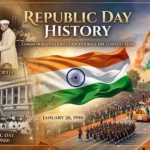
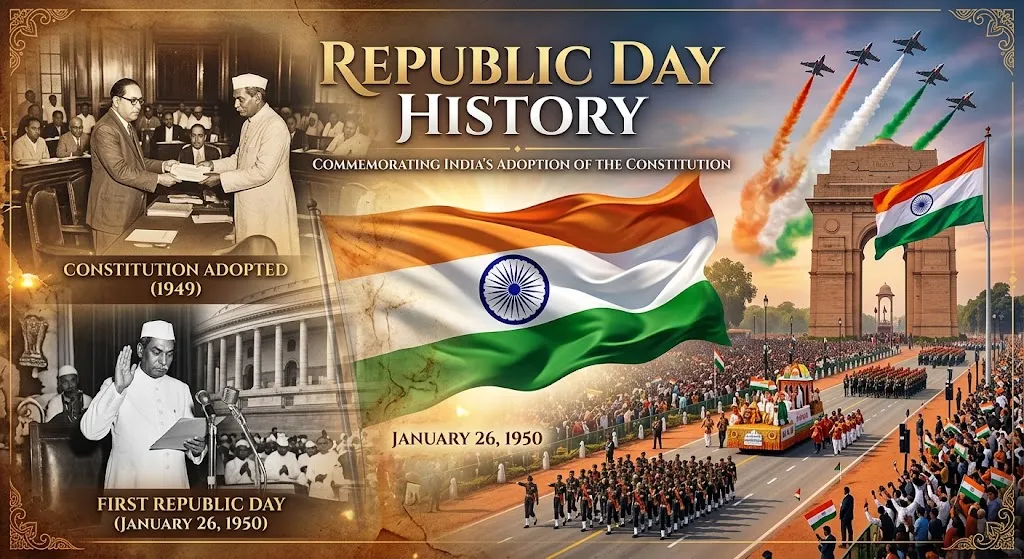
Republic Day is Celebrated every year on January 26, but the story behind this date began decades before India became a republic. The history of Republic Day connects the freedom movement, the demand for Purna Swaraj, India’s independence, the making of the Constitution, and the birth of the Republic in 1950.
If you want to understand the complete Republic Day history, it is important to look beyond January 26, 1950. The date had already become significant during India’s struggle for complete independence in 1930.
What Is Republic Day?
Republic Day is a national celebration that marks the day the Constitution of India came into force on January 26, 1950. On this historic day, India became a republic and adopted a constitutional system of government.
India had already achieved independence on August 15, 1947, but independence and becoming a republic were two different milestones. Republic Day represents India’s transition from a dominion to a sovereign republic governed according to its Constitution.
The day is also a reminder of India’s democratic institutions, constitutional values, national unity, and the long struggle that preceded the creation of the Republic.
Why Is Republic Day Celebrated on January 26?
The date had historical importance long before the Constitution came into force.
In December 1929, the Indian National Congress held its Lahore Session under the presidency of Jawaharlal Nehru. The Congress declared Purna Swaraj, meaning complete independence, as its goal.
This decision connected the new Republic with the earlier promise of complete independence.
Purna Swaraj and January 26, 1930
Purna Swaraj means complete or total independence. The idea became a major turning point in India’s national movement.
Before this period, different political groups had demanded varying levels of self-government. The Lahore Session of 1929 marked a stronger demand for complete independence from British rule. Although India eventually became independent on August 15, 1947, January 26 remained an important symbol of the freedom struggle.
That historical connection later influenced the choice of January 26 as Republic Day.
India’s Independence on August 15, 1947
India finally achieved independence from British rule on August 15, 1947. Jawaharlal Nehru became the country’s first Prime Minister, and the long struggle against colonial rule entered a new phase.
However, India did not immediately become a republic.
After independence, India initially remained a dominion within the Commonwealth framework. The Governor-General served as the constitutional head of state while the Constituent Assembly continued working on the Constitution.
This period between independence and the establishment of the Republic was essential for building India’s new political and constitutional system.
Why Did India Need a New Constitution?
Political independence created a new challenge: India needed a constitutional framework for governing itself.
The country needed clear rules Concerning Government institutions, citizens’ rights, elections, lawmaking, federal relations, judicial authority, and the responsibilities of the state.
The Constitution was designed to provide this framework.
It established the basic structure of India’s democratic government and expressed important ideals including justice, liberty, equality, and fraternity.
The Constitution therefore became much more than a legal document. It became the foundation of the Republic.
Formation of the Constituent Assembly
The Constituent Assembly was responsible for preparing the Constitution of India. Its first meeting took place on December 9, 1946.
Members of the Assembly debated major questions about India’s future. These included fundamental rights, citizenship, representation, federalism, the powers of government, minority protections, and the relationship between the Union and the states.
The Constitution emerged through extensive discussions and deliberations rather than being created in a single stage.
The work of the Constituent Assembly became one of the most important chapters in the history of modern India.
Dr. B. R. Ambedkar and the Drafting Committee
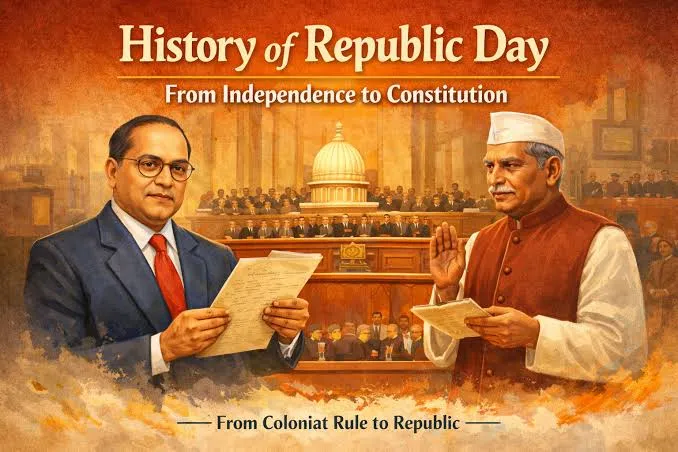
Dr. B. R. Ambedkar played a central role in the preparation of India’s Constitution. He served as chairman of the Drafting Committee established on August 29, 1947.
The Drafting Committee worked on transforming the decisions and principles discussed by the Constituent Assembly into a detailed constitutional document.
Ambedkar’s contribution remains an important part of India’s constitutional history. Alongside him, many members of the Constituent Assembly, committees, legal experts, administrators, and political leaders contributed to the Constitution-making process.
The final Constitution reflected years of debate, revision, and careful consideration.
Constitution Adopted on November 26, 1949
The Constituent Assembly adopted the Constitution on November 26, 1949.
However, January 26, 1950, was selected as the date when the Constitution would fully come into force.
This distinction can be remembered easily:
| Date | Historical Event |
| January 26, 1930 | Purna Swaraj Day was observed |
| August 15, 1947 | India became independent |
| November 26, 1949 | Constitution was adopted |
| January 26, 1950 | Constitution came into force |
| January 26, 1950 | India became a republic |
This sequence explains why both November 26 and January 26 have important places in India’s constitutional history.
Why Did India Become a Republic in 1950?
Becoming independent did not automatically mean that India was a republic.
A republic is a form of government in which the head of state is not a hereditary monarch. India’s Constitution established the office of the President as the constitutional head of the Republic.
When the Constitution came into force on January 26, 1950, the office of the Governor-General was replaced by the constitutional office of the President.
Dr. Rajendra Prasad became the first President of India.
This marked India’s formal transition from a dominion to a republic governed under its own Constitution.
What Happened on the First Republic Day?
January 26, 1950, was a historic day for India.
The Constitution came into force, and India officially became a republic. Dr. Rajendra Prasad assumed office as the first President of India.
The country’s first Republic Day ceremony was held in New Delhi. Rajendra Prasad took part in the celebrations and reviewed the ceremonial proceedings.
President Sukarno of Indonesia attended the occasion as the chief guest.
The first Republic Day was therefore both a constitutional milestone and a major national celebration.
Where Was the First Republic Day Parade Held?
The first Republic Day parade was not held at today’s Kartavya Path.
In 1950, the main Republic Day ceremony took place at the Irwin Amphitheatre in New Delhi, an area associated with the present-day Major Dhyan Chand National Stadium.
The early Republic Day celebrations were different in scale and format from the huge national ceremony people see today.
Over the decades, the parade developed into a major annual event featuring the armed forces, cultural presentations, tableaux, national symbols, and other ceremonial elements.
This evolution is an important part of Republic Day parade history.
How Did Republic Day Celebrations Evolve?
Republic Day celebrations gradually became larger and more organized as India’s national institutions developed.
The Celebration now includes several elements that have become familiar to millions of Indians.
These include military contingents, cultural performances, state and Union Territory tableaux, school participation, awards, ceremonial traditions, and displays representing India’s cultural diversity.
The parade is not simply a display of military strength. It also presents India’s regional traditions, history, art, culture, achievements, and national identity.
The celebration has therefore evolved into a combination of constitutional symbolism, patriotism, culture, and national unity.
Republic Day Parade and Its Modern Tradition
The Republic Day parade in New Delhi has become one of India’s most recognizable national ceremonies.
The parade provides an opportunity to showcase India’s defence capabilities while also highlighting the country’s cultural diversity.
Tableaux from states and Union Territories often present themes connected with regional history, traditions, art, architecture, festivals, achievements, and social development.
The ceremony also includes performances and participation from different groups, making it a visual representation of India’s idea of unity in diversity.
The modern celebration is therefore connected to both the original constitutional milestone of 1950 and the country’s evolving national identity.
Republic Day vs Independence Day
People sometimes confuse Republic Day with Independence Day, but the two occasions commemorate different historical events.
| Republic Day | Independence Day |
| January 26 | August 15 |
| Celebrates the Constitution coming into force | Celebrates India’s independence |
| 1950 | 1947 |
| India became a republic | British rule ended |
| Focuses strongly on constitutional government | Focuses strongly on freedom and independence |
A simple way to remember the difference is:
August 15, 1947 = Independence
January 26, 1950 = Republic
The two dates are connected, but they represent different stages of India’s journey as a nation.
Importance and Significance of Republic Day
Republic Day is important because it represents much more than the anniversary of a constitutional document.
It symbolizes India’s journey from colonial rule to self-government and from the demand for independence to the establishment of a constitutional republic.
The occasion reminds citizens about democratic institutions, constitutional values, national unity, and the responsibilities associated with citizenship.
Republic Day is also an opportunity to remember the freedom movement and the many people who contributed to India’s independence and constitutional development.
At its heart, the day celebrates the idea that the country is governed through a constitutional system and democratic institutions.
Republic Day History Timeline
The history of Republic Day becomes easier to understand when its major events are placed in chronological order.
| Year or Date | Event |
| December 1929 | Lahore Session of the Indian National Congress |
| January 26, 1930 | Purna Swaraj Day observed |
| December 9, 1946 | Constituent Assembly held its first meeting |
| August 15, 1947 | India became independent |
| August 29, 1947 | Drafting Committee established |
| November 26, 1949 | Constitution adopted |
| January 24, 1950 | Rajendra Prasad elected President |
| January 26, 1950 | Constitution came into force |
| January 26, 1950 | India became a republic |
| January 26, 1950 | First Republic Day celebration |
| Following decades | Republic Day celebrations developed into a major national ceremony |
The most important connection in this timeline is between January 26, 1930, and January 26, 1950. The first date represented the freedom movement’s demand for complete independence, while the second marked the establishment of India’s constitutional republic.
Related To Another Article: https://genzwishes.com/republic-day-wishes-in-marathi/
Why Republic Day Is More Than a National Holiday
Republic Day is officially a national occasion, but its historical meaning goes much deeper.
It connects three important stages of India’s modern history: the freedom movement, independence, and constitutional government.
The day also reminds citizens that a republic depends on institutions, laws, rights, responsibilities, and democratic participation.
For younger generations, Republic Day provides an opportunity to understand how India’s political system developed and why the Constitution remains central to the country’s identity.
The parade, flag ceremonies, cultural performances, and patriotic events are therefore expressions of a much larger historical story.
People Also Ask
A: The first Republic Day was celebrated on January 26, 1950, when the Constitution of India came into force, and India became a republic.
A: January 26 was selected because the date had already been associated with the Purna Swaraj movement. January 26, 1930, was observed as Purna Swaraj Day during the struggle for complete independence.
A: India became independent from British rule on August 15, 1947.
A: The Constituent Assembly adopted the Constitution on November 26, 1949.
A: The Constitution came into force on January 26, 1950.
Key Facts About Republic Day History
| Question | Answer |
| Republic Day | January 26 |
| First Republic Day | January 26, 1950 |
| Independence Day | August 15, 1947 |
| Constitution adopted | November 26, 1949 |
| Constitution came into force | January 26, 1950 |
| First President | Dr. Rajendra Prasad |
| Drafting Committee Chairman | Dr. B. R. Ambedkar |
| Purna Swaraj Day | January 26, 1930 |
| First Republic Day chief guest | President Sukarno of Indonesia |
| First Republic Day venue | Irwin Amphitheatre, New Delhi |
Conclusion
The history of Republic Day is the story of India’s journey from a freedom movement to an independent nation and finally to a constitutional republic.
The importance of January 26 began with Purna Swaraj Day in 1930. India then achieved independence on August 15, 1947, adopted its Constitution on November 26, 1949, and became a republic when the Constitution came into force on January 26, 1950.
That is why Republic Day is more than a patriotic celebration. It represents the constitutional beginning of modern India and connects the aspirations of the freedom struggle with the democratic Republic that followed.
When we celebrate Republic Day, we remember not only the historic events of 1950 but also the long journey that made that day possible.