Introduction
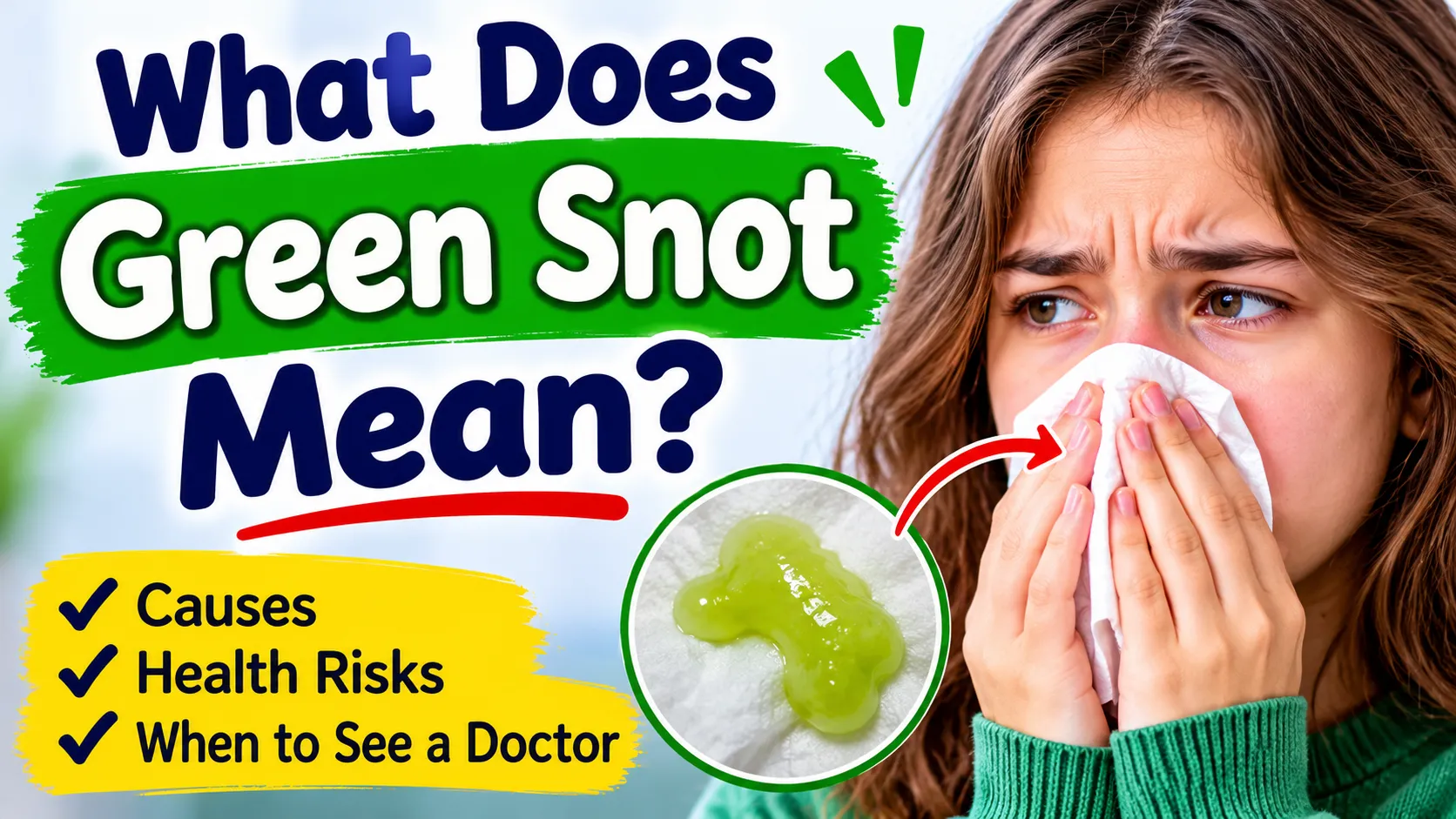
Noticing Green Snot when you blow your nose can be surprising, especially when you already have a stuffy nose, a headache, or a runny nose. But what does green snot mean, and should you be worried?
Green snot usually means your immune system is responding to inflammation or an infection in your nasal passages. It commonly appears during a cold or another respiratory illness. However, green mucus does not automatically mean you have a bacterial infection or need antibiotics.
The color develops partly because immune cells called neutrophils release an enzyme that contributes to the green appearance. Your other symptoms, how long you have been sick, and whether your condition is improving provide more useful clues about your health.
Let’s explore the common causes, possible warning signs, safe treatments, and everything else you should know about green nasal mucus.
1. What Does Green Snot Mean?
Green snot generally means your immune system is responding to inflammation, irritation, or an infection in your nasal passages.
Your nose naturally produces mucus to trap dust, allergens, bacteria, and viruses. This mucus also keeps your nasal tissues moist and helps protect your respiratory system.
When your body detects an infection, it sends immune cells called neutrophils to the affected area. These white blood cells contain an enzyme called myeloperoxidase, which contributes to the greenish color of mucus.
As these cells and their enzymes accumulate, your nasal discharge may change from clear to yellow or green.
Green mucus can appear during:
- A common cold.
- Viral respiratory infections.
- Sinus inflammation.
- Some bacterial infections.
- Other conditions that cause nasal irritation.
However, green snot alone cannot identify the exact cause of an illness.
In simple terms: Green snot often means your immune system is actively responding to something. It does not automatically mean you have a serious infection.
2. Why Does Your Snot Turn Green?
Your snot changes color because of several processes happening inside your nasal passages.
Normally, nasal mucus is clear and relatively thin. However, when inflammation develops, your immune system becomes more active and sends additional white blood cells to the affected tissues.
Here is how the process works:
- Your body detects an irritant or infection: A virus, bacteria, allergen, or other substance affects your nasal passages.
- Inflammation develops: Your nasal tissues become irritated or swollen.
- Immune cells arrive: Your body sends neutrophils to respond to the problem.
- Enzymes enter the mucus: Myeloperoxidase inside neutrophils contributes to the green coloration.
- Your mucus changes: The discharge may become thicker, cloudy, yellow, or green.
This process is part of your body’s natural defense system.
You may also notice that your mucus becomes thicker when your nose is congested or when you are not drinking enough fluids.
One important point is that green mucus can develop during an ordinary viral cold. It does not necessarily mean your illness is becoming more serious.
3. What Causes Green Snot?
Several conditions can cause green nasal discharge. Your other symptoms and the duration of your illness can help explain what might be happening.
Here are some common possibilities.
Common Cold
The common cold is one of the most frequent causes of green snot.
A cold often begins with sneezing, a sore throat, and clear nasal discharge. As your immune system responds, the mucus may become thicker and change to yellow or green.
This color change can happen during normal recovery.
Sinusitis
Sinusitis occurs when the lining of your sinuses becomes inflamed and swollen.
It can develop after a cold or another respiratory infection. Common symptoms include:
- Green or yellow nasal discharge.
- Facial pain or pressure.
- Nasal congestion.
- Headaches.
- Reduced sense of smell.
- Tooth discomfort.
- Postnasal drip.
Sinusitis can have viral, bacterial, or other inflammatory causes. Green mucus alone cannot establish which type you have.
Other Respiratory Infections
Influenza and other respiratory viruses can cause inflammation and increased mucus production.
You may experience green nasal discharge alongside coughing, sneezing, fever, and a sore throat.
Allergies and Nasal Irritation
Allergies commonly cause clear, watery discharge, sneezing, and congestion.
Dust, smoke, pollution, and strong fragrances can also irritate your nasal passages and increase mucus production.
Although allergies usually produce clear mucus, other factors may affect its appearance.
If green discharge persists or comes with concerning symptoms, do not automatically assume allergies are responsible.
4. Does Green Snot Mean a Bacterial Infection?
No. Green snot does not Automatically Mean you have a bacterial infection.
This is one of the biggest misconceptions about mucus color.
Both viral and bacterial infections can cause green or yellow nasal discharge. During a common cold, your immune system sends white blood cells to fight the infection. Their enzymes can change the appearance of your mucus.
Healthcare professionals consider several factors when evaluating possible bacterial sinusitis.
These include:
- Symptoms lasting more than 10 days without improvement.
- Symptoms that initially improve but then become noticeably worse.
- Severe symptoms, including a fever around 39°C (102°F) or higher, together with purulent nasal discharge or facial pain lasting several consecutive days.
These patterns can increase suspicion of bacterial sinusitis, but they do not replace a medical examination.
Do You Need Antibiotics for Green Snot?
Not necessarily.
Antibiotics treat certain bacterial infections. They do not work against viruses that cause common colds or influenza.
Taking antibiotics unnecessarily can cause side effects and contribute to antibiotic resistance.
A healthcare professional can decide whether antibiotics are appropriate after considering your symptoms and medical history.
Important: Never take leftover antibiotics or someone else’s prescription simply because your mucus looks green.
5. Green Snot vs. Yellow Snot: What’s the Difference?
Green and yellow snot can both appear when your immune system responds to inflammation or an infection.
The difference in color does not reliably identify the type or severity of an illness.
| Feature | Yellow Snot | Green Snot |
| Appearance | Yellow or cloudy | Green or dark green |
| Common explanation | Immune activity and inflammation | Immune activity and accumulated enzymes |
| Possible causes | Cold and sinus inflammation | Cold and sinus inflammation |
| Bacterial infection | Cannot confirm it | Cannot confirm it |
| Antibiotics | Not automatically needed | Not automatically needed |
Is Green Snot Worse Than Yellow Snot?
Not necessarily.
A darker color does not automatically mean your infection is more severe.
For example, someone with green mucus and mild congestion may be recovering normally, while someone with yellow mucus and severe facial pain may need medical evaluation.
Your overall health, fever, breathing, facial discomfort, and symptom duration provide more useful information than color alone.
6. What Does Thick Green Nasal Mucus Mean?
Thick green nasal mucus usually develops when mucus production increases and the discharge becomes more concentrated.
Inflammation can cause nasal tissues to swell, making it harder for mucus to drain normally.
Several factors can contribute to thick mucus:
- A common cold or respiratory infection.
- Sinus inflammation.
- Reduced fluid intake.
- Dry indoor air.
- Nasal irritation.
- Mucus collecting in the nasal passages.
Is Thick Green Mucus Dangerous?
Not always.
Thick mucus can be uncomfortable, but its consistency alone does not indicate a dangerous infection.
You might notice that your mucus becomes especially thick in the morning because it accumulates while you sleep.
Drinking enough fluids and using an appropriate saline nasal spray may help loosen mucus.
However, persistent thick discharge accompanied by fever, worsening facial pain, severe headaches, or other concerning symptoms deserves medical attention.
7. What Does Green Snot From One Nostril Mean?
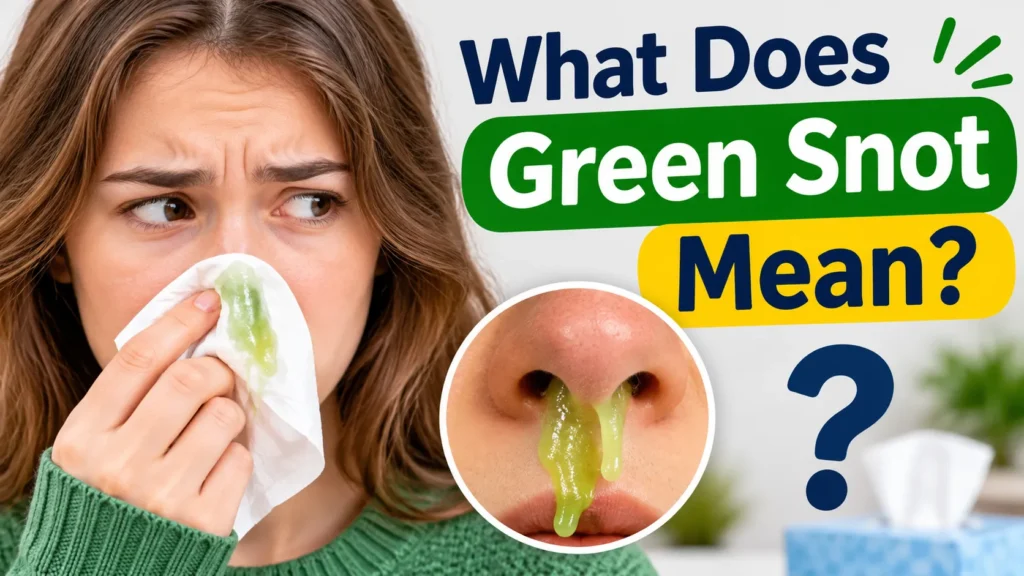
Green snot coming from only one nostril can happen for several reasons.
Sometimes inflammation affects one side of your nasal passages more than the other. A blocked sinus or localized irritation can also cause discharge to appear mainly on one side.
Possible explanations include:
- Uneven nasal congestion.
- Sinus inflammation affecting one side.
- Localized nasal irritation.
- A localized infection.
- A foreign object inside the nose, particularly in young children.
When Should One-Sided Green Discharge Be Checked?
Pay attention if the discharge continues, smells unpleasant, or comes with facial pain or swelling.
Persistent foul-smelling discharge from one nostril in a child needs medical assessment because a foreign object may be present.
Rarely, persistent watery drainage from one nostril after a head injury can indicate a cerebrospinal fluid leak. This is different from ordinary thick green mucus and requires urgent medical evaluation.
Do not assume that every case of one-sided green discharge is a sinus infection.
Related To Another Article: https://genzwishes.com/what-does-222-mean-in-love/
8. What Does Green Snot With Other Symptoms Mean?
Green mucus becomes more informative when you consider the symptoms appearing alongside it.
Different combinations can provide useful clues about possible causes.
| Symptoms | Possible Explanation |
| Green snot and sneezing | Cold, allergies, or nasal irritation |
| Green snot and sore throat | Respiratory infection or postnasal drip |
| Green snot and fever | Respiratory infection or sinusitis |
| Green snot and facial pressure | Possible sinus inflammation |
| Green snot and headache | Cold or sinus-related inflammation |
| Green snot and cough | Respiratory infection or postnasal drip |
| Green snot and bad smell | Possible localized infection or another nasal problem |
| Green snot and breathing difficulty | Requires urgent medical assessment |
These combinations are clues, not diagnoses.
Green Snot With a Fever
A fever can develop when your immune system responds to an infection.
If you experience a high or persistent fever, particularly with worsening symptoms or facial pain, contact a healthcare professional.
Green Snot With a Cough
Mucus can travel down the back of your throat. This process is called postnasal drip.
It can irritate your throat and trigger coughing.
A cough may also result from an infection affecting your respiratory tract.
If you experience shortness of breath, chest pain, or rapid breathing, seek urgent medical attention.
9. How Long Does Green Snot Last?
Green snot often improves as the underlying cold or respiratory illness gets better.
Many common colds improve within approximately 7 to 10 days, although some symptoms can last longer.
The duration depends on the underlying cause.
| Possible Cause | General Pattern |
| Common cold | Often improves within 7–10 days |
| Viral sinus inflammation | May improve gradually over days or weeks |
| Bacterial sinusitis | May persist or worsen and requires clinical assessment |
| Allergic irritation | Can continue while exposure persists |
| Chronic sinus problems | Symptoms may last 12 weeks or longer |
These are general patterns, not guaranteed recovery times.
When Does Green Snot Become Concerning?
Consider contacting a healthcare professional if:
- Your symptoms last more than 10 days without improvement.
- You begin feeling better but suddenly become worse.
- You experience a persistent high fever.
- Facial pain or swelling becomes severe.
- Your symptoms repeatedly return.
Remember that green mucus can remain visible during recovery. Its color alone cannot tell you whether an infection is still active.
10. Is Green Snot Contagious?
Green snot itself is not contagious. However, the illness causing it may spread to other people.
For example, viruses responsible for common colds and influenza can spread through respiratory droplets and contaminated hands or surfaces.
You cannot determine whether someone is contagious simply by looking at their mucus.
If green snot appears alongside symptoms of a respiratory illness, take reasonable precautions:
- Wash your hands regularly.
- Cover your mouth when coughing or sneezing.
- Avoid sharing personal items.
- Improve ventilation in indoor spaces.
- Consider wearing a mask around others when you are sick.
- Avoid close contact with people who are especially vulnerable.
If allergies or noninfectious irritation cause your symptoms, those conditions are not contagious.
11. What Does Green Snot Mean in Children?
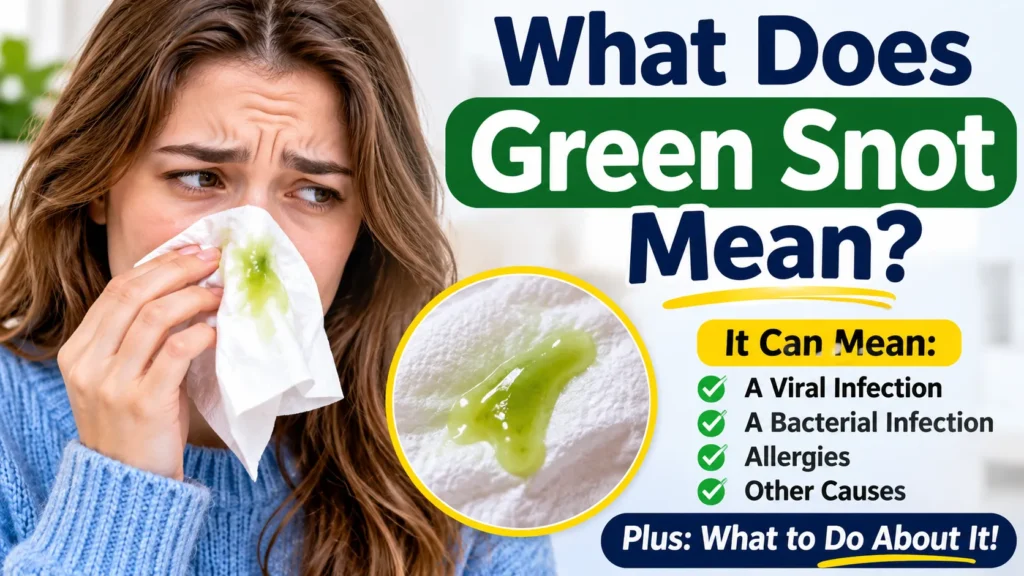
Green snot in children is common, particularly during colds and other respiratory illnesses.
A child’s mucus may start clear and gradually become thicker, yellow, or green as the immune system responds.
This change does not automatically mean the child needs antibiotics.
Common Reasons Children Develop Green Snot
- Common cold.
- Viral respiratory infection.
- Sinus inflammation.
- Nasal allergies.
- Exposure to dust or other irritants.
- A foreign object inside the nose, particularly when discharge is one-sided and foul-smelling.
When Should Parents Contact a Doctor?
Seek medical advice if your child experiences:
- Symptoms lasting more than 10 days without improvement.
- A high fever with persistent thick nasal discharge.
- Facial pain or swelling.
- Symptoms that improve and then become worse.
- Persistent foul-smelling discharge from one nostril.
- Difficulty drinking or signs of dehydration.
Breathing difficulty, unusual drowsiness, or a seriously unwell appearance requires urgent medical attention.
Important for babies: A temperature of 38°C (100.4°F) or higher in a baby younger than three months requires immediate medical assessment.
Parents should not give children antibiotics or adult cold medicines without appropriate medical advice.
12. How to Get Rid of Green Snot Safely
There is no Special Treatment that removes the green color itself. The best approach is to relieve congestion and address the underlying cause.
Most uncomplicated viral colds improve with time and supportive care.
Here are some practical ways to feel more comfortable.
1. Drink Enough Fluids
Water and other suitable fluids help prevent dehydration.
Staying hydrated can make thick mucus easier to clear.
2. Use a Saline Nasal Spray
Saline sprays add moisture to your nasal passages and can help loosen mucus.
Follow the product instructions and use an appropriate product for your age.
3. Try a Safe Saline Nasal Rinse
A saline nasal rinse can help wash away mucus and other particles.
However, water safety is essential.
Use only:
- Distilled water.
- Sterile water.
- Previously boiled and cooled water.
Never use untreated tap water in a nasal rinse device.
Clean and dry the device according to its instructions.
4. Use a Clean Humidifier
Dry air can irritate your nasal passages.
A clean humidifier may help maintain comfortable indoor humidity and reduce dryness.
Follow the manufacturer’s cleaning instructions to prevent mold and microbial growth.
5. Get Adequate Rest
Your body needs rest while recovering from an illness.
Try to maintain a regular sleep schedule and avoid unnecessary physical strain while you feel unwell.
6. Blow Your Nose Gently
Blowing your nose can remove accumulated mucus.
Avoid blowing too forcefully because it may irritate sensitive nasal tissues or cause minor bleeding.
7. Ask a Pharmacist About Suitable Medication
Some over-the-counter products may help relieve congestion, fever, or discomfort.
However, not every medicine is appropriate for every age or health condition.
Follow the product label and seek advice from a pharmacist or healthcare professional before using decongestants or other medications.
Nasal decongestant sprays can cause rebound congestion when used for too long. Follow the product’s duration limit.
13. When Should You See a Doctor About Green Snot?
Green mucus alone usually does not require an emergency visit.
However, certain symptoms may indicate that you need medical evaluation.
Contact a Healthcare Professional If:
- Green nasal discharge lasts more than 10 days without improvement.
- Your symptoms become worse after initially improving.
- You have a persistent or high fever.
- You experience significant facial pain or pressure.
- Your nasal discharge repeatedly returns.
- You have persistent foul-smelling discharge from one nostril.
- You have a weakened immune system or an underlying condition that increases your risk of complications.
Seek Urgent Medical Attention If You Experience:
- Difficulty breathing or severe shortness of breath.
- Swelling or redness around the eyes.
- Changes in vision or double vision.
- A severe or unusual headache.
- Confusion or unusual drowsiness.
- A stiff neck accompanied by fever or severe headache.
- Severe facial swelling.
These symptoms should not be ignored, regardless of your mucus color.
If you are unsure whether your symptoms require urgent care, contact a healthcare professional for advice.
14. How to Prevent Excess Nasal Mucus
You cannot prevent every Cold Or Episode of nasal congestion, but healthy habits can reduce your exposure to common respiratory infections and nasal irritants.
Consider these preventive steps.
Practice Good Hand Hygiene
Wash your hands with soap and water, especially before eating and after coughing, sneezing, or touching shared surfaces.
Avoid Cigarette Smoke
Smoke can irritate your nasal passages and respiratory system.
Avoid smoking and unnecessary exposure to secondhand smoke.
Manage Allergies
If you experience frequent sneezing, congestion, or a runny nose, identify possible triggers with help from a healthcare professional.
Managing allergies may reduce ongoing nasal inflammation.
Keep Indoor Spaces Clean
Reduce exposure to dust and other common irritants.
Clean frequently used surfaces and maintain good ventilation.
Stay Hydrated
Drink enough fluids throughout the day to support normal bodily functions.
Follow Recommended Vaccinations
Vaccinations recommended for your age and health circumstances can help protect against certain respiratory infections, including influenza.
Prevention does not guarantee that you will never develop green mucus, but these habits support respiratory health.
15. Common Myths and Facts About Green Snot
There are several misconceptions about green nasal mucus. Understanding the facts can help you avoid unnecessary worry and inappropriate treatment.
| Myth | Fact |
| Green snot always means a bacterial infection. | Viral infections can also cause green mucus. |
| Green snot always requires antibiotics. | Antibiotics do not treat viral infections. |
| Dark green mucus means a severe illness. | Color alone cannot determine illness severity. |
| Thick mucus always means dehydration. | Inflammation and other factors can also thicken mucus. |
| Green snot is always contagious. | The underlying cause determines whether an illness can spread. |
| Green mucus means recovery is impossible without medicine. | Many viral illnesses improve naturally with supportive care. |
| Children with green snot always need antibiotics. | Green mucus is common during childhood colds. |
| Nasal rinses can use ordinary tap water. | Nasal irrigation requires distilled, sterile, or previously boiled and cooled water. |
The most important fact is that mucus color is only one part of understanding your symptoms. Duration, severity, and accompanying signs provide more meaningful information.
People Also Ask
Green snot can appear during the immune response to a common cold, including while your body is recovering. However, the color alone cannot confirm that you are getting better. Improving congestion, fever, energy levels, and other symptoms provide a better indication of recovery.
Dark green snot is not automatically dangerous. It can result from immune cells and their enzymes accumulating in nasal mucus. However, seek medical advice if it persists, worsens, or occurs with a high fever, significant facial pain, or other concerning symptoms.
Allergies usually cause clear, watery nasal discharge. However, allergies can cause inflammation and congestion that affect mucus consistency. Green discharge should not automatically be attributed to allergies, especially if you also have symptoms suggesting an infection.
No. Green snot alone does not mean you need antibiotics. Both viral and bacterial illnesses can cause discolored mucus. A healthcare professional considers your symptoms, their duration, and other clinical findings before deciding whether antibiotics are appropriate.
You can help relieve green nasal mucus by drinking enough fluids, using saline nasal sprays, trying safe saline rinses, keeping indoor air comfortably humid, resting, and gently blowing your nose. These measures relieve symptoms but do not replace medical treatment when an underlying condition requires it.
Conclusion
Green snot usually means your Immune System is responding to inflammation, irritation, or an infection in your nasal passages. White blood cells and their enzymes can change mucus from clear to yellow or green during an ordinary cold.
Although green mucus can occur with bacterial sinusitis, it does not automatically mean you have a bacterial infection or need antibiotics. Your other symptoms, how long they last, and whether your condition improves or worsens are much more important.
Stay hydrated, use appropriate saline products, get enough rest, and monitor your symptoms. If you experience persistent symptoms, severe pain, high fever, or breathing difficulties, seek appropriate medical care.