Introduction
Have you ever noticed Your Cat Making a soft, vibrating sound while sitting on your lap, relaxing beside you, or enjoying a gentle pet? That familiar rumbling noise is called purring, and it is one of the most recognizable forms of feline communication.
But what does it mean when a cat purrs? Most people associate this sound with happiness, comfort, and affection. However, cats can also purr when they feel hungry, nervous, stressed, or even physically uncomfortable.
Understanding why cats purr requires looking beyond the sound itself. Their body language, surroundings, and everyday behavior can reveal much more about what they might be feeling. Let’s explore the science, common situations, and important warning signs behind this fascinating feline behavior.
1. What Does It Mean When a Cat Purrs?
When a cat purrs, it usually expresses an emotional state or communicates a particular need. Purring commonly accompanies relaxation, contentment, social bonding, and attention-seeking. However, it can also occur during stress, fear, or physical discomfort.
For example, imagine your cat curling up on your lap, closing its eyes, and producing a gentle rumbling sound. Its relaxed posture and comfortable surroundings suggest that it enjoys the moment.
Now imagine a different situation. Your cat is hiding under a bed, avoiding interaction, and purring quietly. This behavior could indicate that it feels frightened or uncomfortable rather than happy.
The meaning depends on the complete situation.
Cats communicate through several sounds and physical signals, including:
- Purring: May communicate contentment, social contact, or discomfort.
- Meowing: Often directed toward people to request attention or communicate a need.
- Hissing: Commonly signals fear, defensiveness, or a desire for distance.
- Growling: Can communicate a warning or discomfort.
- Chirping: Often occurs during excitement or attention toward something interesting.
A purr alone cannot tell you exactly what your cat feels. Consider its posture, facial expression, tail movement, and behavior before interpreting the sound.
2. Why Do Cats Purr? 7 Common Reasons
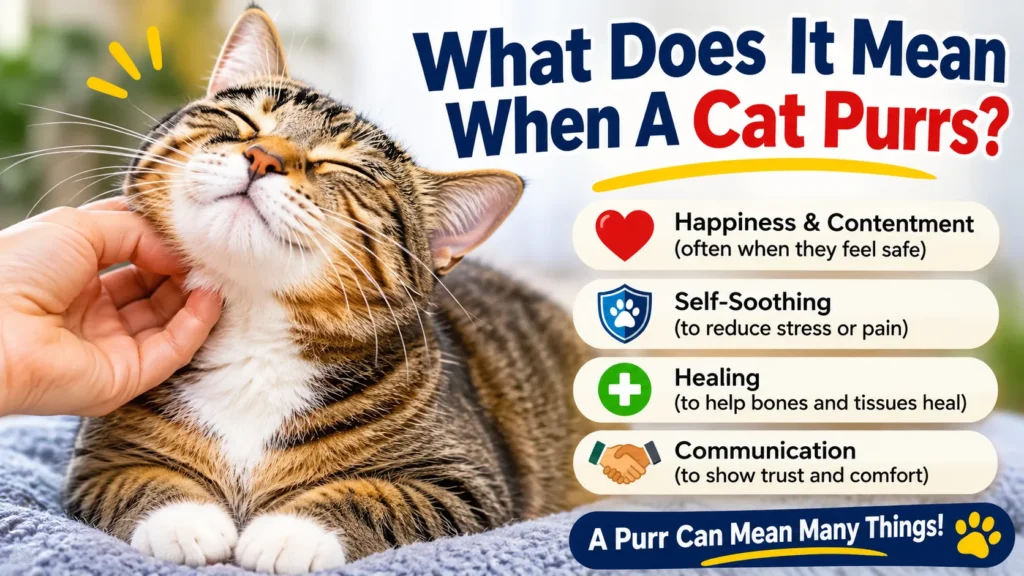
Cats purr for several different reasons, and the same sound can communicate different things in different situations. Happiness is a common explanation, but it is not the only one.
Here are seven important reasons your feline companion might produce this familiar rumbling sound.
1. Your Cat Feels Happy and Comfortable
One of the most recognizable reasons for purring is contentment. When cats feel safe and comfortable, they often produce a gentle rumbling sound while resting or interacting with familiar people.
You might notice this behavior when your cat lies in a sunny spot, relaxes on a soft blanket, or curls up beside you.
A comfortable cat may also display these signs:
- Relaxed ears and facial muscles.
- Soft eyes or slow blinking.
- A comfortable resting position.
- Gentle kneading with its front paws.
- A loosely positioned tail.
- Willingness to remain near familiar people.
When these behaviors accompany purring, they often suggest that your cat is enjoying its surroundings.
2. Your Cat Wants Attention
Sometimes, cats purr because they want you to notice them. They might approach your chair, rub against your legs, or sit beside you while producing a gentle vibration.
Your cat could be asking for affection, playtime, or simply some company.
Some cats also develop a distinctive attention-seeking purr. Researchers have studied solicitation purring, which can combine ordinary purring with a higher-pitched sound that resembles a small cry.
This combination may make the sound more noticeable to humans.
If your cat starts purring whenever you enter the room, it might have learned that this behavior encourages interaction.
3. Your Cat Is Showing Affection
Purring can accompany friendly social interactions between cats and their familiar human companions.
When a cat approaches you, rubs its head against your hand, and settles nearby, it may be expressing trust and social comfort.
You might notice this behavior when your cat:
- Sits beside you on the sofa.
- Rests on your lap.
- Rubs its cheeks against your legs.
- Follows you around the house.
- Purrs during gentle physical contact.
Every cat has a different personality. Some enjoy cuddling, while others show affection by quietly staying in the same room.
Remember that purring does not automatically mean your cat wants to be picked up. Respecting its preferred distance helps maintain a healthy relationship.
4. Your Cat Feels Hungry
Have you noticed your cat purring when you walk toward the kitchen?
Some cats purr around mealtime because they have learned that certain sounds and behaviors attract human attention.
They might sit beside their food bowl, follow you into the kitchen, or rub against your legs while waiting for their meal.
Research on solicitation purring suggests that some cats combine their ordinary purr with a higher-frequency vocal element that people may find difficult to ignore.
This behavior can become part of your cat’s daily feeding routine.
However, purring around food does not always mean hunger. Your cat might simply associate the kitchen with attention, familiar people, or positive experiences.
5. Your Cat Feels Nervous or Stressed
Purring does not always indicate a positive emotional state. Cats may also purr during unfamiliar, stressful, or uncomfortable experiences.
For instance, your cat might produce a gentle rumbling sound during a car journey, at a veterinary clinic, or while meeting unfamiliar animals.
Researchers and veterinarians consider self-soothing one possible explanation for this behavior. Purring may help some cats cope with uncomfortable situations, although its exact emotional function is not fully understood.
Watch for additional signs of stress:
- Ears turned sideways or backward.
- A tightly tucked tail.
- Hiding or avoiding interaction.
- Dilated pupils.
- A tense or crouched posture.
- Reduced interest in normal activities.
If your cat displays several of these behaviors while purring, give it space and provide a quiet, secure environment.
6. Your Cat May Be Experiencing Pain
One surprising reason cats purr is that they can produce this sound while experiencing pain or physical discomfort.
A purring cat is not necessarily a healthy or comfortable cat. Some cats continue purring during illness, injury, or stressful veterinary examinations.
This behavior is one reason owners should pay attention to changes in their pets’ daily routines.
Possible warning signs include:
- Reduced appetite.
- Unusual hiding behavior.
- Limping or difficulty jumping.
- Reduced activity.
- Changes in grooming habits.
- Sensitivity when touched.
- Unusual aggression or withdrawal.
If you notice these changes, contact a veterinarian for advice. Difficulty breathing, collapse, or severe injury requires urgent veterinary attention.
7. Your Cat Is Communicating With Other Cats
Purring also plays a role in feline social communication.
Mother cats may purr while nursing their kittens, and young kittens can begin producing purring sounds within their first days of life.
These sounds may help maintain contact between mothers and their young.
Adult cats may also purr during friendly interactions with familiar cats. Depending on the circumstances, this behavior can accompany social bonding, comfort, or attempts to reduce tension.
This shows that purring is much more than a simple expression of happiness. It is one part of a broader feline communication system.
3. What Does It Mean When a Cat Purrs Around You?
When a cat purrs around you, it may feel comfortable, relaxed, affectionate, or interested in getting your attention. The situation and its body language help explain which possibility is more likely.
For example, your cat might approach with its tail upright, rub against your legs, and begin purring. These behaviors commonly accompany a friendly greeting.
Alternatively, your cat might climb onto your lap, settle down, and produce a gentle rumbling sound. If its muscles are relaxed and its eyes appear soft, it may be enjoying your company.
However, consider the complete interaction.
A cat that remains close but looks tense, keeps its ears flattened, or repeatedly tries to move away might not want physical contact.
Your cat’s personality and previous experiences also influence how it communicates. Some cats are naturally vocal, while others rarely purr around people.
The best approach is to observe your cat’s usual behavior rather than expecting every cat to communicate in the same way.
4. Why Does My Cat Purr When I Pet Them?
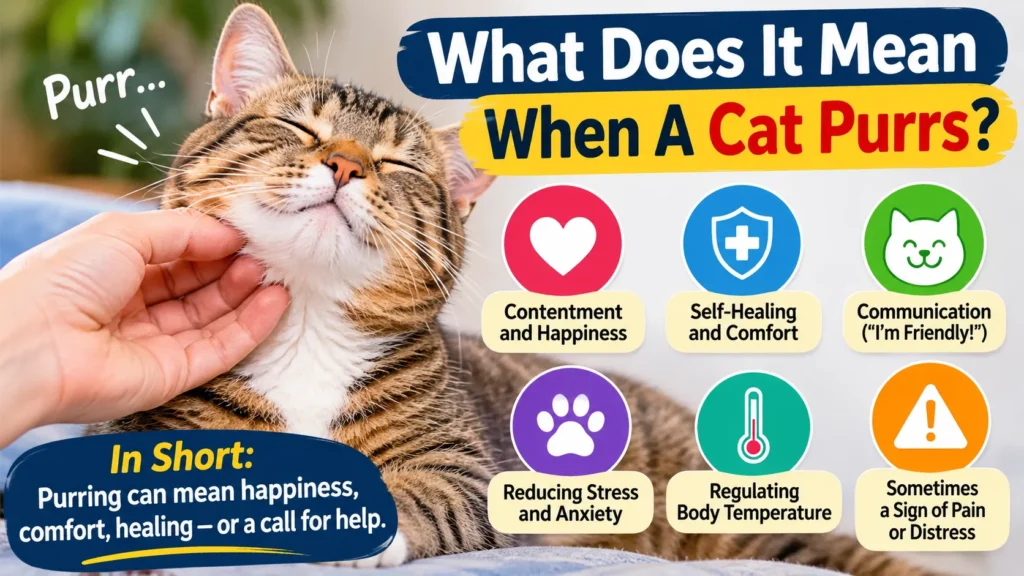
Cats Commonly purr while being petted because they enjoy the interaction and feel comfortable with familiar human touch.
Gentle strokes around the cheeks, chin, forehead, and head may encourage purring in cats that enjoy attention in those areas.
You might notice your cat closing its eyes, leaning toward your hand, or relaxing its body. These behaviors often suggest that the interaction feels pleasant.
However, some cats become overstimulated when petting continues for too long.
Watch for these possible warning signs:
- A rapidly twitching tail.
- Ears turning backward.
- Skin twitching along the back.
- Sudden muscle tension.
- Attempts to move away.
- Swatting or biting.
If you notice these signals, stop petting and allow your cat to choose whether it wants further interaction.
A cat can purr and still become irritated. Its complete body language matters more than the sound alone.
5. Why Does My Cat Purr While Sleeping?
Cats may purr while resting, becoming sleepy, or settling into a comfortable sleeping position.
You might hear a soft rumbling sound when your cat curls up on a blanket, rests beside you, or relaxes in a familiar spot.
Some cats also produce purring sounds during quiet periods when they are becoming drowsy.
However, not every sound from a sleeping cat is a purr. Snoring, nasal noises, and unusual breathing sounds can sometimes be mistaken for ordinary feline vocalizations.
Pay attention to changes from your cat’s normal breathing pattern.
If your cat develops persistent noisy breathing, breathes with its mouth open, or appears to struggle for air, seek urgent veterinary attention.
A comfortable sleeping cat may purr, but unusual breathing should never be dismissed as ordinary purring.
6. Why Do Cats Purr and Knead?
When cats purr and knead simultaneously, they are often displaying a behavior associated with comfort and early kittenhood.
Kneading happens when a cat alternately presses its front paws against a soft surface. Many people call this behavior making biscuits because the movement resembles kneading dough.
Kittens perform this action while nursing, and adult cats may retain the behavior throughout their lives.
Your cat might knead a blanket, pillow, clothing, or your lap while producing a gentle purring sound.
Common explanations include:
- Comfort: Your cat may feel relaxed and secure.
- Early experience: The movement is associated with nursing during kittenhood.
- Resting preparation: Some cats knead before settling down.
- Social interaction: Kneading may accompany friendly contact.
- Soft surfaces: Cats may prefer preparing a comfortable resting area.
Some cats extend their claws during kneading, which can make the behavior uncomfortable.
You can place a soft blanket between your cat’s paws and your lap. There is generally no need to discourage normal kneading.
7. Why Does My Cat Purr So Loudly?
Some cats naturally produce louder purrs than others. Individual differences in vocal behavior can make one cat’s purring much more noticeable than another’s.
A loud purr might occur when your cat feels relaxed, enjoys attention, or wants something from you.
For example, your cat might produce a strong rumbling sound when sitting on your lap or waiting for its favorite meal.
However, loud purring does not automatically prove that your cat is happy.
Consider these questions:
- Is the sound normal for your cat?
- Does your cat appear relaxed?
- Has its appetite remained normal?
- Is it behaving normally?
- Does the purr sound different from before?
If the purring becomes unusually intense or changes suddenly, observe your cat for other symptoms.
A sudden change accompanied by coughing, noisy breathing, weakness, or reduced appetite deserves veterinary attention.
8. Do Cats Purr When They Are in Pain?
Yes. Cats can purr when they are experiencing pain, illness, fear, or physical discomfort.
This may seem surprising because people usually associate purring with happiness. However, the sound can occur in both positive and negative situations.
Cats are also known for hiding signs of illness, which can make health problems difficult to recognize.
A cat experiencing discomfort might continue purring while displaying other unusual behaviors, such as:
- Hiding in quiet places.
- Refusing food.
- Moving less than usual.
- Avoiding jumping or climbing.
- Sitting in a hunched position.
- Becoming unusually sensitive to touch.
- Losing interest in familiar activities.
The sound of a purr cannot tell you how much pain a cat is experiencing.
If you suspect an injury or illness, arrange a veterinary examination. Never assume that a cat is healthy simply because it continues purring.
9. Can Purring Help Cats Feel Better?
Purring may have a Self-Soothing role that helps cats manage stress and uncomfortable experiences.
Scientists have also investigated whether the low-frequency vibrations associated with purring could influence physical processes involving bones and tissues.
Some theories suggest that these vibrations might have biological benefits. However, researchers have not established that ordinary cat purring can heal injuries or treat diseases.
It is important to separate scientific possibilities from proven medical facts.
Here is a simple distinction:
| Scientific Idea | What We Know |
| Purring supports communication | A recognized function of feline behavior |
| Purring accompanies relaxation | Commonly observed in comfortable cats |
| Purring occurs during stress | Documented in stressful situations |
| Purring may support self-soothing | A plausible explanation, but its exact role remains uncertain |
| Purring heals broken bones | Not established as a proven treatment |
| Purring replaces veterinary care | Incorrect |
Purring is an interesting part of feline biology, but it should never replace professional medical treatment.
If your cat is injured, sick, or behaving unusually, consult a veterinarian.
10. How Do Cats Make the Purring Sound?
Cats produce purring through a complex process involving the larynx, vocal folds, airflow, and nervous system.
The larynx, commonly called the voice box, contains structures that help produce vocal sounds.
As air moves through the larynx during breathing, the vocal folds vibrate and generate the familiar low-frequency rumbling sound.
Unlike many other feline vocalizations, purring can continue during both inhalation and exhalation.
Scientists have studied this process for many years. A 2023 study published in Current Biology examined the larynges of eight domestic cats and found that they could produce purring-range sounds without neural input or active muscle contraction in an experimental setup.
This finding challenged the traditional explanation that active muscle contractions are always necessary for purring.
However, the study did not completely settle how purring works in living cats. The mechanism may involve a combination of physical and physiological processes.
The science behind purring is still developing, making this familiar sound more fascinating than it first appears.
11. What Does Your Cat’s Body Language Tell You?
Your cat’s body language can provide important clues about the meaning of its purring.
A gentle rumbling sound accompanied by relaxed muscles is different from the same sound produced while a cat hides or crouches.
Pay attention to the following physical signals:
| Body Language | Possible Meaning |
| Relaxed body and soft eyes | Comfort or contentment |
| Upright tail and friendly approach | Greeting or social interest |
| Slow blinking | Relaxed social interaction |
| Gentle kneading | Comfort or familiar behavior |
| Flattened ears | Fear, stress, or irritation |
| Tucked tail and crouching | Anxiety or discomfort |
| Hiding and reduced activity | Possible stress or illness |
| Repeated attempts to move away | Desire for personal space |
| Tense body and dilated pupils | Possible fear or heightened alertness |
These signs are useful clues, not definite diagnoses.
Consider your cat’s normal personality, surroundings, and recent behavior before deciding what its purring might mean.
Learning these signals can help you recognize when your cat wants attention and when it needs space.
Related To Another Article: https://genzwishes.com/what-does-msrp-mean/
12. Why Do Kittens Purr?
Kittens can begin purring within their first few days of life.
They commonly produce these sounds while nursing, resting beside their mother, or interacting with their littermates.
Mother cats also purr during nursing and close contact with their young.
This early communication may help kittens and their mothers maintain contact and support their social bond.
As kittens grow, they may continue purring when they feel comfortable, want attention, or interact with familiar people.
Adult cats often retain this behavior throughout their lives, although individual cats differ in how frequently and loudly they purr.
If you have a young kitten, remember that purring does not guarantee that everything is healthy. Proper feeding, warmth, regular monitoring, and appropriate veterinary care remain essential.
13. When Should You Worry About Your Cat’s Purring?
Purring alone is usually not a reason to worry. However, an unusual change in purring accompanied by other symptoms deserves attention.
Cats often hide discomfort, so small changes in their everyday habits can provide important clues.
Consider contacting a veterinarian if your cat:
- Starts hiding while purring.
- Stops eating or drinking normally.
- Becomes unusually inactive.
- Shows signs of pain when touched.
- Has difficulty walking or jumping.
- Develops unusual breathing sounds.
- Stops grooming normally.
- Experiences a sudden behavior change.
Some symptoms require more urgent attention.
Seek emergency veterinary care if your cat:
- Struggles to breathe.
- Breathes with its mouth open.
- Collapses or becomes unresponsive.
- Experiences a serious injury.
- Shows severe weakness or sudden distress.
Do not wait for the purring to stop before seeking help.
A cat can continue purring while experiencing a serious medical problem. The complete picture of its health matters far more than the sound.
14. How to Respond When Your Cat Purrs
The best way to respond to a purring cat is to understand its Surroundings and respect its individual preferences.
If your cat looks relaxed, you can offer gentle attention, allow it to rest beside you, or simply let it enjoy a comfortable environment.
If it approaches while purring, consider whether it wants food, affection, playtime, or companionship.
Here are seven helpful ways to respond:
- Observe its body language: Check the ears, tail, eyes, and posture before interacting.
- Offer gentle attention: Pet your cat if it clearly enjoys physical contact.
- Respect personal space: Never force cuddling or picking up.
- Maintain regular routines: Consistent feeding and playtime can support comfort.
- Provide a safe environment: Give your cat a quiet place to rest.
- Monitor behavior changes: Watch appetite, activity, grooming, and litter box habits.
- Seek veterinary advice: Contact a professional if purring accompanies concerning symptoms.
Over time, you will become more familiar with your cat’s individual communication style.
Understanding its normal behavior is one of the best ways to recognize when something changes.
15. People Also Ask
A: Usually, purring can indicate happiness, comfort, and relaxation. However, cats also purr when they feel hungry, stressed, frightened, or unwell. Observe their body language and surroundings to understand the possible meaning.
A: Your cat may purr on your lap because it feels safe, enjoys your warmth, and appreciates your company. Relaxed muscles, soft eyes, and gentle kneading can provide additional signs of comfort.
A: Yes. Cats can purr when they experience illness, injury, stress, or pain. If purring occurs alongside hiding, reduced appetite, weakness, or unusual behavior, contact a veterinarian.
A: Your cat may enjoy your attention and feel comfortable with your touch. Some cats naturally produce louder purrs than others. However, watch for signs of irritation or overstimulation during petting.
A: Purring may help cats communicate and regulate their emotions. Researchers have also investigated possible physical benefits of its vibrations, but there is no established proof that purring heals injuries or treats medical conditions.
Conclusion
So, what does it mean when a cat purrs? In Many Situations, it means your cat feels comfortable, relaxed, affectionate, or interested in interacting with you. However, purring can also occur during hunger, stress, fear, and physical discomfort.
The most important lesson is that a purr does not tell the complete story. Your cat’s body language, surroundings, appetite, and everyday behavior provide additional clues about its emotional and physical condition.
Whether your feline companion is relaxing on your lap or quietly communicating from its favorite sleeping spot, paying attention to these signals can help you understand it better.
Share this guide with another cat lover and bookmark it whenever you want to understand your furry friend’s mysterious little rumble.