Introduction
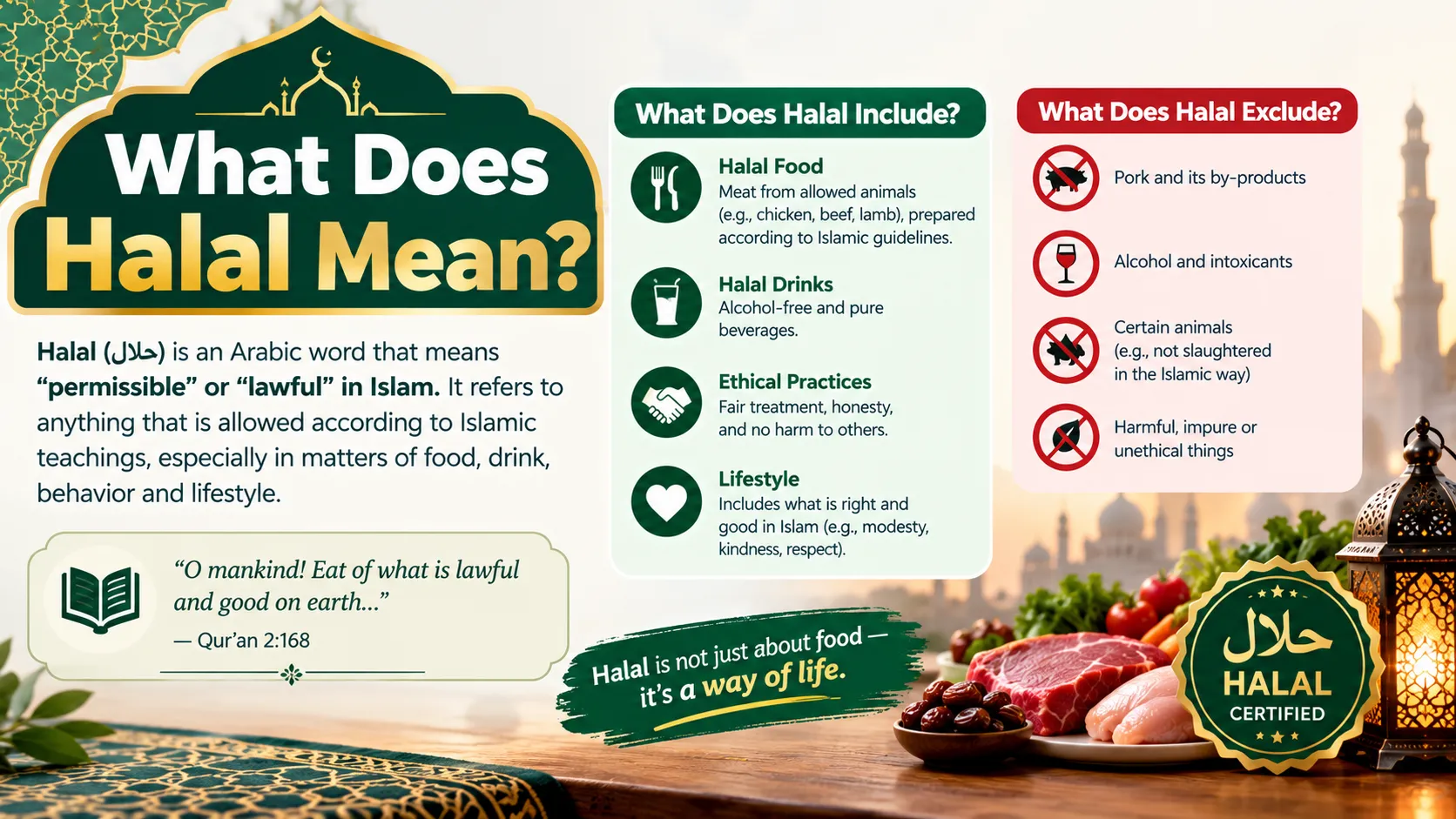
What does Halal Mean? Halal is an Arabic word meaning lawful, permitted, or permissible under Islamic law. People most commonly use the term to describe food and drinks that Muslims are allowed to consume, but its meaning extends to other areas of life.
You may encounter the word on restaurant menus, supermarket packaging, product labels, and conversations about Islamic beliefs. Understanding it can help you make sense of Muslim dietary practices and recognize what halal certification represents.
Halal is also closely connected to its opposite, haram, which means forbidden or prohibited. Understanding the difference between these terms makes it easier to explore Islamic dietary rules and everyday practices.
1. What Does Halal Mean in Simple Words?
Halal means something is allowed or permissible according to Islamic law.
The term is widely associated with food, but it can also describe products, personal conduct, and financial activities that meet the relevant Islamic requirements.
For example, apples, rice, and vegetables are generally halal. Pork is prohibited under Islamic dietary rules.
Meat requires additional consideration because the animal must be permissible to eat and the slaughter process must meet applicable Islamic requirements.
In simple terms, halal describes what Islam permits, although the precise ruling can depend on the subject and the circumstances.
2. What Does Halal Mean in Arabic?
Halal is written as حلال in Arabic. Its meaning in English includes lawful, allowed, and permissible.
The word appears in Muslim communities worldwide and is commonly used in discussions about food, shopping, business, and religious practices.
For example, a restaurant advertising halal chicken indicates that its chicken is represented as meeting the applicable Islamic dietary requirements.
The word does not simply mean healthy, natural, or high-quality. It primarily describes permissibility under Islamic law.
3. What Does Halal Mean in Islam?
In Islam, halal refers to what is permissible under Islamic teachings.
The Quran and the Sunnah of Prophet Muhammad provide foundational guidance for understanding halal and haram. Muslims apply these principles to dietary choices and other aspects of life.
For example, Islamic dietary rules permit many ordinary foods, including fruits, vegetables, and grains. They prohibit certain foods and practices, including consuming pork.
Some questions require more detailed interpretation, particularly when they involve complex ingredients, modern manufacturing processes, or financial arrangements.
When a ruling is uncertain, consulting a qualified Islamic scholar or a trusted religious authority can help clarify the relevant requirements.
4. What Is the Difference Between Halal and Haram?
Halal and haram are Contrasting terms in Islamic teachings.
Halal means permissible, while haram means forbidden or prohibited.
| Term | Meaning | Example |
| Halal | Permissible | Eating an apple |
| Haram | Prohibited | Consuming pork |
| Mashbooh | Doubtful or uncertain | An ingredient whose source needs verification |
Mashbooh describes something whose status may require further investigation. It does not automatically mean that the item is prohibited.
For example, a packaged food might contain an ingredient derived from an unidentified animal source. Additional information may be needed to determine whether it meets the relevant halal requirements.
5. What Is Halal Food?
Halal food is food that Muslims are permitted to consume under Islamic dietary rules.
Many common foods, including fresh fruits, vegetables, grains, beans, and nuts, are generally halal.
Meat requires additional checks. The animal must belong to a permissible species, and the slaughter process must satisfy the applicable Islamic requirements.
Packaged foods can present more complicated questions because their ingredients may come from different sources.
Gelatin, enzymes, emulsifiers, and flavorings are examples of ingredients that sometimes require further investigation.
Consumers can review ingredient lists, manufacturer information, and relevant certification to make better-informed decisions.
6. Which Foods Are Generally Halal?
Many everyday foods are generally considered halal when they contain no prohibited ingredients and meet the relevant requirements.
Examples include:
- Fruits: Apples, bananas, grapes, oranges, and mangoes.
- Vegetables: Potatoes, carrots, spinach, and tomatoes.
- Grains: Rice, oats, wheat, and corn.
- Legumes: Chickpeas, lentils, peas, and beans.
- Nuts and seeds: Almonds, walnuts, and sesame seeds.
- Eggs and dairy: Commonly permissible when their ingredients and production meet applicable requirements.
- Meat: Beef, lamb, goat, and chicken when the animal and slaughter process meet the relevant Islamic rules.
- Seafood: Many types are considered permissible, although rulings on particular aquatic animals can differ among Islamic schools of thought.
These are general examples rather than a ruling on every product in each category.
Plain rice, for example, is generally halal. However, a prepared rice dish might contain prohibited meat or another ingredient that affects its status.
7. Which Foods Are Haram in Islam?
Haram foods include items prohibited under Islamic dietary rules.
Common examples include:
- Pork and prohibited pork-derived ingredients.
- Intoxicating alcoholic beverages.
- Blood consumed as food.
- Carrion, subject to the specific rules and exceptions in Islamic law.
- Meat that does not meet applicable Islamic slaughter requirements.
- Certain animals prohibited under relevant Islamic dietary rulings.
The exact interpretation of some dietary rules differs among Islamic schools of thought.
For this reason, readers should consult qualified guidance when a specific ingredient or food raises a complicated religious question.
8. What Makes Meat Halal?
Halal meat must come from an animal that is permissible to eat and satisfy the applicable Islamic requirements.
Important considerations include:
Permissible species: Cattle, sheep, goats, and chickens are generally permissible species.
Slaughter requirements: The slaughter process must meet the relevant Islamic conditions.
Religious requirements: Applicable conditions may include invoking Allah’s name and meeting requirements concerning the person performing the slaughter.
Handling and processing: Storage, transportation, and preparation must meet relevant requirements and avoid prohibited contamination.
The interpretation of certain details can differ among Islamic authorities.
Therefore, meat from a generally permissible animal is not automatically halal. The slaughter process and subsequent handling also matter.
9. What Is Halal Certification?
Halal certification is a process through which a certification organization evaluates whether a product, process, or facility meets its applicable halal requirements.
Depending on the product and standard, the assessment may include ingredient reviews, document checks, inspections, and audits.
A valid certificate or recognized halal logo can help consumers identify products that have undergone an appropriate assessment.
However, certification standards differ among organizations and countries. Consumers may need to verify whether a particular certificate is accepted by the relevant authority.
Not every halal food carries formal certification. Whole fruits and plain vegetables, for example, generally do not require the same type of assessment as complex processed foods.
10. What Does a Halal Label Mean?
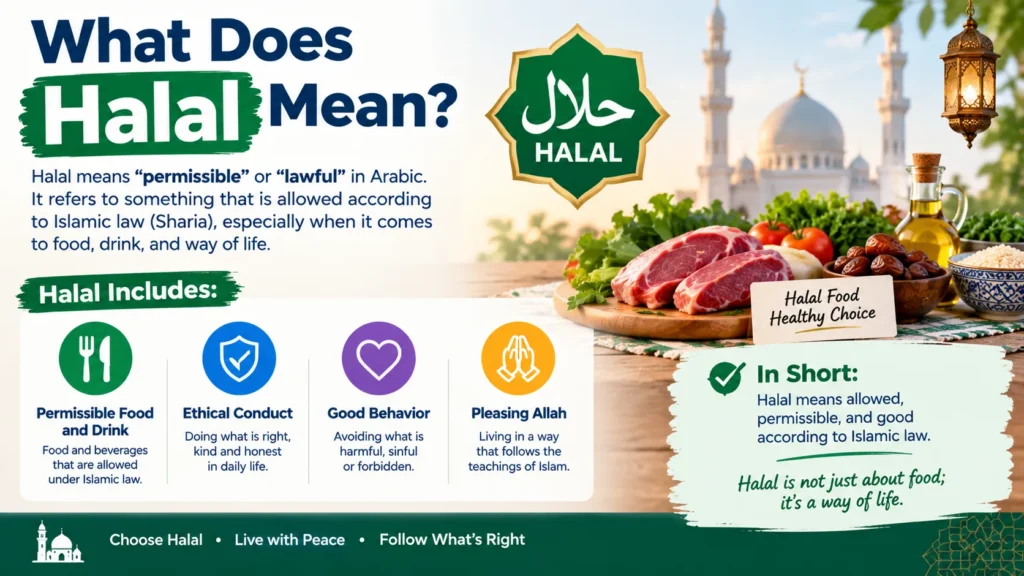
A halal label Generally Indicates that a product is represented as meeting applicable halal requirements.
When a recognized certification organization issues the label, it may also indicate that the product has undergone a defined verification process.
To evaluate a halal claim:
- Read the ingredient list.
- Look for a halal logo or certification statement.
- Identify the organization responsible for the certification.
- Check whether the certificate covers the particular product.
- Contact the manufacturer or certifier if important information remains unclear.
An unfamiliar ingredient is not automatically haram. Its status may depend on its source, processing, and the applicable Islamic ruling.
11. What Does Mashbooh Mean?
Mashbooh is a term used to describe something doubtful, questionable, or uncertain in relation to halal and haram.
It becomes relevant when the available information is insufficient to establish whether a product or action is permissible.
For example, a packaged food might contain gelatin without identifying its source. Since gelatin can come from different sources, additional information may be necessary.
Consumers can investigate the ingredient, contact the manufacturer, check certification information, or consult a qualified Islamic authority.
The key distinction is that uncertainty does not automatically establish that an item is prohibited.
12. Does Halal Apply to Things Besides Food?
Yes. Halal is a broader concept that can apply to personal conduct, products, services, and financial activities.
Examples include:
- Personal conduct: Truthfulness, keeping promises, and treating others fairly.
- Financial activities: Trade, investments, and transactions evaluated under Islamic financial principles.
- Cosmetics: Ingredients and manufacturing processes that affect whether a product meets a particular halal standard.
- Medicines: Ingredient sources and circumstances of use that may require religious consideration.
- Business practices: Conduct and transactions that comply with relevant Islamic requirements.
These examples do not establish automatic rulings on every product or activity. Each area has its own considerations, and some questions involve differences of scholarly interpretation.
Related To Another Article: https://genzwishes.com/mean-median-mode-calculator/
13. Is Halal the Same as Healthy or Organic?
No. Halal, healthy, and organic describe different characteristics.
| Term | What it describes |
| Halal | Permissibility under Islamic law |
| Healthy | Relationship to health and nutritional needs |
| Organic | Compliance with relevant agricultural or production standards |
A halal-certified snack may still contain high amounts of sugar, salt, or fat.
Likewise, an organic product is not automatically halal. Its ingredients and relevant production processes must still meet the applicable Islamic requirements.
Consumers should evaluate religious permissibility, nutritional information, and organic certification separately.
14. Why Is Halal Important to Muslims?
Halal helps Muslims make choices that align with their religious beliefs and Islamic teachings.
Its importance extends beyond selecting food. The concept can also guide purchasing decisions, personal conduct, and financial activities.
For example, a Muslim consumer may check whether meat meets Islamic slaughter requirements before purchasing it. Another consumer may investigate ingredients in packaged foods or personal-care products.
In financial matters, people may seek guidance about whether a particular transaction complies with Islamic principles.
Muslims may follow different scholarly interpretations on certain details. Qualified religious guidance can help clarify complicated or disputed questions.
15. How Can You Tell Whether Something Is Halal?
Determining whether something is halal depends on the product or activity and the available information.
Use this practical checklist:
Check the ingredients. Identify prohibited substances and ingredients whose sources may affect their status.
Review the source. Investigate animal-derived ingredients and relevant production requirements.
Verify certification. Identify the issuing organization and confirm that the certificate covers the product when necessary.
Contact the manufacturer. Ask for clarification about ingredients or processing methods that are not clearly explained.
Consult a qualified authority. Seek reliable Islamic guidance when the answer depends on a complicated or disputed issue.
Avoid assumptions. An unfamiliar product or a product without a halal logo is not automatically haram. Its status depends on the relevant facts and Islamic requirements.
People Also Ask
A: Halal means lawful or permissible under Islamic law. It commonly describes food Muslims are allowed to consume.
A: Halal means permissible, while haram means forbidden under Islamic law.
A: Many fruits, vegetables, grains, and legumes are generally halal. Meat must come from a permissible animal and meet applicable Islamic slaughter requirements.
A: No. Halal concerns religious permissibility, while nutritional quality is a separate consideration.
A: It generally means a certification organization has evaluated a product or process against its applicable halal requirements and approved it under its certification scheme.
Conclusion
Halal is an Arabic Word meaning lawful or permissible under Islamic law. Although people commonly associate it with food, the concept also extends to personal conduct, products, and financial activities.
Understanding the difference between halal and haram can help readers make sense of Islamic dietary choices. Knowing how ingredients, meat requirements, and certification affect a product can also make shopping decisions easier.
When an ingredient or practice is uncertain, checking reliable information and consulting a qualified Islamic authority can help clarify the issue.
In short, halal means what is permissible under Islamic teachings. Understanding the term provides a useful starting point for learning about Muslim dietary practices and other aspects of Islamic life.